
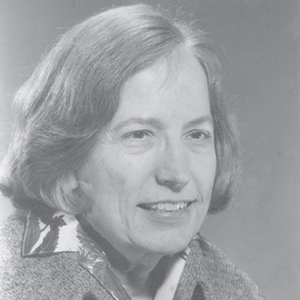
Elizabeth Leonard Scott was born in Oklahoma in 1917 and moved to Berkeley, California, at age four. She attended the University of California, Berkeley, where she earned undergraduate and doctoral degrees in astronomy. Although passionate about the subject, Scott found few opportunities for women in astronomy—many were barred from using telescopes or restricted to assistant roles. Recognizing these limitations, she pivoted to statistics, joining Jerzy Neyman’s newly formed Statistical Laboratory at Berkeley during World War II. This partnership launched a decades-long collaboration and a distinguished career in statistical research.
Scott became a leading statistician whose work spanned fields from astronomy to meteorology. She published extensively, including more than 30 papers in astronomy between 1949 and 1964, many of which applied or developed statistical methods to address scientific problems. One of her key contributions, now known as the “Scott effect,” identified an observational bias in how galaxy clusters are measured—a finding that influenced cosmological theory. Her work also extended to weather modification and cancer research, always emphasizing careful statistical design and interdisciplinary collaboration.
While Scott made groundbreaking contributions to science, she was equally devoted to advancing equity in academia. In the 1960s and 70s, she raised funds for civil rights efforts and used her statistical skills to document gender discrimination in higher education. Her studies revealed systemic barriers affecting the advancement of women graduate students and faculty. She co-chaired a UC Berkeley Academic Senate committee focused on improving the status of women on campus and was instrumental in creating tools like the Higher Education Salary Evaluation Kit to advocate for equal pay.
At a time when women were vastly underrepresented in mathematics and statistics, Scott served as a role model and mentor. She had few female peers during her education—meeting only one woman in the Berkeley math department—but dedicated her own career to creating more space and opportunity for women in the sciences. Her legacy lives on not only in her scholarly contributions but in the doors she helped open for future generations of women in STEM.
This summary was compiled from online sources including Berkeley Statistics, Mac Tutor, and Biographies of Women Mathematicians.
Leave a Reply