• Skip to main content
  • Skip to secondary menu
  • Skip to primary sidebar
  • Skip to footer
  • Homepage
  • About Us
  • Advertising
  • Submission Instructions
  • Editorial Calendar
Amstat News

Amstat News

The Membership Magazine of the American Statistical Association

  • Printed Issues
  • Practical Significance Podcast
  • Additional Features
  • Columns
  • Member News
  • Departments
You are here: Home / Additional Features / Previous Features / Team Dreams and Dream Teams

Team Dreams and Dream Teams

November 1, 2011 Leave a Comment

Xiao-Li Meng, Whipple V. N. Jones Professor of Statistics and Department Chair, Harvard University
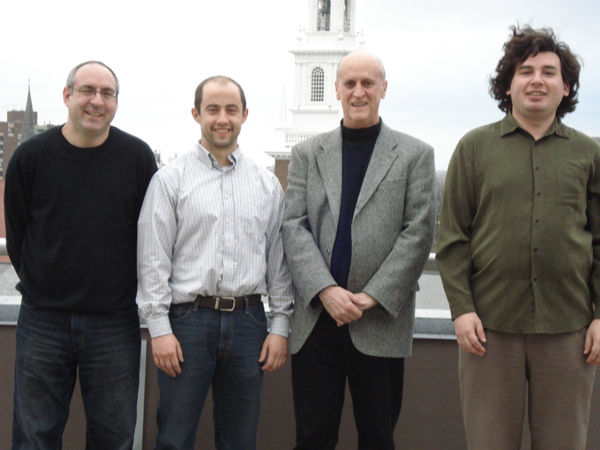
    From Left: Michael Parzen, Kevin Rader, David Harrington, and Joseph Blitzstein, core members of Dream Team
    From Left: Michael Parzen, Kevin Rader, David Harrington, and Joseph Blitzstein, core members of Dream Team

    Twenty-five years ago, my PhD cohort at Harvard Statistics consisted of four students, taught by five ladder faculty. The overall course enrollment was about 300, and the combined number of concentrators (majors) and master’s students was a single digit. Today, both the faculty and PhD cohort sizes have doubled, the numbers of concentrators and master’s exceed 50 and 20, respectively, and the total enrollment reached almost 2,000.

    “So, what’s the big deal?” you may wonder, “the growth in my department is even faster than yours!” Exactly—that’s the big deal. The statistics discipline is no longer perceived as “mathematics lite” or “accounting poor,” but as a field that generates headlines such as “For Today’s Graduate, Just One Word: Statistics” (New York Times, August 5, 2009). As a profession, our team dream to establish statistics as a visible, viable, and vital scientific discipline is largely realized. Our next team dream—that principled statistical thinking and reasoning becoming part of the routine vocabulary of a civilized society—will require substantially more dream teams. Heroic individual effort is always great inspiration, but teamwork is essential to achieving and sustaining societal accomplishments.

    David Pickard was such a heroic individual, particularly with regard to undergraduate education. To honor him, a memorial fund was established in 2010 by a group of alumni under the leadership of Victor Solo, a Harvard colleague of Pickard’s. The fund document summarizes well its purposes:

    The gifts of colleagues, students, and friends of David Pickard establish the David K. Pickard Memorial Endowment Fund. This fund celebrates the memory of David K. Pickard, who served as a junior faculty member in the Harvard Statistics Department from 1977 to 1985. Professor Pickard was known for his outstanding teaching, having won two major Harvard-wide teaching awards: the Phi Beta Kappa Prize in 1982 and the Levenson Prize in 1984. He also won the Hoopes Prize two years in a row for supervising and nominating a senior thesis. Professor Pickard had a strong influence on the statistics PhD students at Harvard in that period. Sadly, Professor Pickard died of a brain tumor in August 1986 in Kingston, Ontario, where he had moved after leaving Harvard.

    Happily, we now have a dream team to enhance Pickard’s mission. David Harrington, our codirector of undergraduate studies (DUS) and recipient of the Roger Nichols teaching award at Harvard Public School of Health, has played a critical role in revamping our undergraduate program. So has Joseph Blitzstein, the other DUS. Like Pickard, Blitzstein won the Phi Beta Kappa Prize (2009) and Levenson Prize (2011) and is a household name among Harvard students (Google “Stat 110 at Harvard” on YouTube). It is therefore extremely fitting that Blitzstein received the inaugural David Pickard Memorial Award and was appointed Harvard Statistics’ first full professor of practice on July 1.

    Michael Parzen, Harvard Statistics’ first senior lecturer, and Kevin Rader, its first preceptor, brought the necessary critical mass for a dream team. Parzen joined in 2010 with a stellar 17-year record of teaching MBAs, a challenging group of students to teach. Rader, a winner of the Pickard Teaching Fellow Award, has been instrumental in carrying out much of the behind-the-scenes work, from training teaching fellows to assisting in course administration.

    The dream team will expand via an open-field and open-rank cluster hiring. The inaugural Pickard award citation summarizes what we are looking for: a clearly wonderful scholar and mentor and a wonderfully clear teacher and communicator.

    Filed Under: Previous Features Tagged With: Harvard, memorial, Pickard, statistics

    Reader Interactions

    Leave a Reply Cancel reply

    Your email address will not be published. Required fields are marked *

    Primary Sidebar

    Search

    More to See

    Jennifer L. Green: The Collaborative Life of a Statistics Professor and Teacher Mentor

    September 1, 2026 By Megan Murphy

    Meetings, Manuscripts, and Meows: Spend a Day with Charlotte Walsh

    September 1, 2026 By Megan Murphy

    Students’ Statistical Thinking When Using Generative AI

    September 1, 2026 By Megan Murphy

    What Students Taught Me About Teaching Statistics

    September 1, 2026 By Megan Murphy

    STATAcorp. Efficiency matters. Stata is easy to use, so you spend less time learning software and more time focusing on your research
    Data Science Certification

    ASA HOME

    American Statistical Association

    Communications from the Executive Director

    ASA Leader Hub

    ASA Career Connect

    ADVERTISERS

    STATA
    SIAM

    Archives

    Categories

    Footer

    Editorial Staff

    Managing Editor
    Megan Murphy

    Graphic Designers / Production Coordinators
    Olivia Brown
    Meg Ruyle

    Communications Strategist
    Val Nirala

    Advertising Manager
    Christina Bonner

    Contributing Staff Members
    Kim Gilliam

    American Statistical Association
    277 South Washington Street, Suite 370
    Alexandria, VA 22314-3646
    Phone: (703) 302-1857


    Copyright © 2026 · Magazine Pro on Genesis Framework · WordPress · Log in