
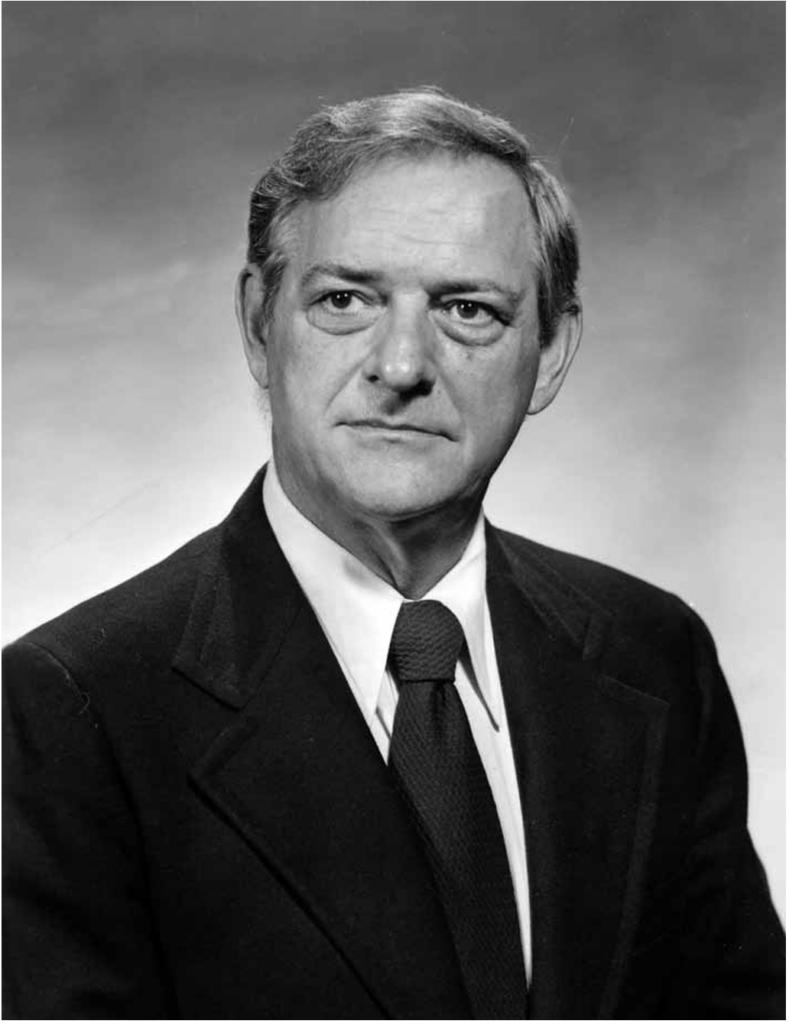
C. Clark Cockerham is remembered for his pioneering formulation of new statistical theory in quantitative genetics and for establishing principles for the understanding of heredity and the genetic improvement of animals and plants. His related work in population-genetic formulations of the variance of allele frequencies provides the means to characterize population structure and is used by both human geneticists and molecular ecologists. His work is marked by elegance and evidence of a deep intuition.
Clark Cockerham was born on December 21, 1921, in Mountain Park, North Carolina, and grew up on the family farm next to the mountains of western North Carolina. He received a B.S. in animal production from North Carolina State College in 1943 and then joined the U.S. Marines. He saw service in the Pacific and would have gone to Japan had it not been for the end of the war following the dropping of the atomic bombs. He returned to North Carolina and managed a lumber mill before returning to graduate school at NC State with support from the G I Bill. With an M.S. in animal industry awarded in 1949, he went on to Iowa State College to study with renowned quantitative geneticist Jay Lush. Iowa State was a center for quantitative genetics, and the thesis for Clark’s 1952 Ph.D. in animal breeding and genetics laid the foundation for much subsequent development in the field.
Leave a Reply