
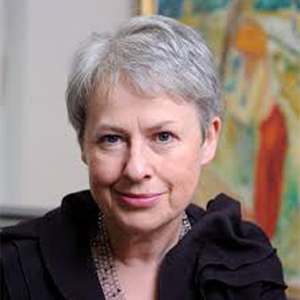
Sheila Macdonald Bird
Medical Research Council, University of Strathclyde
Educational Background
PhD, Aberdeen University (Analysis of Survival Data in Breast Cancer)
MA, Joint Honors Mathematics-Statistics (first-class), Aberdeen University
Dux of School, Elgin Academy
Sheila Macdonald Bird’s father played mental arithmetic games with her, which sparked her childhood enthusiasm for math: “If it takes a hen and a half a day and a half to lay an egg and a half, how long does it take a hen to lay an egg?”
She was later inspired by her math teacher at Elgin Academy, Lewis Grant—who introduced her to statistics—and professor David Kerridge at Aberdeen University to take up a career in biostatistics.
For Bird, days as a biostatistician can be varied, from research-focused days to those spent speaking at conferences. Some of her most enjoyable days have been spent absorbed in designing studies, but it is also quite wonderful for her when analysis leads to new insights with important implications for public health.
It has been an enormous privilege, and a strong motivation, for Bird to use statistical science to make a difference in public health. She believes biostatisticians are privileged to analyze data about patients. Sometimes, those whose health problems concern us are hard to reach, such as those who inject drugs or former prisoners. “But their altruism as contributors to research, says Bird, merits our advocacy on their behalf to ensure discoveries that can improve their lot do not go unheeded. … By making waves, if necessary.”
Bird started making waves in the 1970s, when, as a research assistant, she led a team analyzing statistical misuse in the British Medical Journal.
“This paper on the rate of statistical errors in BMJ articles (52%) is fab, and 40 years old!”
— Ben Goldacre, November 25, 2015
The BMJ’s then editor, Stephen Locke, took this criticism on the chin, published Bird’s paper and editorialized it. This led to her BMJ series on statistics in question and statistical guidelines for contributors to medical journals.
Biostatistics offers a varied career. Bird’s PhD research looked at survival in breast cancer. To allow covariates such as tumor size to influence survival differently in the first and second five years versus the second decade of follow-up, she applied proportional hazards analysis to distinct epochs of follow-up. This approach was then applied to UK kidney graft survival and guided how kidney donors and recipients were matched in the UK for about a decade.
In 1991, Bird began a quarter century as a “biostatistician behind bars.” Studying Scotland’s HIV epidemic meant research in prisons. Among Edinburgh’s heroin injectors, there had been early, rapid HIV transmission, and heroin injectors were imprisoned for crimes they committed to pay for drugs. Devising a study design—acceptable to inmates—to find out how many prisoners were HIV infected (including undiagnosed infections) and how they had become infected—outside or inside prison—was essential.
Along with her late husband, Graham, Bird called the design WASH (Willing Anonymous Salivary HIV) surveillance and conducted studies from 1991–1996. In 1996, using data from their WASH studies, they showed punitive random mandatory drug testing of prisoners would severely underestimate the inside use of heroin.
Drug-related deaths (DRDs) have been a neglected epidemic. Bird’s research group was the first to quantify the high risk of DRDs in the first two weeks after prison release. More recently, they discovered that, for Scotland’s ever-injectors, the four weeks after hospital discharge are also a period of high DRD risk, roughly half the risk that applies in the four weeks after prison release. The Medical Research Council’s prison-based N-ALIVE pilot trial in England, along with Scotland’s science-led before/after evaluation of its National Naloxone Policy, investigated contemporaneously whether take-home naloxone (issued by prisons or in the community) is effective at reducing opioid-related deaths in the four weeks after prison release. Policy evaluation produced the evidence faster but needed to refer to the University of Cambridge’s Sir Austin Bradford Hill’s criteria for appraising causality.
Bird was also involved in looking at exposure to dietary BSE (bovine spongiform encephalopathy). Jason Cooper and Bird quantified the UK’s dietary consumption of BSE by gender and birth cohort and showed that the 1940–1969 cohort had greater dietary exposure than those born in 1970 onward. This meant the young age of the UK’s vCJD (variant-Creutzfeldt-Jakob disease) cases could only be explained if there was also age-related susceptibility to progression from dietary BSE exposure to clinical vCJD.
Bird has received four medals from the Royal Statistical Society. Bradford Hill was a past director of the Cambridge MRC Biostatistics Unit. Hence, she was pleased to receive the Sir Austin Bradford Hill medal in 2000 for contributions to medical statistics. The Howard Medal in 2015, which commemorates the 18th-century prison reformer John Howard, was awarded for her work in prisons and is especially dear to her because it began in 1991 with her late husband.
Bird’s advice for biostatisticians is inspired by two pieces of her father’s advice:
“It’s not the wind but the set of your sail that determines the way you go.”
“Principle is the only thing worth fighting for.”
Career in Brief
- Research assistant in medical statistics at Edinburgh University
- Part-time PhD while lecturer in statistics at Aberdeen University
- Joined the MRC Biostatistics Unit in Cambridge in 1980
- Made an MRC program leader in 1996
- Made an officer of the Order of the British Empire (OBE) in 2011
Honors
- Henry Award in Logic
- Joint Boxhill-Simpson Prize in Mathematics
- Royal Statistical Society Guy Medal in Bronze (1989) for contributions to medical statistics
- Royal Statistical Society Bradford Hill Medal (2000) for contributions advocating the use
of sound statistical methods in medical research, practice, and policy- Glaxo Wellcome Medal of Worshipful Society of Apothecaries of London (2001) for Wellcome Lecture, “Trials and Tribulations: Costs and Effectiveness”
- Fellowship (by distinction) of Faculty of Public Health of Royal College of Physicians of the United Kingdom (2005)
- Royal Statistical Society Chambers Medal (2010) for outstanding services to the society
- OBE in Queen’s New Year’s Honours List (December 2010) for services to social science
- Fellow of the Royal Society of Edinburgh (2012)
- Royal Statistical Society Howard Medal (2015) for services to social statistics
- Fellow of the Academy of Medical Sciences (2017)
- University of Edinburgh Honorary Doctorate of Science (2018) for significant contribution to many parts of public policy around human and animal health
Leave a Reply