
Penny S. Reynolds, University of Florida College of Medicine
AUGUST BIRTHDAYS
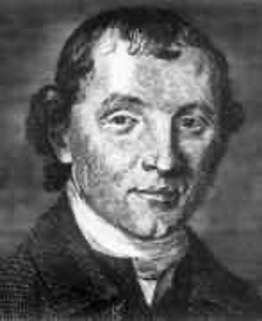
1710 Thomas Simpson developed Simpson’s rule for approximating definite integrals and authored the paper “On the Advantage of Taking the Mean of a Number of Observations in Practical Astronomy” in 1755. It focused on observation error distributions rather than the observations themselves and was the earliest attempt to demonstrate the law of large numbers.
1834 John Venn wrote The Logic of Chance (1866) but is best known for his Venn Diagram. In his autobiography, he says it was a method of adapting Euler diagrams to Boolean logic, although his writings do not indicate when or why he came to invent it. He was also an inventor, and, in 1909, he built a cricket ball bowling machine that bowled out the Australian First Eleven.
1857 George E. Roberts, ASA Fellow 1916; 15th ASA President 1920. He was director of the United States Mint from 1898–1907 and 1910–1914, working primarily on economic and monetary policy.
1868 Ladislaus von Bortkiewicz is best known for his 1898 Das Gesetz der kleinen Zahlen [The Law of Small Numbers], which describes the application of the Poisson distribution to analysis of rare events. It made famous the data on the number of deaths by horse kick in the Prussian army and marked the entry of the Poisson distribution into the standard canon of distributions.
1874 Edward Thorndike, ASA Fellow 1917 (and one of the first ASA fellows to not be an economist). He is best known for pioneering the use of animals in behavioral psychology and promoting rigorous methodology in the psychology of learning and education. He was also a fervid eugenicist, justifying discrimination of women and minorities in academia on scientific grounds.
1874 Wesley C. Mitchell, ASA Fellow 1916; 13th ASA President 1918. He was an economist, pre-eminent researcher on business cycles, and a founding member and first director of the National Bureau for Economic Research.
1875 Henry Lewis Rietz, ASA Fellow 1923; ASA Vice President 1925; founding member and first president of the Institute of Mathematical Statistics 1935. He was one of the most influential leaders in establishing mathematical statistics in the United States.
1880 Major Greenwood, President of the Royal Statistical Society 1934; Guy Silver (1924) and Gold (1945) medals. He was the leading medical statistician for the first half of the 20th century and played a key role in the development of medical statistics in the United Kingdom.
1882 Ethel May Newbold, Royal Statistical Society Fellow 1921. She was an epidemiologist and the first woman to be awarded the Guy Silver Medal in 1928.
1890 Julie E. Backer, ISI Fellow 1948. She was bureau chief for the Norwegian Central Bureau of Statistics from 1936–1956 and an influential researcher in public health and population statistics.
1892 Hilda Mary Woods, Royal Statistical Society Fellow 1926. She was a medical statistician, the first female lecturer at the London School of Hygiene and Tropical Medicine, and coauthor of one of the first textbooks of medical (as opposed to vital) statistics in 1931.
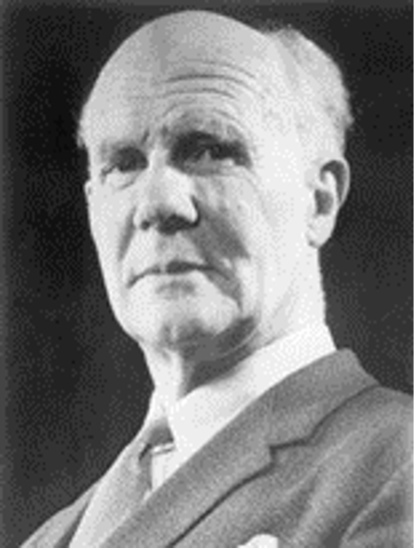
1895 Egon Pearson, Royal Statistical Society President 1955; Guy Gold Medal 1955. He diverged from his father, Karl, in statistical philosophy, mostly in the principles and practice of statistical inference. He is best known as codeveloper with Jerzy Neyman of the Neyman-Pearson lemma in 1933 for statistical hypothesis testing and the first explicit consideration of alternative hypotheses, power, and type I and type II errors. He was also an early contributor to statistical quality control, sequential small sample sampling, and Monte Carlo investigations of sampling distribution.
1903 Rensis Likert, ASA Fellow 1949; ASA President 1959. He was an organizational and social psychologist, best known for developing the Likert scale.
1904 Cuthbert Daniel, ASA Fellow 1955. He made major contributions to industrial applications of experimental design. He saw the statistical light when his biochemist wife introduced him to Ronald Fisher’s Statistical Methods for Research Workers.
1907 Ruth Rice Puffer, ASA Fellow 1966. She was in public health biostatistics and head of the department of health statistics of the Pan American Health Organization, where she led the Inter-American Investigation of Childhood Mortality. On their 100th anniversary the Pan American Health Organization listed her in the top 100 “public health heroes.”
1908 William (“Bill”) E. Ricker, Royal Society of Canada Fellow 1956; Order of Canada Fellow 1986. One of the founders of modern fisheries science, he developed the Ricker discrete model describing dynamics of fisheries populations as a function of time-dependent density. His 1985 paper proposing the geometric mean regression for biological applications received a Classic Citation Award.
1908 Mildred Barnard was one of the three “Founding Mothers” of biostatistics at the CSIR (later Commonwealth Scientific and Industrial Research Organization), Australia, and first woman to chair the Brisbane Branch of the International Biometrics Society.
1909 Florence Nightingale (F. N.) David, ASA Fellow 1954; IMS Fellow. She is best known for work on combinatorics, correlation, and history of probability. She was first winner of the ASA Elizabeth Scott Award in 1992 for increasing opportunities for women in statistics. She was named after Florence Nightingale, a family friend.
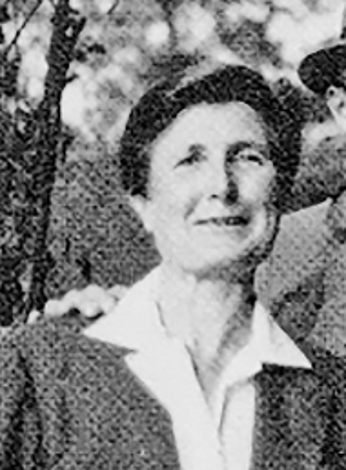
1910 Irene Hess, ASA Fellow 1972. She was the director of the Institute for Social Research and founding chair of the ASA Section on Survey Research Methods. She was a frequent collaborator with Leslie Kish on survey sampling methodology.
1914 Lenore Epstein Bixby, ASA Fellow 1969. She served as deputy assistant commissioner of the Office of Research, director of the Division of Retirement and Survivors’ Studies, and with the Committee on National Statistics of the National Academy of Sciences.
1921 Charles Dunnett, ASA Fellow 1965; Statistical Society of Canada President 1982, SSC Gold Medal 1986. Awarded MBE for his WWII Royal Navy radar work. Developer of Dunnett’s test for multiple comparisons and methods of equivalence testing, which are among the top 25 most-cited statistics papers of modern times.
1925 Jeanne Ridley, ASA Fellow 1976. A professor of sociology, she was a frequent collaborator with Mindel Sheps (ASA Fellow 1970) on problems of human demography, fertility, natality, and population dynamics.
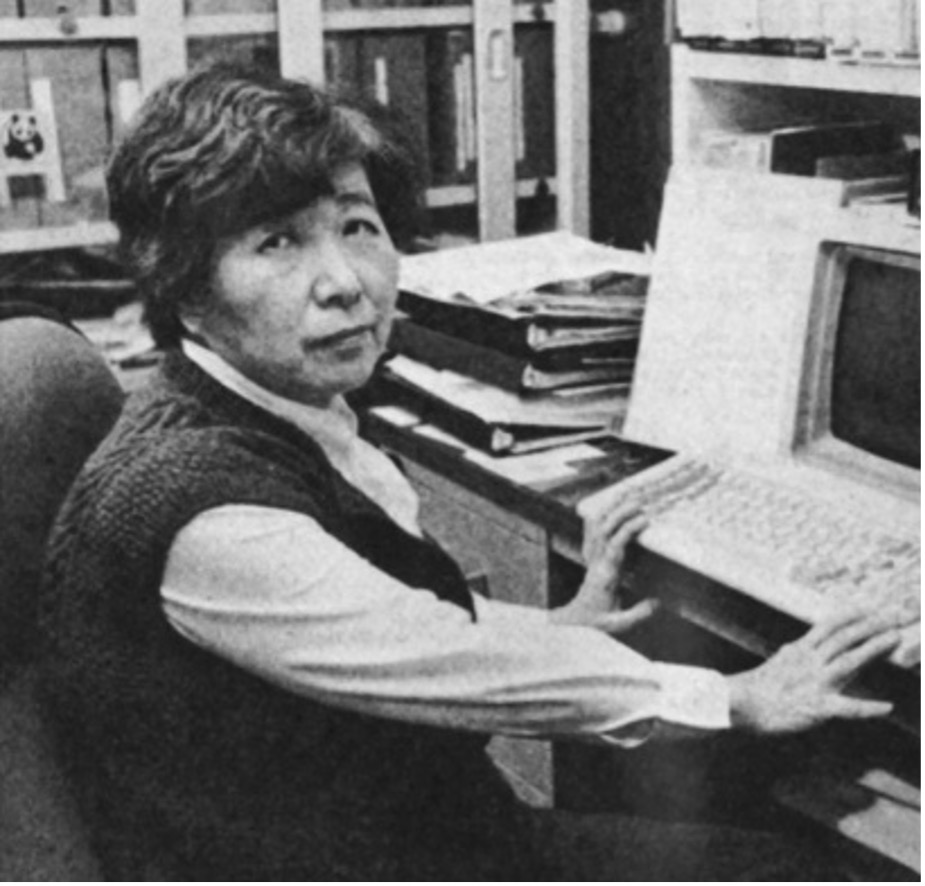
1927 Kimiko Osada Bowman, ASA Fellow 1976; elected member ISI 1978; IMS Fellow 1987; AAAS Fellow 1970. Pioneered methods for approximating probability distributions of maximum likelihood estimators and developed divergent series algorithms for large computers. Because she contracted polio when young, she was a champion for people with disabilities.
1954 Kathryn Chaloner, ASA Fellow 1994; ISI Fellow; 2014 Elizabeth L. Scott Award. She developed methods in optimal Bayesian experimental design and worked on clinical trial design for infectious disease and women’s health.
EVENTS IN AUGUST
1668 Nicolaus Mercator (né Niklaus Kauffman) publishes the Logarithmotechnica, in which he presents his eponymous series ln(1+x) and uses the term “natural logarithm” (logarithmus naturalis). However, he may have pinched the idea from Pietro Mengoli.
1673 Gottfried Wilhelm Leibniz introduces the term “function” for the first time, but in a nonanalytical sense (he referred to analytic expressions as “relatio”). In 1698, Johann Bernoulli used “function” in the sense of an analytic expression. Euler popularized the use of f(x) notation in 1734.
1918 On August 31, Maj. André-Louis Cholesky is killed in action. His matrix decomposition method for solving systems of n linear equations is published posthumously. Thirty years later in 1948, Alan Turing demonstrates the stability of the method for large-n machine computations.
1931 Harold Hotelling, ASA Fellow 1937. Publishes a generalization of Student’s t-test, now known as Hotelling T2 distribution, for multivariate hypothesis testing. He also defines “probable error” as what was later called confidence intervals.
1934 The term “likelihood” is first used in a Bayesian context by Harold Jeffreys in what he calls the “the theorem of inverse probability,” where posterior probability is proportional to the product of the prior probability and the likelihood. Ronald Fisher first used the term in its modern sense in 1921.
1936 Donald Mainland, ASA Fellow 1954. A physician turned medical statistician, he publishes a note describing a simple method for determining “limits for the true odds” for a small (n = 7) clinical trial. He also provides a sample size calculation derived by Ronald Fisher. However, the true purpose of the note was to emphasize the need for statistics education for physicians.
1955 The term “artificial intelligence” is coined in a proposal for a summer workshop submitted by Claude Shannon (Bell Labs), John McCarthy (Dartmouth), Marvin Minsky (Harvard), and Nathaniel Rochester (IBM). The workshop took place in July and August 1956.
1962 John Nelder, (later) head of Rothamsted Research Station and ardent birdwatcher, publishes a statistical analysis of the ‘Hastings Rarities,’ the so-called “birdwatchers Piltdown Fraud.” He uses chi-squared tests to suggest patterns of rare bird records between 1892 and 1930 in SE England were unlikely to be due to chance and concludes they represent fraud by taxidermist George Bristow.
1962 Philosopher of science Thomas Kuhn publishes his blockbuster The Structure of Scientific Revolutions, presenting a radically new idea of scientific progress. Instead of a linear process of ever-increasing knowledge, scientific progress is seen as paradigm-driven and phasic, disrupted by ‘paradigm shifts’ and embedded in the social and cultural environment.
1971 In an unusual departure for a presidential address, newly elected 66th ASA President Churchill Eisenhart (ASA Fellow 1943) gives a comprehensive historical overview of a central problem of statistical inference, the choice of the “best” mean. The result of his research is a 69-page typewritten paper covering the history of the mean from Pythagoras to the 19th century.
1977 Martin Bland and Doug Altman publish together for the first time. Their letter to the editor of The Lancet criticizes an article that confused association with causation. They went on to publish more than 100 papers together, many of which are citation classics. Their BMJ Statistics Notes series has been called the “finest series of short articles on the use of statistics.”
2025 To commemorate Afternoon Tea Week, August 11–17, here are some statistical thoughts on tea and cake. Most people are familiar with the famous “lady tasting tea” experiment devised by Ronald Fisher in the 1920s. However, in 1872, Francis Galton describes results of “a number of experiments on the art of making good tea.” He boils it down (as it were) to three factors: time; quantity; and temperature. In a 1904 Nature article, he describes how to cut a cake on “mathematical principles” so it presents the least area to the air. In 1957, William Cochran and Gertrude Cox used data from Frances E. Cook’s 1938 master’s thesis on the breakage angle of chocolate cake to demonstrate linear hierarchical modeling. Cook performed 15 replicates of a randomized trial of three recipes and six baking temperatures.
Download the references for this month’s Time Series.
Leave a Reply