
Jing Cao, SDSS Program Chair, and Sarah Kalicin, SDSS Program Chair-Elect
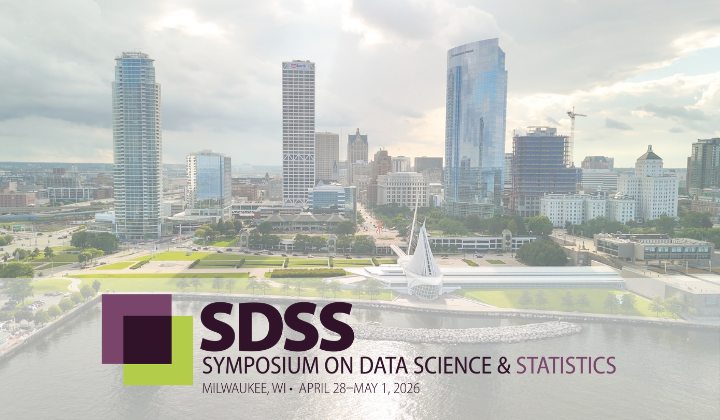
The 2026 Symposium on Data Science and Statistics will take place from April 28 to May 1 at the Hyatt Regency Milwaukee in Wisconsin.
Submission for lightning talks will be accepted from January 7 to February 5. Lightning talks include a five-minute presentation followed by an e-poster session. Conference registration and hotel reservations also open January 7.
The symposium will offer networking opportunities for early- to mid-career attendees through small-group mentoring opportunities. Participants can sign up as a mentor, mentee, or both.
This year’s program features the following two plenary speakers:
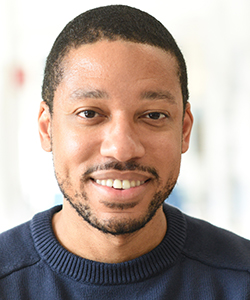
Lorin Crawford is a principal researcher at Microsoft Research. His work focuses on developing interpretable machine learning and AI algorithms to explore how genetic effects and gene-by-environment interactions influence complex traits and disease progression. Crawford has been recognized on the Forbes “30 Under 30” list and The Root 100 list of most influential African Americans.
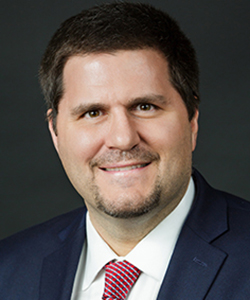
Jeff Morris is the George S. Pepper Professor of Public Health and Preventive Medicine and director of the division of biostatistics at the University of Pennsylvania. An Institute of Mathematical Statistics and American Statistical Association Fellow, Morris specializes in quantitative methods for extracting knowledge from biomedical big data. He is also widely recognized for his science communication efforts across social and traditional media
The symposium will also feature a plenary panel discussion titled “Statistical Thinking: A Critical Piece in the Age of AI.” This session will be moderated by Karl Pazdernik, chief data scientist and team lead for AI and data analytics at Pacific Northwest National Laboratory. He will be joined by panelists Frank Alexander, who is the director for AI strategy and research at Argonne National Laboratory, and Rui (Sammi) Tang, who is the senior vice president and global head of quantitative sciences and evidence generation at Astellas Pharmaceuticals.
Attendees can also participate in the following short courses for a variety of skills and interests:
- Modern Machine Learning with Bayesian Additive Regression Trees, led by Robert E. McCulloch of Arizona State University and Rodney Sparapani of Medical College of Wisconsin
- Getting Started with Positron: A Next-Generation IDE for Data Science, led by Mine Çetinkaya-Rundel of Duke University
- Expanding the Statistician’s Toolkit: Building and Sharing Data Science Tools in R, led by Mehdi Maadooliat, Jaihee Choi, and Daniel Cirkovic of Marquette University
- Toward Trustworthy Statistical Inference with Black-Box AI Predictions, led by Jiwei Zhao of University of Wisconsin-Madison
- Everyday Reproducibility, led by Gregory Hunt of William & Mary and Johann Gagnon-Bartsch of the University of Michigan
Leave a Reply