
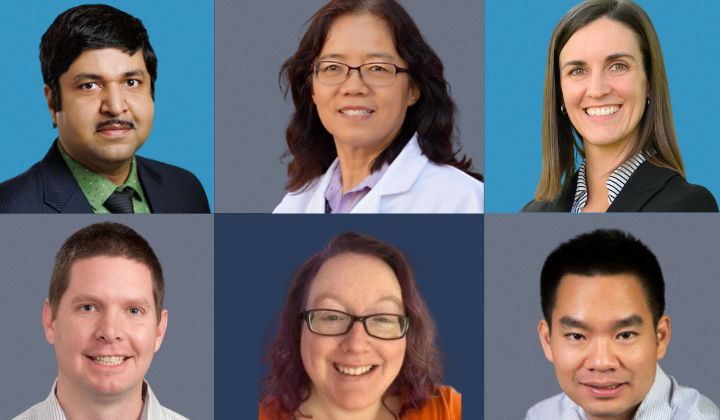
ASA GivesBack Leadership Team
Behind the journey of every data scientist and statistician is someone who took the time to guide, encourage, and open doors. Through the annual “Thank a Mentor” initiative, we invite ASA members to recognize those individuals whose support made a lasting difference, whether through career advice, thoughtful feedback, or simply believing in someone’s potential at the right moment.
These tributes offer more than appreciation. They tell the story of a community built on generosity, connection, and shared growth. Each reflection is a reminder of how mentorship shapes individual paths and strengthens the future of our field.
Anjishnu Banerjee

Submitted by Aninda Roy
I am deeply grateful for the mentorship of Anjishnu Banerjee, whose guidance has profoundly shaped my academic and professional development. From the beginning of my doctoral training, he encouraged me to approach problems thoughtfully and develop my own ideas rather than relying on ready-made solutions. He challenges me to think critically, ask deeper questions, and refine my reasoning through discussion. Even when my initial ideas are not fully formed, he recognizes the effort and guides me constructively, helping me understand where improvements are needed while building my confidence.
Beyond research, he has consistently encouraged me to pursue opportunities that expand my academic exposure and professional growth. He motivates me to step outside my comfort zone, engage the broader scientific community, and continuously improve my communication and leadership skills. Through his mentorship, I have learned how to present my work clearly, write more effectively, and think strategically about my long-term career goals.
Equally important, he taught me how to collaborate with integrity—respecting diverse perspectives while thoughtfully contributing my ideas. He fosters curiosity beyond immediate research interests and encourages community involvement, reinforcing both intellectual growth and belonging.
His mentorship has fundamentally shaped my development as an independent, confident, and resilient researcher, and his influence will continue to guide my career for years to come.
Staci Hepler
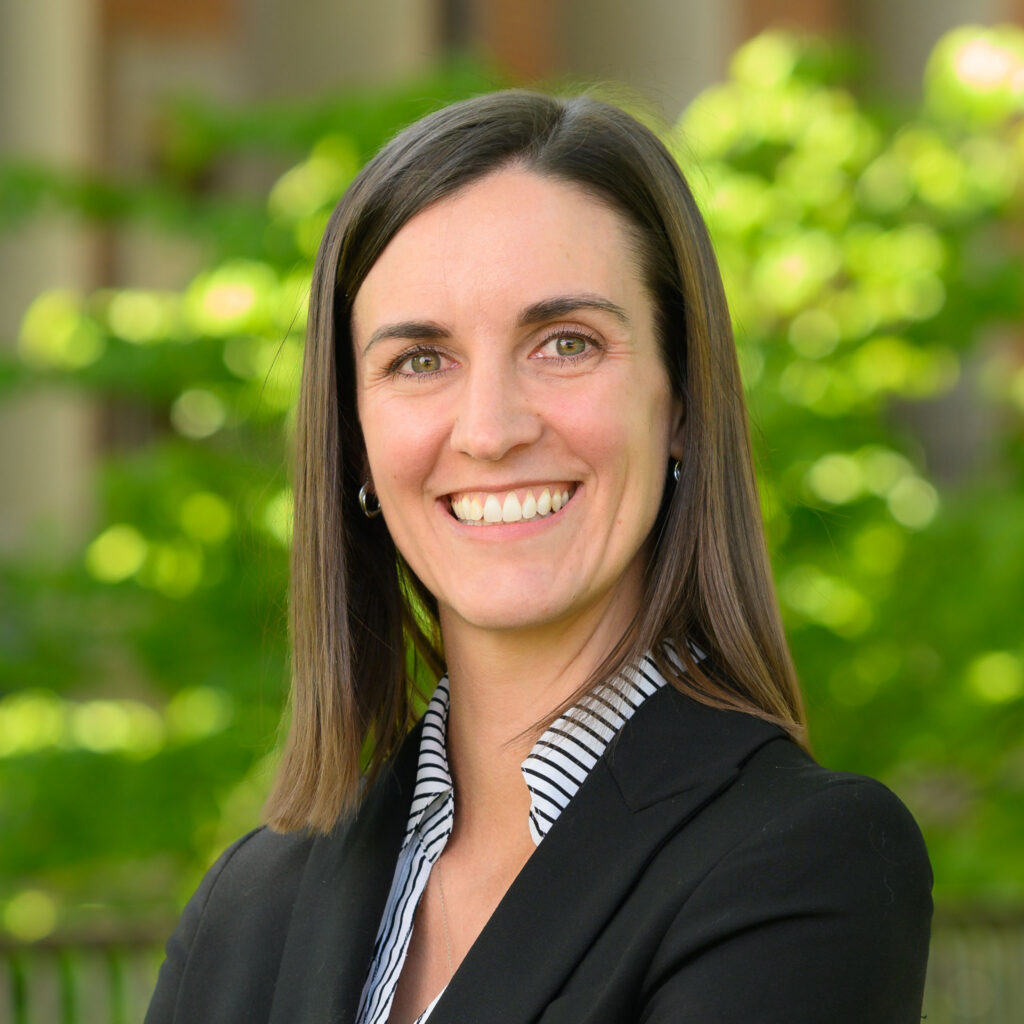
Submitted by Eva Murphy
As I reflect on my time as a postdoctoral fellow, I am deeply thankful for Staci Hepler’s mentorship. From our earliest conversations, she took my goals seriously and treated my professional development as something worth investing in. When I expressed a desire to strengthen my publication record and gain more experience as a researcher, she responded with concrete opportunities rather than general advice. She encouraged me to lead manuscripts, contribute substantively to collaborative work, and take responsibility for shaping research questions. Over time, I grew more confident in my ideas and more comfortable identifying as an independent scholar.
Her encouragement to expand my methodological range has been especially meaningful. She supported my pursuit of Bayesian modeling and broadened my collaborative network by introducing me to colleagues who shared similar interests and long-term visions for building research programs. Through these collaborations, as well as conversations about grant writing, I came to better understand how individual projects fit within sustained scholarly commitments.
What I appreciate most, though, is how thoughtfully our collaboration evolved. As my interests became more defined, she created space for me to articulate what I wanted to pursue next and trusted me to move in those directions. Her steady guidance during the academic job search further reinforced that trust. I entered that process knowing what to expect, how to present my work, and what to ask for, ultimately accepting a position aligned with my goals.
I am sincerely thankful for her mentorship and for the example she has set as a scholar and advisor. She has modeled the kind of mentor I aspire to be.
Whitney Huang

Submitted by Eva Murphy
As I prepare to begin my first faculty position, I find myself thinking often about how much of my development as a statistician traces back to Whitney Huang, my doctoral mentor. He guided me from my earliest steps in research through graduation, and his influence continues to shape how I approach my work.
From the beginning, he set high expectations. He pushed me to think more carefully, write more precisely, and attend closely to detail. As a novice researcher, I sometimes found that intensity overwhelming, yet he seemed to know when to step in and clarify a path forward and when to allow me to wrestle with uncertainty long enough to grow from it. That balance was formative. Under his mentorship, I completed work that was later recognized with a student paper award and two fellowships in my final year—milestones that reflected his steady guidance as much as my own effort.
He taught me far more than technical material, though he certainly did that, too. On his own time, he introduced me to extreme value theory and spatio-temporal modeling, topics not formally included in our curriculum but central to my research trajectory. He pushed me to write and review manuscripts, present at conferences, chair sessions, and navigate the process of applying for awards. Through introductions to senior colleagues, he expanded my professional network in ways that continue to matter.
One moment I will always remember is the period after my first manuscript rejection. I was exhausted and ready to move on; he was not. He encouraged me to revise the paper carefully and submit it again. I followed his advice, and the manuscript was ultimately accepted without revisions. That outcome would not have happened without his persistence and belief in the work.
Even after graduation, he remained invested in my progress in teaching, research, and the job search. He consistently offered perspective when moments felt discouraging and reminded me to be patient. His example continues to guide me, and I hope to offer my own students the same steady commitment.
David Kline
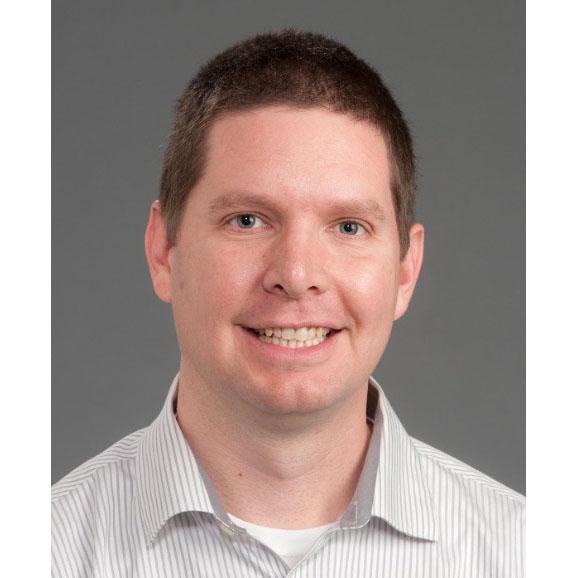
Submitted by Eva Murphy
David Kline was never my official mentor, but his impact on my development as a statistician and researcher over my three years as a postdoctoral fellow has been significant. Through collaboration, conversation, and thoughtful feedback, he shaped my thinking in ways that complemented and extended what I was learning through formal mentorship.
When I joined the team as a postdoctoral fellow, he welcomed me genuinely, treating me as a full contributor from day one rather than someone simply along for the ride. That early trust mattered. Over time, he provided opportunities that allowed me to grow into a more independent researcher. He connected me to a study examining pathways to long-acting injectable pre-exposure prophylaxis willingness among people who inject drugs in Appalachian Ohio by vouching for my work. Around the same period, he introduced me to a group of public health researchers with access to IQVIA prescription transaction data after hearing about my research interests. That introduction allowed me to pursue independent work combining environmental events and public health data, a direction I’ll continue in my faculty position.
Working alongside him, I also learned to pair methodological rigor with clear communication that resonates with public health researchers and other non-statistical audiences. That balance has become central to how I think about interdisciplinary work and is something I now carry into every collaboration.
David is the kind of colleague who makes others feel supported and capable. I am a stronger researcher and collaborator because of his generosity and trust.
Jennie Ma
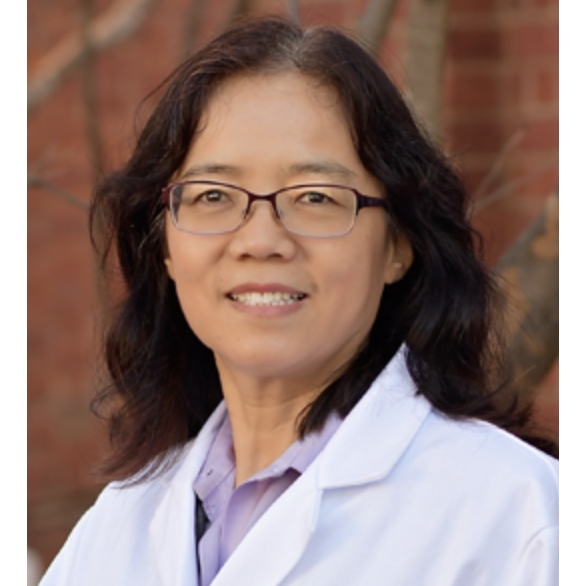
Submitted by Heather Cook
I am deeply grateful to my graduate mentor, Jennie Ma, whose guidance shaped both my career and my sense of purpose as a statistician. I worked with her for several years during graduate school through a research assistantship on a large longitudinal study of children’s health, and she served on my dissertation committee. From the beginning, she treated me as a developing scholar, gradually entrusting me with increasing responsibility in study design, data management, modeling, and interpretation. That trust was integral to building my confidence as a statistician. Together, the research group published multiple papers, and she consistently challenged me to think critically, rigorously, and ethically about every decision.
While I understood that statistics could have real impact, it was through one of our publications in PLOS Neglected Tropical Diseases that I truly felt that impact. Our findings demonstrated the profound influence of maternal health on children’s growth, and seeing our work contribute to important public health conversations was transformative. That experience solidified my commitment to applied research that meaningfully informs policy and practice.
Her mentorship did not end at graduation. In my current role as Assistant Professor of Statistics, she has continued to collaborate with me, including on another publication. Although her own role is research-focused, she modeled what a sustained, productive research career can look like and gave me the confidence to pursue my own balance between research and teaching. Her continued support, intellectual rigor, and belief in my potential have had a lasting influence on my career trajectory.
Jennifer Ann Morrow

Submitted by Richard Amoako
I am proud to nominate Jennifer Ann Morrow (Department of Education Leadership and Policy Studies, University of Tennessee, Knoxville) as the mentor who greatly influenced my journey in statistics. As a doctoral student facing the challenges of mixed-methods research, her strong dedication to my professional growth was essential. Her expertise in survey research and psychometric validation provided the critical guidance I needed to develop a reliable tool for assessing faculty AI readiness in higher education.
Beyond her technical expertise, Jennifer instilled in me a strong commitment to methodological precision. She encouraged me to think critically about every analytical choice, ensuring my work met the highest standards of empirical research. During moments of uncertainty, especially during exploratory factor analysis and validation, her patience and insightful feedback gave me the confidence to strive for scholarly excellence. She didn’t just offer advice; she invested in my growth as a researcher, inspiring me to see statistics not just as numbers, but as tools for meaningful human understanding.
Her mentorship went far beyond guiding my dissertation. She taught me how to combine rigorous quantitative analysis with compassionate qualitative inquiry skills that will shape my future in educational research and evaluation. Her belief in my potential often exceeded my own, pushing me to overcome seemingly impossible obstacles. Now, as I move from student to professional, I uphold the standards of integrity and accuracy she instilled in me. I am sincerely grateful for her unwavering support, which transformed my approach to research and strengthened my passion for improving educational and evaluation methods. Thank you, Jennifer Ann Morrow, for being the foundation of my statistical and doctoral journey.
The ASA GivesBack Leadership Team
Sunita Ghosh
Jamie Joseph
Karen Childers
Jamie Roberman
Caroline Birdrow
Hwasoo Shin
Thank you for sharing these tributes; they powerfully illustrate how mentorship—from technical training to personal encouragement—serves as the vital backbone of the statistical community.