
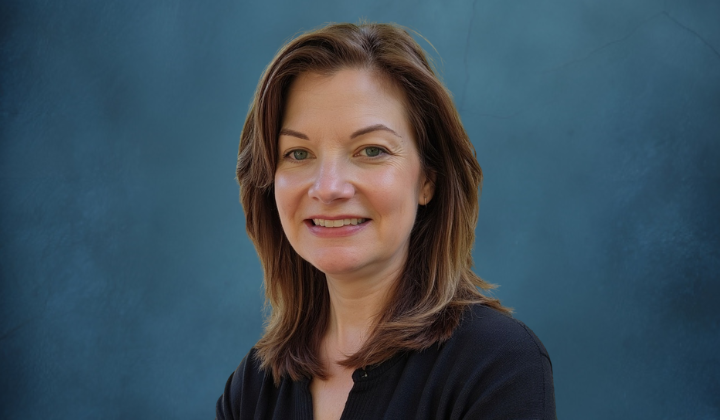
This month, we’re featuring Jennifer Park, a leader in statistical policy and data governance, working to strengthen the US federal statistical system through improved data access, transparency, and innovation. With a career spanning federal service, international collaboration, and research, she is driven by a commitment to building data systems that support evidence-based decision-making to serve the public good.
What is your current role or area of expertise in statistics and/or data science?
After 20 years of federal and international service, I currently consult in several capacities. As a senior adviser to America’s DataHub Consortium, I assist the federal statistical system in measuring the impact of the National Secure Data Service Demonstration Project. I also serve as secretariat for the ASA’s Federal Statistical System Modernization Project and as a study director at the Committee on National Statistics at the National Academies of Science, Engineering, and Medicine. My work focuses on strengthening the US federal statistical system by improving access to data for evidence-building, advancing shared data infrastructure, and reducing barriers to innovation.
What has been one of your biggest professional achievements?
I feel fortunate to have contributed to many elements of national and international statistical policy, along with so many dedicated colleagues in times of great change.
One of my most meaningful professional achievements has been contributing to the development and modernization of core US statistical policy frameworks. While serving in the Office of the US Chief Statistician, I authored Statistical Policy Directive No. 1, Fundamental Responsibilities of Federal Statistical Agencies. I also led several interagency teams charged with developing or revising other statistical policy directives and guidance, including Statistical Policy Directive No. 15, which provides minimum standards for federal collecting and reporting of race/ethnicity statistics and federal guidance on measurement of same-sex marriage, sexual orientation, and gender identity.
I also contributed to the development of Title III of the Foundations for Evidence-Based Policymaking Act of 2018, which established a modern framework for secure data access and evidence-building across the federal government.
In parallel, I initiated and advanced national reporting platforms for the Sustainable Development Goals—first in the US and now used by more than 20 countries—to communicate statistical progress toward global goals. Around that same time, I also worked on improving AI-assisted approaches, guided by human expertise, to translate and standardize metadata, improve data harmonization, improve accessibility, and reduce barriers for countries to participate in global statistical systems.
Also, deeply meaningful to me has been leading major consensus studies at the National Academies, including work on a 21st-century national data infrastructure and the 8th edition of Principles and Practices for a Federal Statistical Agency.
What career advice do you live by, and who gave it to you?
Throughout my career, I’ve embraced the idea of being “brave, not perfect”—to move forward thoughtfully even in uncertain environments. This is advice that I found myself giving to my daughter, and learned, as parents often do, that I should follow the same advice.
This perspective has been especially important in working at the intersection of statistics and data science, where innovation requires balancing uncertainty with rigor, transparency, and trust.
Other advice I think of often is from Stefan Schweinfest, former director, UN Statistical Division. He challenged me by advising, “It’s more important to be together than [absolutely] right.” That is hard for any expert to hear, but essential for a person working in policy. We achieve nothing alone. We must consider different perspectives.
What experiences and past roles have led you to where you are today?
My career spans federal service, international statistical leadership, and academic research. I have moved around a lot compared to some. I have followed ideas that give me energy. It was metadata standards before metadata became cool. It was generative AI tools before we called them that. Following the energy of ideas is exciting but can also be stressful. Always ask questions. Be prepared to fail and keep trying. Stay focused on the benefit.
What is the biggest career challenge you’ve had to overcome?
Without a doubt, adapting to changing priorities—understanding them and finding a way to meaningfully engage. Sometimes, priorities that change are external. I’ve worked across several administrations and federal and international agencies. And sometimes, those priorities are internal. I am a breast cancer and ovarian cancer survivor. Whatever the source of changing priorities, one needs to listen to them and understand them, and then find a way to address them while still being your authentic self. It takes equal parts humility and confidence.
Are you a member of an ASA chapter, section, or special interest group? Why did you decide to join, and what have you learned from your experiences?
Yes, I am a member of the Government Statistics Section and the Washington Statistical Society . I am an invited member of the Committee on Professional Ethics. I am also contributing to the ASA Federal Statistical System’s Modernization Project. For many years, I was not in a position to volunteer for the ASA. I am delighted to do so now.
What led to your participation with the Federal Statistical System’s Modernization Project, as well as your leadership in establishing the Katherine Wallman Award?
I heard about the modernization project from colleagues. Our federal statistical system faces a critical juncture—the opportunity to address long-held challenges and an openness for policy change necessary to do so. It is ambitious. But the time has come for boldness.
Katherine Wallman was my boss while I was at OMB [Office of Management and Budget]. She was a mentor to me while I worked at the UN and World Bank. She was a close friend as I managed career and life changes after my cancer diagnosis. She was tough. She was brave. And she was always a lady. We all need heroes in our lives to inspire us. Then, we can inspire others to thrive. I gathered other close friends of Katherine—Connie Citro, Hermann Habermann, and Brian Harris-Kojetin—to share that inspiration.
What is something you’d like people to know about you that we haven’t asked?
I am grateful to the ASA for supporting our professional community over the years. We thrive together. Now more than ever, the ASA provides ways—large and small—for us to be present for each other. Thank you for helping us build the connections and ideas that inspire us.
Leave a Reply