
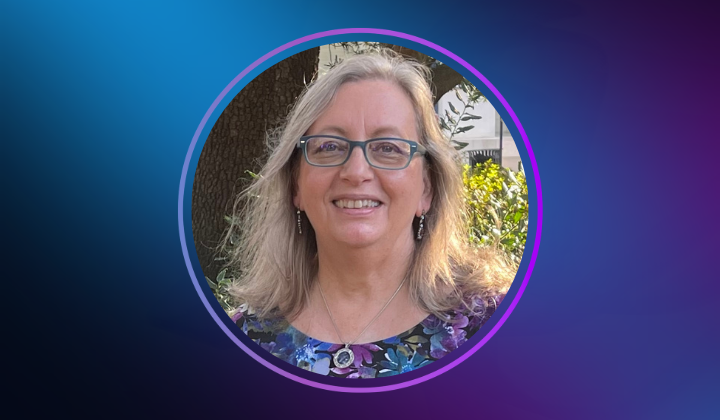
Karry Roberts is a Ford Motor Company retiree. She earned her master’s in applied statistics from Oakland University in Michigan and a bachelor’s in metallurgical engineering and German from the University of Wisconsin at Madison. She is also a Six Sigma Master Black Belt.
Currently, Roberts is chair of the Children’s Hospital of Michigan Governing Board, as well as co-chair of the Quality and Safety Committee. In 2012, she was invited to present at the first annual CHM Quality and Safety Conference. This motivated her to begin volunteering on process improvement work at CHM. She joined the Quality Assurance Committee in 2012 and the full board in 2017. She’s been chair since 2025.
An active board member of the Detroit Chapter of the ASA since 2003, she recently stepped down to encourage others to be officers. She primarily served as chapter secretary for the past 23 years but also served one term as chapter president. For 10 years, she has organized the chapter’s annual statistical awards judging team with the Detroit and Ann Arbor chapters for the Michigan Science and Engineering Fair, as well as regional science fairs in prior years.
We encouraged her to answer the following questions to share her expertise with ASA members:
What is your current role or area of expertise in statistics and/or data science?
I am a Ford Motor Company retiree, where I was a global manufacturing quality Six Sigma manager and technical leader in statistical engineering, applying statistical testing strategies to a wide variety of manufacturing processes. I have a master’s in applied statistics from Oakland University in Michigan. My undergraduate is a bachelor’s in metallurgical engineering and German from the University of Wisconsin at Madison. I also completed a one-year study abroad program at the University of Erlangen-Nuremberg in Germany. I am a Master Black Belt in Six Sigma.
I currently find it very rewarding to volunteer as the chair of the Children’s Hospital of Michigan Governing Board. Our board is a diverse group of people from the community, and we promote patient safety and performance improvement. I was initially invited to present at one of their hospital quality conferences about 15 years ago, then I became engaged with process improvement efforts and joined the board. While the medical field is very different from automotive, my process focus brings new perspectives in brainstorming discussions and recommendations to the leadership.
What has been one of your biggest professional achievements?
My appointment as a technical leader in statistical engineering at Ford Motor Company was clearly my biggest achievement. This role was a recognition for technical accomplishments in my field of expertise and was reviewed and approved of by company experts in the field. I combined my background in applied statistics and engineering, while working in advanced manufacturing, applying statistical methods to a wide variety of manufacturing technologies on multi-disciplinary teams. I primarily used measurement systems analysis, design of experiments, regression, and measures of association in what was an engineering “playground” of smaller-scale equipment. We gained great insights with our rigorous studies.
What career advice do you live by, and who gave it to you?
As career advice, I believe it is critical to always strive for improvements. Keep the mindset that “zero is possible!” This was given to me by a director I worked for at Ford. He remains a colleague and friend volunteering with Children’s Hospital, and he always advocates for the ultimate goal of zero concerns.
Additionally, something I’ve learned through my career, and advice I give to others, is to always document the starting point of your work. For example, document what people think the results will be. People will often claim afterward that they already knew those results and that early knowledge or assumptions are not always the final result. Prior documentation helps prove the experimentation was necessary. This is also important to show the magnitude of your improvements.
What experiences and past roles have led you to where you are today?
Teamwork and process improvement have always been vital components of my work. I also feel it is very important to volunteer and give back to my community.
There were many who influenced my career development and aspirations at Ford. In my earlier career days, my manager recognized my interest in experiment design from training programs and encouraged me to pursue my applied statistics degree. Later, though I officially worked in the quality organization, a vice president more-or-less “adopted” me into his organization as an advanced manufacturing expert in statistical work.
As Six Sigma methodology was rolled out at Ford, I became one of the first Master Black Belts. I combined my applied statistics expertise with the more general teaching of Six Sigma. This gave me much wider reach in statistical applications for global manufacturing. It was amazing to work with the global team.
Now in retirement, I can dedicate more time to volunteering with the hospital board and share my expertise in problem solving.
What is the biggest career challenge you’ve had to overcome?
As a female manufacturing engineer in the 1980s, my biggest challenge was to prove I could do the job! It took time and perseverance to change the mindset of my workforce from challenging my every step to begging me to stay when a promotion came along. Initially, the managers curiously trained me on every piece of equipment more than my male engineering counterparts, likely out of doubt or fear, but gained faith as I successfully demonstrated I was up to the challenge. My dad, who had been a union committeeman in another industry, gave me great negotiating advice. Even when tested, I held my head high and treated others with respect as team members.
You served as the ASA Detroit Chapter secretary. Do you recommend others volunteer for leadership positions in ASA chapters? How did the experience shape you professionally or personally?
Involvement with ASA chapter leadership has been a great opportunity to make connections and learn from others throughout the community in areas of academia, medicine, and industry. This involvement helps me think more broadly and have people to discuss academic ideas with. I have been active with the Detroit Chapter ongoing since 2003. This year, I stepped down and encouraged others to be officers. I primarily served as chapter secretary through the past 23 years, in addition to one term as chapter president. I have organized our annual statistical awards judging team with the Detroit and Ann Arbor chapters for the Michigan Science and Engineering Fair for 10 years, as well as regional science fairs in prior years.
I strongly recommend involvement with professional societies for networking opportunities and intellectual growth across disciplines.
What is something you’d like people to know about you that we haven’t asked?
I believe it is essential to combine various academic fields and to have practical experience. In my career, having both statistical and engineering experience, plus working on so many different applications helped me understand how to approach testing and interpret results. My experiences traveling and learning other languages and cultures have also expanded my perspective of the world. I truly believe this is a great way to broaden your horizons both personally and professionally.
Congratulations on your accomplishment Ms. Roberts. It is great to hear of your work for the statistical community and your career advancement in the automotive industry. Exemplary career Kerry!
That’s great 👍 miss karry Roberts