
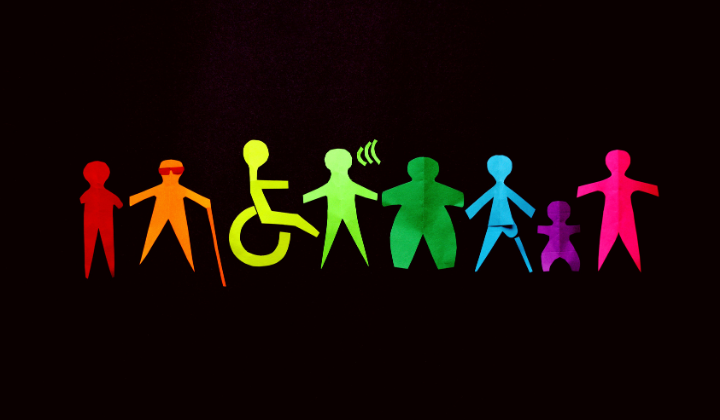
The disability community is one of the largest and most diverse communities in the world. One in six of the global population currently experiences significant disability. This number may be higher when considering disabilities in developed countries have relatively more comprehensive disability data collection. What’s more, almost all of us will experience disability—either directly or indirectly—through family and friends at some point in our lives. Yet disability often remains underrepresented in the data that informs research, public policy, and organizational decision-making. When disability is not measured, it becomes difficult to understand the barriers people face, evaluate whether interventions are effective, or advocate for meaningful change.
For statisticians, disability data presents an opportunity to improve both the quality of evidence and the inclusiveness of the conclusions drawn from it. Collecting and maintaining disability data is fundamental to ensuring disabled people are visible in the evidence used to shape society.
Why Collect Disability Data?
A more inclusive society benefits everyone. Step-free access, for example, assists not only wheelchair users or those with reduced mobility, but also a parent pushing a stroller or a traveler rolling luggage. Building accessible environments, however, requires evidence.
The phrase “no data, no visibility” captures an important reality. When disability is absent from datasets, disabled people effectively disappear from analyses. This introduces selection bias, limits the generalizability of research findings, and risks designing policies and services that work well only for those who are represented. Collecting disability data makes it possible to identify disparities, understand unmet needs, and ensure statistical evidence reflects the diversity of the population.
Disability data also provides a foundation for accountability. Governments, organizations, researchers, and service providers all rely on data to monitor progress toward accessibility and inclusion goals. Without appropriate data, it is difficult to determine whether interventions are improving outcomes or whether persistent inequities remain. Good data enables evidence-based advocacy by replacing anecdotes with measurable patterns and trends.
What Disability Data Should We Collect?
Collecting disability data is more than recording whether someone identifies as disabled. The experiences of those living with disabilities are highly variable, and the data we collect should reflect this reality as much as possible.
First, longitudinal data is essential. Disability can change over time as health, environments, and support needs evolve. Following individuals (or populations) over time allows researchers to understand trends and evaluate interventions.
Second, disability should not be studied in isolation. Experiences are shaped by the interaction of disability with age, sex and gender, race and ethnicity, socioeconomic status, geography, and many other characteristics. Considering these intersections provides a more accurate picture of inequities than examining disability alone.
Third, both quantitative and qualitative data have important roles. Quantitative data can measure outcomes, quantify disparities, track progress over time, and evaluate the effectiveness of interventions. Qualitative data complements these measurements by providing context and capturing experiences that numerical summaries alone cannot. Together, they produce stronger evidence.
Finally, disability data should be collected with action in mind. Data should inform resource allocation, guide service delivery, support scientific research, and help organizations proactively identify barriers before they become major obstacles.
How Can We Collect Better Disability Data?
Improving disability data should be guided by community ownership and self-determination (a principle sometimes described as “nothing about us without us”). Disabled people should not simply be subjects of data collection—they should help determine what information is collected and how it is collected, interpreted, and used. Their lived experience provides expertise and insight that strengthens every stage of this process.
Statisticians also have an important role. Through careful study design and methodological developments, we can help address challenges such as missing data, measurement error, and bias that disproportionately affect disability research. Thoughtful analysis and transparent reporting improve the validity and credibility of disability statistics.
Survey design deserves particular attention. Development and use of standardized definitions in disability datasets improve comparability across studies, while disability-conscious questionnaires reduce unnecessary barriers to participation. Statisticians must also recognize the heterogeneity of disability. Ensuring adequate representation in official statistics is equally important if disability is to be visible in national evidence.
Finally, successful data collection depends on trust. Participants need to understand why disability information is being collected, how it will be protected, and how it will ultimately benefit the community. Data collection also needs to be accessible, including multiple modes of participation and accessible survey materials.
Much of this will require official statistics agencies to modify existing or create new surveys. For example, the Current Population Survey collects data about five types of disability. One possibility is to expand the data collected along the lines of more inclusive definitions used in the October 2024 CPS Supplement.
When disability communities have the opportunity to collect, maintain, and shape data that describes their lives, they gain not only visibility, but also the evidence needed to advocate for change. For statisticians, supporting these efforts is an opportunity to strengthen both the data quality and inclusiveness of the society that data is intended to serve.

Michael Wallace

Shiya Cao
Photo Credit: Jim Gipe / Piovt Media
Leave a Reply