
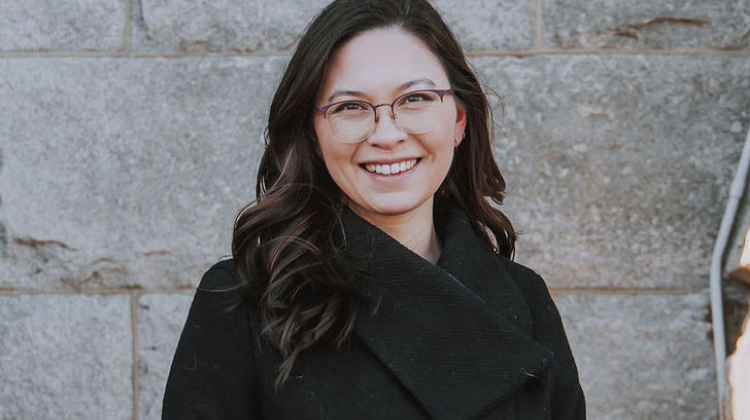
Lauren Chan, a postdoctoral scholar at The University of Chicago, was one of this year’s Mass Media Fellows at the American Association for the Advancement of Science. Over 10 weeks this past summer, she collaborated with journalists, appeared on the radio, and contributed to news organizations, sharing her expertise in nutrition informatics, dietetics, and healthcare technology.
As a registered dietitian, Chan loves sharing knowledge about everything from the foods we eat to how our bodies metabolize them. In 2018, she created the award-winning Dietitians in Nutrition Support YouTube channel, where she reaches thousands of viewers every year with dietetics education.
We wanted to get to know her better, so we asked her the following questions:
You came into the fellowship with a strong background in science communication, but what was it like to suddenly be working as a journalist at STAT?
While this summer was my first time working in a newsroom, some parts of the work felt very similar to what I do as a scientist. Oftentimes, people describe science and research as being a detective, finding sources, generating data, and trying to connect the dots to discover new information. Similarly, journalism is a detective job, where you are finding the information and context of a story for your readers.
The biggest difference, I felt, when I came to STAT was the pace. Compared to academia, where it can take months to write a paper, newsrooms are putting out stories every day. It is a very specific skill set—writing at such a fast pace while interviewing, fact checking, and ensuring your story will be interesting to the audience. Working on a deadline can be stressful, but it also makes for exciting work, where you learn about many different topics in a short period of time.
During your time writing for STAT, you said you learned how to “find and craft a great story that advances evidence-based science.” What makes a good science story?
Great science stories are ones that move people to action. Science is everywhere, and while some people (like I) think about it constantly, others don’t always see how science impacts them on a daily basis.
This summer, I was focused on finding stories based in science that had relevant, meaningful implications for readers. I’m a strong believer that science shouldn’t be gatekept, so when a complex and important finding needs to be reported, it’s critical to help the audience understand why they should care and how the knowledge can be used to impact their lives.
What do you think scientists and statisticians misunderstand about journalists—and what do journalists sometimes misunderstand about scientists?
It’s important to remember that scientists and journalists often share the same goal of highlighting exciting research that will have a positive impact on the audience.
Some scientists worry about journalists not fully understanding their research, which can mean it does not get reported accurately. As a scientist, being able to clearly articulate why someone in the general public should care about your work helps the journalist understand and translate that information to the reader. Journalists are also looking for meaningful quotes from researchers that add emotion or feeling to the findings to create the human connection in a story.
For journalists, it’s helpful to remember that not all scientists are media savvy, and those who are can sometimes end up becoming overrepresented voices. Integrating into science communities and regularly interviewing new sources—even in fields where you already have many contacts—can uncover fresh viewpoints and experiences, helping ensure science is represented more broadly.
Has the fellowship changed what you see yourself doing after your postdoc? If so, how?
Communication and writing have always been my favorite parts of science and research. After learning another style of writing and reporting this summer, I am eager as ever to pursue future roles where I can continue engaging with experts, advocates, and the public about news in science and health. This fellowship opportunity expanded my skills to be a more impactful writer with a greater focus on the public audience, while still robustly describing the science. I hope these skills will serve me well in my current and future science communication work.
You mentioned you’d like to continue freelance science writing. What are two or three stories you would like to tell?
My prior research, and some of my summer reporting, focused on how technology has impacted the healthcare industry. I would love to continue reporting on how AI tools—especially ambient AI scribes—impact patient trust in healthcare providers, insurance costs, and healthcare utilization by patients.
As a dietitian and nutrition researcher, I am closely following policy changes and trends in the nutrition space. I am eager to watch and report on the progression of policies like the Medical Nutrition Therapy Act. If passed, it could significantly expand access to nutrition services in the US for those on Medicare and Medicaid.
What advice would you give a statistician or scientist interested in science communication but isn’t sure how to get started?
Starting in any new field can feel intimidating, but as scientists and statisticians, we are trained to learn new things all the time! First, consider who your audience is and what stories they would find interesting. Do they want daily news, summaries of trends across years of data, information about new technology? Do they prefer written, video, or other formats of content? Next, figure out which stories your audience needs to hear right now. Not a year ago and not in the future, but right now. Once you know who you are writing for and what your target audience wants to see, you may have a great idea (or a few) for a story. Even if you aren’t sure what the exact story is, reporting (also known as doing research) will help you fill in the blanks as you ask questions, read, and interview experts. Then, all that’s left to do is start writing! Scientists and statisticians, who are experts in research, have every skill they need to be successful at science communication. It’s just using those skills in a new way.
You were sponsored by the ASA, and statistics is an important part of the scientific stories you encounter. What role do you think statisticians can play in communicating science to the public?
Statisticians are so critical to science, especially given their strong understanding of the value and impact research findings actually have. I would encourage statisticians working on scientific research to think about how their specialized knowledge can be important for the general public that reads science media. For example, the idea of “significance” is discussed frequently in research, but the general audience may not understand the statistical meaning of the word. Whether speaking directly to the public or by sharing their knowledge with journalists or other news media, statisticians can translate what the significance of a finding actually means in the context of a field. This is essential for helping readers understand the finding and make informed decisions about whether to consider it in their decision-making.
What is something you now know about being a journalist that you wish you’d known before you started the fellowship?
One lesson I wish I’d known ahead of time was how journalists need to be fearless in their pursuit of information. That means asking hard questions, speaking to very important people, or cold calling until you get someone on the phone. Creating a network of sources and experts is not an easy task, but it is essential to successful reporting and getting the information you need. Also, sometimes a story may upset people who don’t share the same perspectives. Telling a representative and honest story that includes viewpoints from parties with differing opinions is a balancing act that can step on people’s toes. There’s no way around it, and that’s ok.
Tell us something surprising about yourself.
Once I finish writing these questions, I’m about to bottle feed some four-week-old kittens. For the last five-plus years, I’ve fostered cats and kittens in the Chicago area, which includes everything from tiny bottle babies to super senior cats. I have rescued almost 300 cats since I started fostering and love to talk about animal welfare!
Leave a Reply