

In honor of Women’s History Month, we are once again celebrating ASA women who work in statistics and data science. These 11 accomplished women were chosen because they are leaders and mentors to many in their field.
Cover Story
Celebrating Black History Month 2024
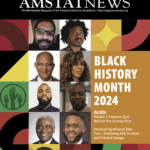
In celebration of Black History Month, we recognize eight individuals from the Black/African American collective who have made contributions to the statistics field as mentors, professors, and entrepreneurs.
Committee Collaboration Yields Editors’ Choice Collection

The ASA Committee on Membership Retention and Recruitment recently collaborated with the ASA Committee on Publications and ASA staff to promote the ASA’s journals and recognize the authors of excellent papers. Take a look at the papers they chose.
Data Analytics, Data Science Degrees See Large Increases in 2022
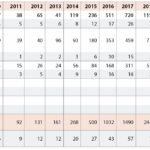
This fall’s release of the 2022 degree completion data from the National Center for Education Statistics is marked by the large increases in the undergraduate and master’s degrees awarded in the recently introduced categories for data analytics and data science. The number of bachelor’s degrees in data science, for example, jumped to 897 in 2022, from 165 in 2021 and 84 in 2020. For bachelor’s degrees in data analytics, the 2020, 2021, and 2022 numbers are 325, 455, and 767, respectively.
A Roadmap for ASA Chapter Rejuvenation
Does your chapter need a boost? This article provides guidance the authors hope will help you attain the status of a healthy ASA chapter.
Building a Stronger Community at JSM 2023

The 2023 Joint Statistical Meetings—held in Toronto, Ontario, August 5–10—attracted more than 6,000 participants from academia, industry, and government and served as a platform for intellectual exchange, business discussion, friendship building, and networking.
Judea Pearl, AI, and Causality: What Role Do Statisticians Play?

In the first half of 2023, the machine learning programs ChatGPT and GPT-4 changed the landscape of artificial intelligence research seemingly overnight. Judea Pearl’s research bridges the subjects of statistics and artificial intelligence and highlights the importance of causality in both settings. Dana Mackenzie, Pearl’s co-author for The Book of Why, interviews him here to get his take on recent developments. When they wrote their book in 2018, Pearl contended machine learning had not yet moved past the first rung of the “ladder of causation.” Computers could not correctly answer queries about interventions and still less about counterfactual scenarios. Has his assessment changed?
ASA 2023 Data Visualization Poster & Project Statistics Competition Winners
First-place winners received $300, a certificate, and grade-appropriate graphing calculators provided by Texas Instruments. Second-place winners received $200 and a certificate, third-place winners received $100 and a certificate, and honorable mentions received certificates.
Ji-Hyun Lee Elected 2025 ASA President and Susan Paddock Elected Vice President
The ASA recently announced the election of Ji-Hyun Lee as its 120th president. Her term begins January 1, 2025, with a one-year term as president-elect beginning January 1, 2024.
As ASA president, Lee will focus on increasing the statistical community’s visibility and impact, enhancing opportunities to support the evolving needs of the statistical profession, and diversifying membership. Her priority will be to build strong bridges—both within and outside the ASA community—to strengthen the association and seize opportunities in this data-driven era. She noted, “Collaboration with others has always been the most fulfilling aspect of my career and personal life.”
FY23 Budgets, FY24 Budget Request Show Strong Support for Research, Statistical Agencies

The December deal to fund the US government for the current fiscal year included an increase of 14% for the National Science Foundation and 6% for the National Institutes of Health, along with double-digit percent increases for several statistical agencies. Released in March, the president’s requested budget for fiscal year 2024 (FY24) also has favorable increases for the agencies but will face the new Republican majority in the US House of Representatives, where there is a desire to reduce federal government spending to FY22 levels.