

Hartley is an example of how discipline, hard work, and both a bit of genius and risk-taking can lead to a life that is admired and envied.
Statisticians in History
George Snedecor

Snedecor’s commitment to research helped establish the Mathematics Statistical Service in the Department of Mathematics. This service eventually became the Statistical Laboratory.
C. R. Rao

Rao has done much to advance knowledge in theory and practice of statistical inference. His book, Linear Statistical Inference and Its Applications, has been cited nearly 17,000 times.
Mario Marazzi

Mario Marazzi was born in Puerto Rico, where he observed early on the difficulties that arise with unreliable official statistics. He is the first Puerto Rican elected member of the International Statistical Institute and serves on the Census Scientific Advisory Committee.
Elizabeth L. Scott
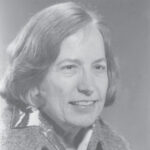
In the 1960s and 70s, Scott raised funds for civil rights efforts and used her statistical skills to document gender discrimination in higher education.
Samuel S. Wilks
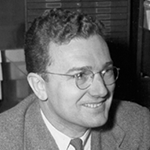
During World War II, Wilks help was constantly sought by Army and Navy officers, and by other scientists working on weapon design and use for the military services.
Jack Chao-Sheng Lee

Chao-sheng Lee can be described as one of the most outstanding people in Taiwan’s present statistical community. His 40-year career of teaching and research has resulted in nearly 100 academic papers in well-known international periodicals. The National Chiao Tung University (NCTU) Graduate Institute of Statistics, where Lee established himself when he returned from the United […]
George Cobb

An inspiring innovator, George Cobb changed the face of statistics education. He gave this modest branch of our profession a level of respect it had not had before but continues to enjoy.
Wray Jackson Smith
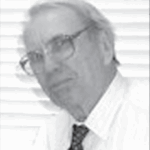
Wray Jackson Smith activated the first Job
Corps training centers and was responsible
for the planning, programming, and budgeting of major operational programs.
Dorothy P. Rice

Dorothy P. Rice was the keeper of the nation’s health statistics and helped create the national death index.