
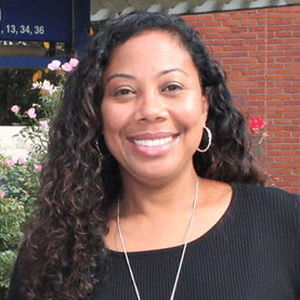
Affiliation: Research Professor; Director of the Biostatistics Scientific Collaboration Center; and Director of Diversity, Equity, and Inclusion, Department of Epidemiology and Biostatistics, Drexel University
Education: BS, Mathematics, Bennett College
MS, Biostatistics, Emory University
PhD, Biostatistics, Emory University
I grew up in Voorhees, New Jersey, a suburb of Philadelphia, and then attended Bennett College in Greensboro, North Carolina—a small, historically Black, women’s college. The only thing I knew I loved was teaching, and I declared three majors: mathematics; secondary mathematics education; and psychology.
Each summer, I participated in an internship or research experience. In fact, the Harvard Summer Program in Biostatistics and United Negro College Fund Mellon Mays Undergraduate Fellowship (MMUF) Program set me on the path to becoming a faculty biostatistician. Prior to the Harvard Summer Program, I knew I wanted to teach mathematics, but I did not know in which area.
The idea of using my quantitative background to help answer public health and medical problems in a multidisciplinary team was fascinating to me. Instantly, I was hooked on biostatistics. The MMUF program confirmed for me I wanted a career in academia that included teaching. From these undergraduate experiences, I went on to earn my PhD in biostatistics from Emory University.
I am fortunate to have a career doing what I love. Research-wise, my career has focused on collaborating closely with clinicians, public health practitioners, and scientists to improve public health and eliminate health disparities. I relish teaching, mentoring, recruiting, and retaining the next generation of diverse data and statistical scientists. I am passionate about helping facilitate equitable, inclusive learning and working environments. I am privileged to have the opportunity to lead biostatistics collaboration centers, which provide a platform to combine my interests.
Notably, collaboration centers can train both quantitative and nonquantitative researchers. In these collaborations, we statisticians contribute not only our technical skills but also uphold rigor and reproducibility. We are contributing to study design and refining research aims. We are integral to study progress and operations, including protecting the safety of participants. We also are key to translation and dissemination of study results.
What an honor it is to be in this field. My proudest moments are watching my mentees blossom, contributing to the work of the ASA Committee on Minorities in Statistics and ENAR’s Fostering Diversity in Biostatistics Workshop Committee, and serving on the Data Safety and Monitoring Board for the US government-supported COVID-19 vaccine trials.
Leave a Reply