
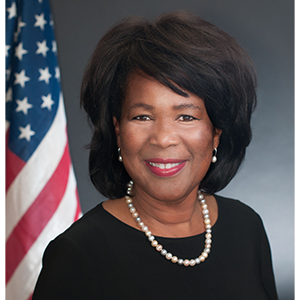
 Commissioner, National Center for Education Statistics
Peggy Carr’s family moved to Cleveland, Ohio, in the 1950s—during The Great Migration—and that is where Carr was born and attended grade school. However, high unemployment forced the Carr family to return to North Carolina during the height of the civil rights movement. There, Carr’s parents realized a good education was the way out, which led to one of the most pivotal milestones in Carr’s educational career: She and her siblings were among the first African American students to integrate K–12 schools in eastern North Carolina. That was before the widespread implementation of forced integration of public schools in the South.
This challenging period of community growth, identity, and self-reflection inspired Carr’s intense interest in equity in education. She began to excel in mathematics and science and had a powerful sense of competitiveness and dedication to academic excellence. Her matriculation at two historically Black universities—North Carolina Central and Howard—were also formative experiences in Carr’s educational and professional trajectory. Being trained in these predominately minority institutions in the 1970s allowed her to deepen her interest and skill sets in the social sciences with a focus on statistics and research methodology without being impeded by the chaotic racial and social unrest around her.
Carr was the first in her family to earn a PhD, the first person of color to hold an executive management position at the National Center for Education Statistics, and among the first persons of color to be accepted as part of the Federal Senior Executive Service at the US Department of Education. In 2021–2022, she received the American Educational Research Association’s Distinguished Public Service Award and was honored to be appointed to the position of commissioner for the National Center for Education Statistics—one of only 13 federally recognized statistical agencies in the country.
Leave a Reply