
Pierre-Philippe Dechant, Rukia Nuermaimaiti, Inger Fabris-Rotelli, Justine Nasejje, Najmeh Nakhaeirad, Raeesa Docrat, and Anna Kaduma Gumbie
Pierre-Philippe Dechant shares the story behind International DataFest—how it came to be and the lessons learned from organizing it. To complement his perspective, we also feature two Q&As with international organizers: Anna Kaduma Gumbie of the University of the Witwatersrand and University of Pretoria and Rukia Nuermaimaiti of the University of Leeds.
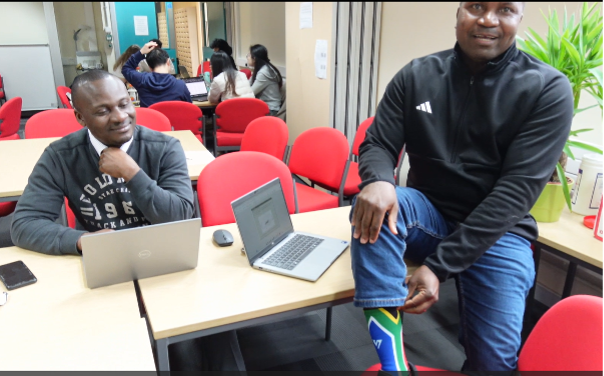
How did the global collaboration to run DataFest come about?
We had various connections across institutions and research and student education that grew slowly over the years. Connecting the following dots essentially allowed us to team up to deliver the first DataFests in South Africa and England:
- About three years ago, Justine Nasejje at Wits instigated a joint research grant with Dechant at Leeds, which laid the foundations for more collaborative international work.
- Two years ago, Leeds and Pretoria developed a strategic institutional partnership, so Dechant was part of a delegation traveling to Pretoria to talk about data science. Nasejje and Dechant were trying to meet up then but Nasejje was at Wits and not Pretoria after all.
- But Wits and Pretoria have local links, so Nasejje connected Najmeh Nakhaeirad from Pretoria with Dechant. They then secured an International Strategy Fund grant to collaborate on data science education around sustainability, jointly attending CompEd in Botswana in October 2025, just up the road from Wits and Pretoria.
- With this tripartite link established and a focus on student education and research, they connected with other colleagues at the three institutions: Gumbie, Nuermaimaiti, Inger Fabris-Rotelli, and Raeesa Docrat.
- Nuermaimaiti from Leeds had heard from the Edinburgh organizers about DataFest and was keen to bring it to England. Her vision and enthusiasm pulled everyone along.
- In October 2024, Nuermaimaiti, Nakhaeirad, Nasejje, Dechant, and other collaborators ran student collaborative design workshops across Leeds, Wits, Pretoria, and Southwest Jiaotong University: collaborative online international learning, known as COIL. Students from data science–adjacent disciplines formulated a local sustainability challenge and collaborated on ideas for solving these with data science methods.
- Nasejje, Dechant, collaborators, and students submitted a joint research article on data science, health, and sustainability.
- A donation from David Fine created opportunities for international, interdisciplinary collaboration between Leeds and Wits. In January 2025, Nasejje traveled to Leeds, meeting Nuermaimaiti and Dechant and sparking ideas for data science research projects. Nuermaimaiti, Nasejje, Dechant, and collaborators were successful in getting a pump-priming and then a large grant on student education, data science, community engagement, and sustainability in June 2025.
The lessons learned from this? You cannot plan everything, but unexpected opportunities might come your way. Try to be open to these and agile, rather than precisely mapping out what is beyond your control. If you try to connect dots at each step, the network and impact grow and aims align, unlocking synergies between them. We often think we are too time poor to collaborate, but the gains are probably worth the effort in terms of time savings and increased opportunities.
Often there is a divide between research and student education. Using both in tandem, as appropriate, allowed the team to make big strides. And despite the large distance and different contexts, the team realized you can learn a lot from each other and might actually be doing similar things in different global and local contexts.
Global collaboration opportunities between universities are valuable. Universities are a globally networked superpower, with profound local links into communities and global links to each other. And a student education focus has such a huge reach. Your impact is literally through whole generations of students. What can be more satisfying than helping students develop their skills, collaborate, communicate, and connect globally?
What were the timelines, and what happened after Datafest?
The ongoing and practical ASA DataFest activities led to the following more sustained collaboration between the three institutions:
- November – February: Peer collaboration and mentoring on how to run the hackathon; sharing insights and experiences across Wits, Pretoria, and Leeds
- March 21–23: Leeds DataFest
- May 2–4: Pretoria and Wits run a joint South Africa DataFest.
- May 6–30: Several South African colleagues visit Leeds, funded by Horizon Platform and the International Strategy Fund.
- May 7: Wits colleague talks about decolonization, sustainability, and community engagement, particularly data science education and hack/maker spaces.
- May 8: COIL-Ed spring conference and workshop, an educator-facing COIL conference building on the October student-facing workshops. Nuermaimaiti, Nakhaeirad, and student attendees present on the Leeds-Pretoria-Wits DataFest experience, while other colleagues and student attendees present on the October COIL workshops as part of an international set of conference presentations including COIL work from Singapore, China, UK, and Ukraine.
- May 8: Inger Fabris-Rotelli and Nakhaeirad give a double statistics seminar in the school of mathematics; discussions about the possibility of joint supervision of PhD/MSc students
- June 23–26: Nuermaimaiti presents on the DataFest experience at the UKCOTS student education conference.
- October 2025: Nakhaeirad, Nasejje, Dechant, and collaborators attend CompEd data science education conference in Gaborone, Botswana, and lead a working group there
For 2026, the team hopes to offer DataFests again and pass the organization of the Leeds DataFest to the next generation of student education colleagues. They also hope to iterate and expand to Imperial College London, maybe even Singapore, and increase numbers overall. The team would like to increase opportunities for students to interact internationally, either through a synchronous approach across all three institutions or a meaningful asynchronous way to connect outside of the DataFest weekend. The team is planning to have joint student education conferences (e.g., COIL-Ed) that give colleagues and students opportunities to share collaborative international experiences, active/experiential learning, or both.
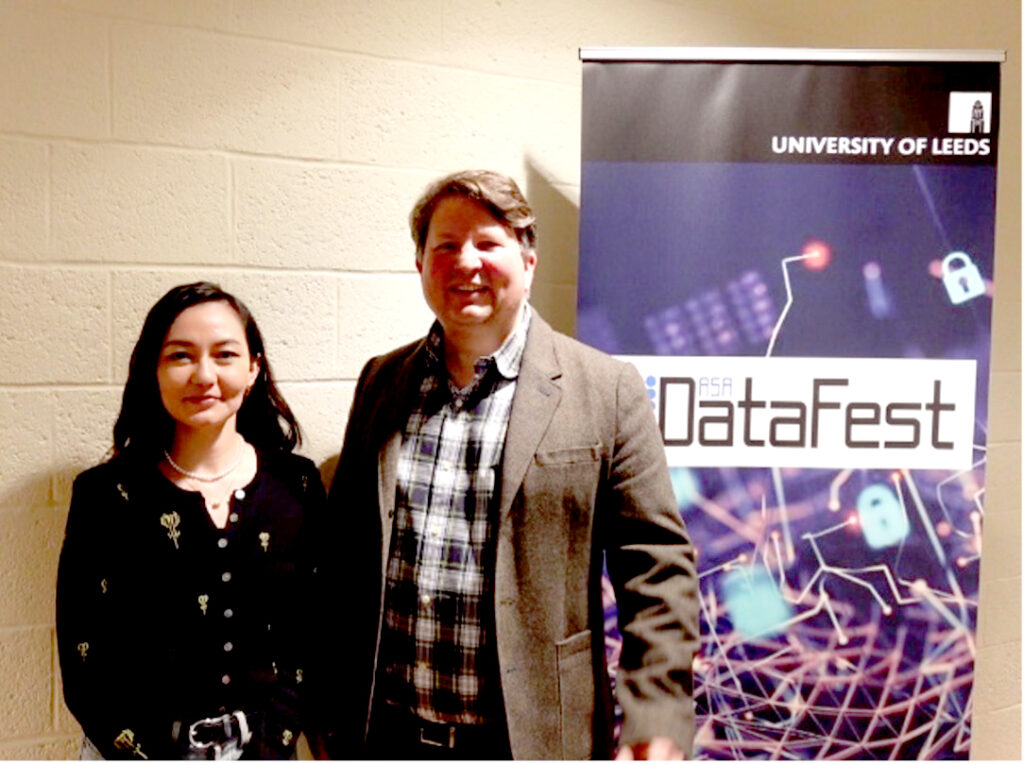
What were the international links for staff and students?
Driven by Nuermaimaiti’s enthusiasm for DataFest, the team met online as an international team 8–10 times. They learned from each other about the DataFest format, the requirements for ASA membership and receiving the data set, convening an industry panel, raising funds in both South Africa and Leeds, and prizes and certificates.
For the students, there was no direct contact due to time constraints. However, in terms of framing the event, the students were made aware that they were part of a global wave of DataFest hackathons in general and Leeds, Wits, and Pretoria in particular. At Leeds, the team recorded footage and greetings from the Leeds students in late March that they turned into a video for the South African DataFest participants in early May. The South African participants then recorded greetings the team could share on the Leeds DataFest teams space and at the COIL-Ed spring conference.
In the Leeds feedback questionnaire, 11 of 12 respondents reported they liked being part of a global wave of DataFest hackathons and having the link with South Africa. Nine of 12 participants answered the question, “How important do you think it is to include an international or cross-cultural dimension in hackathons like this?” with either “very important” or “somewhat important,” with another two neutral and one responding “not very important.” Generally, within Leeds, the groups were highly diverse as to disciplines, years of studies, and international background. A common theme from participants was how enriching it was to work in diverse teams, that everybody had something to contribute, that they learned from each other, and that it allowed them to play to their strengths. The industry panel was also diverse and highly international with members hailing from Nigeria, the Democratic Republic of Congo, and the Philippines.
Lessons Learned
The team members learned how similar, despite the different national contexts, their institutions and interactions with students and the local community are, along with how beneficial it is to share experiences and resources.
They originally looked into the possibility of doing a joint hackathon between all three institutions, but soon realized the different times in the northern and southern hemispheres, holidays, and teaching and assessment schedules weren’t going to allow it.
One lesson the team learned is to keep it simple. Where there are low-hanging fruit in terms of synergies, go for it. However, most people are time poor, so doing something practical that works simply is key. The team aligned itself with the following approach: try something simple; prototype/pilot; get feedback; expand; revise; iterate.
DataFest is an experiential learning opportunity for students, as well as a learning opportunity for educators and a vehicle for expanding collaborations and fostering community. It was key for the team’s evolving collaborations, straddling student education and research, data science, experiential learning, and sustainability.
INTERNATIONAL ORGANIZER PERSPECTIVE
Rukia Nuermaimaiti, University of Leeds
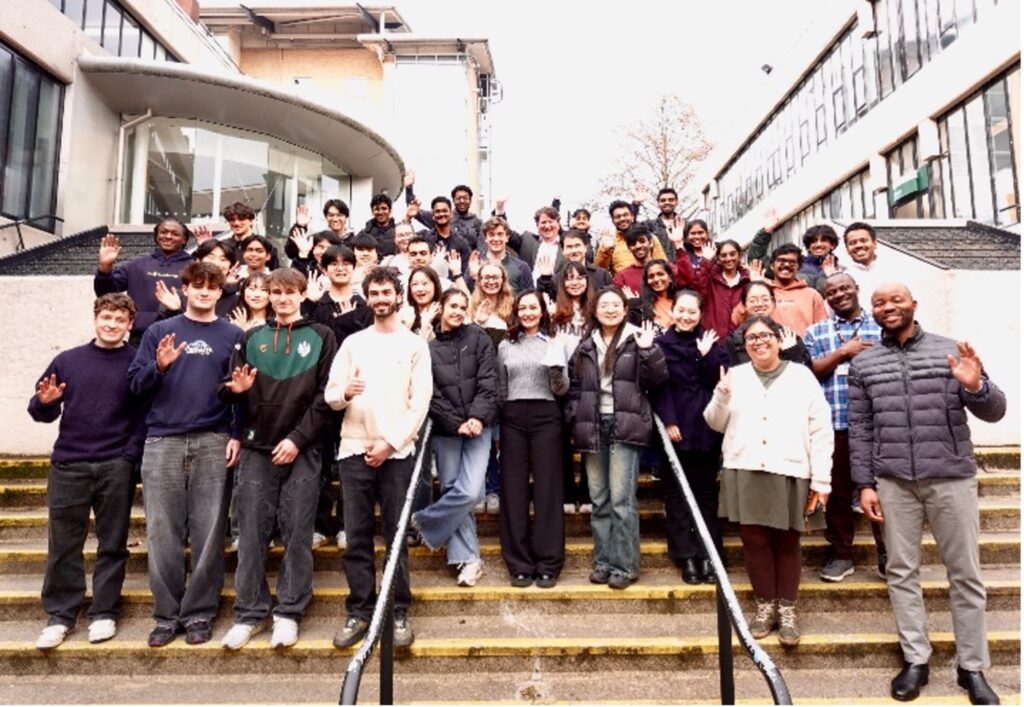
Why did you choose to host DataFest at your institution?
We chose to host the ASA DataFest data science hackathon to bring this dynamic, collaborative event to England and offer our students an invaluable opportunity to engage with real-world data challenges. In recent years, the importance of data literacy, collaboration, communication, and interdisciplinary analytical thinking has grown across nearly every field. Hosting DataFest aligned perfectly with our institutional goals to foster these skills among students, not only in STEM disciplines but across the wider academic community.
By organizing this event, we aimed to bridge the gap between theoretical coursework and practical, industry-oriented experience. Our goal was to give students a platform to test their skills, work with messy, real-life data, form insights, and communicate those insights clearly mirroring what data scientists do in practice. DataFest also enabled us to connect students with industry professionals and academic mentors in a setting that promotes creativity, innovation, and collaboration.
What are some highlights or memorable moments from this year’s event?
We opened registration to students across multiple departments, welcoming participants not only from mathematics and statistics but also from biology, chemistry, medicine, computer science, and more—more than 10 departments in total. This diversity of academic backgrounds led to rich, multidisciplinary teamwork and a range of creative approaches to problem-solving.
One of the standout moments from this year’s event was the participation of a visiting team from South Korea. The team comprised one student from the school of mathematics and three from the school of languages. Their unique combination of technical and communication skills impressed the judging panel, earning them the Best Communication & Data Storytelling Prize (a Leeds-specific award). Judges commended their ability to present their findings clearly and concisely, supported by effective visualizations that communicated the key messages of their analysis. Their success underscored the power of interdisciplinary collaboration and demonstrated that effective data storytelling is as important as analysis.
How did students engage with the data or challenge?
Students enthusiastically engaged with the real-life data set and found the process of developing their own research questions to be both a challenge and a valuable learning experience. Many undergraduates noted that, unlike regular coursework where questions are predefined, this open-ended exploration pushed them to think critically and creatively. With guidance from PhD students and academic staff, all teams produced commendable work. The Best Use of External Data Prize especially encouraged students to think outside the box and integrate diverse data sources into their analyses.
What lessons did you learn from organizing the event?
One of the key challenges we faced was securing industry professionals to serve on judging panels and offer feedback to students. Initially, it was difficult to find people who were comfortable engaging in an academic hackathon setting. Scheduling the event during weekends and the panel for Sunday afternoon also posed some equity, diversity, and inclusion considerations for both the panels and students. However, once committed, the industry participants were generous with their time and expertise. Their presence added value, giving students direct exposure to how their work would be received in real-world settings.
As organizers, we also gained insights into the kinds of qualities that are most valued in industry today. These include not only technical data-handling abilities, but also skills such as storytelling, communication, collaboration, and visualization. These insights will inform how we teach data-related modules and help us better prepare students for data-driven careers.
How did the event foster community or collaboration?
Some teams registered as pre-formed groups, while others were matched based on their indicated skills and preferences. We took care during registration to understand students’ interests, technical strengths, and desired roles. All participants agreed to a code of conduct beforehand, and the atmosphere throughout the weekend was incredibly respectful, collaborative, and inclusive.
Feedback showed students valued the chance to work with peers from different cultural backgrounds and levels of expertise, articulating how important diversity is for effective teams. Many formed friendships and professional connections during the event. Cross-disciplinary collaboration emerged as one of the most rewarding aspects, both for the students and the mentors who supported them.
What feedback did you receive from students, judges, or faculty?
Feedback from everyone was positive. Students described the event as useful and fun, with many expressing interest in returning. They appreciated the chance to apply their learning in a challenging and supportive environment.
Judges—both academic and industry-based—praised the quality of the student work and were impressed by the participants’ ability to synthesise and communicate complex findings under time constraints.
One of our academic judges, George Mbaeyi, has already volunteered to take the lead in organizing next year’s event. Additionally, several faculty members have expressed interest in expanding the scope of the event. In particular, colleagues with links to China are exploring the possibility of co-hosting a future DataFest in collaboration with our partner institution, Southwest Jiaotong University.
INTERNATIONAL ORGANIZER PERSPECTIVE
Anna Kaduma Gumbie, University of the Witwatersrand
Why did you choose to host DataFest at your institution?

We chose to host the ASA DataFest (as a joint event between the University of the Witwatersrand and the University of Pretoria) as a way to increase value in our statistics students’ learning experience and foster collaborative work between our two departments. We also saw this as an opportunity to expose our students to the excitement of real-world data analysis with the added advantage of working on a problem being worked on by other institutions in other parts of the world.
What are some highlights or memorable moments from this year’s event?
There were many memorable moments, but among those that stand out were the collegiality amongst students; they had a jovial camaraderie. The initial excitement coupled with a bit of anxiety in the faces of the students not knowing what to expect, followed by the spirit of competitiveness, which emerged as the groups were formed and the work was started. The moments of laughter and excitement as they delved deeply into the amounts of data presented to them and the sheer overwhelming feeling at the end of Day One for many of the students. The determination to solve the problem presented, the final day excitement and anxiety waiting to present results to judges, and—of course—a lot of tea and pastries consumed.
How did the students engage with the data or challenge?
Students took the task of answering the questions to heart by remembering it is imperative to explore your data thoroughly—keeping the questions in mind—before breaking down the task at hand into smaller sections. We must note the main reaction, though: OVERWHELMING!
After calming down, students threw themselves into the task of answering/addressing each section they identified as necessary. There was much enthusiasm, and it was fascinating to see how each group (we had five, each comprised of three students) emerged with quite different sections at times. It brought to the fore how important data is in telling a story/making informed decisions and how the decisions are made depending on where the focus is placed.
What lessons did you learn from organizing the event?
Being first-time participants, our lessons are many and varied. Our main lesson, however, has to be from the funding perspective. We learned it is imperative to start early in seeking funding for such an event, especially if we are to follow the same modus operandi we did this year. It is not easy to raise funding for an event such as this in our parts of the world, which involved having to organize funding for accommodation at a common suitable venue, transportation to the venue for some of our participants, and catering. We hosted the event near UP, and Wits students needed to be transported and accommodated at the venue (we are about 37 miles apart).
The event was made possible through funding provided by the DSTI-NRF Centre of Excellence in Mathematical and Statistical Sciences, South Africa, in partnership with the Statistics HUB of the department of statistics at the University of Pretoria.
We are indeed happy that, with the short time we had to prepare (about four months), we were able to host a successful event. We are indeed grateful to our colleagues from both institutions who participated in the event as judges and facilitators for their commitment and self-sponsoring (transport) to and from the venue.
In what ways did the event foster community or collaboration?
Our joint hosting of this event was the first of its kind between our two departments. We were delighted to see our students come together to work on problems in a very collegial manner. Although it was set in a competitive environment, the collaborative mood that existed among them was encouraging and showed how, as future professionals, these students will have little to no challenge in engaging with peers from different walks of life to solve common problems that require their expertise. These students have kept in contact with each other through avenues such as LinkedIn, and it is our hope this will continue as they transition into their professions in the statistics field.
Did you receive any feedback from students, judges, or faculty?
Our students highly appreciated the chance to participate in the ASA DataFest. Feedback from them included statements such as “teamwork makes (for) dream work,” “we learned a lot,” “exciting,” “intense,” “a great experience,” “got a good insider of what real-world data looks like,” “lots of fun,” and “interesting to work with different types of people and see how they think.” They thought this experience should be a compulsory session and incorporated into their study year as practical experience. They considered this a vital step in helping them build their confidence and preparedness in facing the real world once they complete their studies.
Both students and lecturers were grateful and excited to have partaken in the first DataFest in South Africa and we look forward to hosting more DataFest sessions in the future.
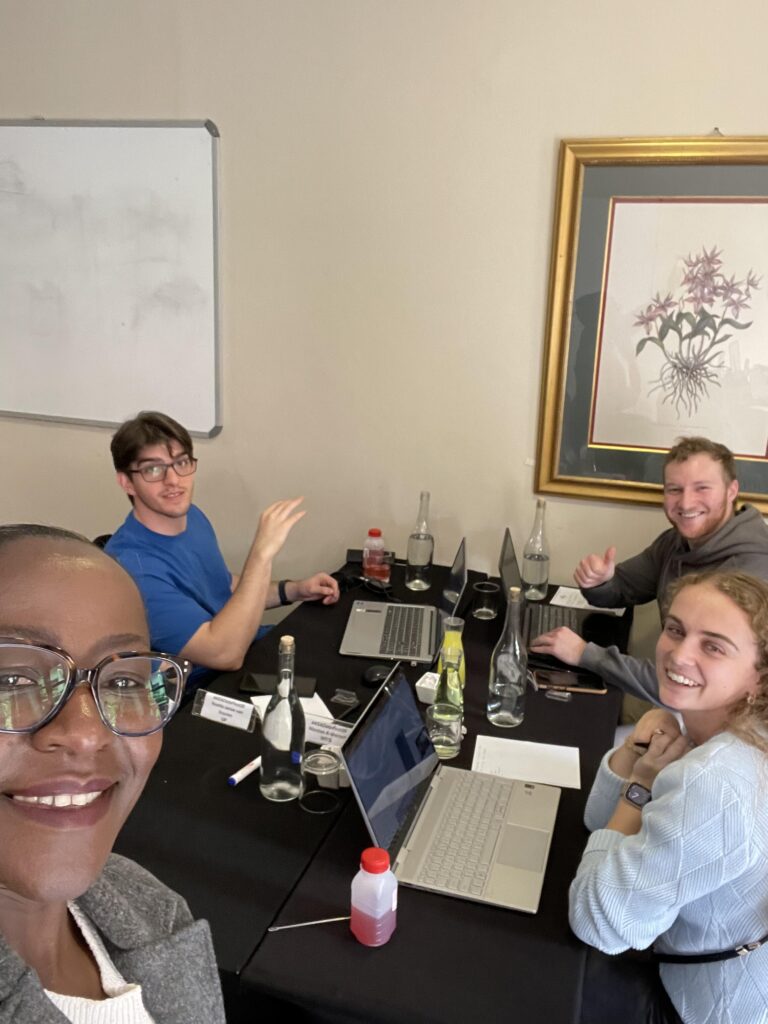
Team Data Heads (from back left): Nicolas Andersch (University of the Witwatersrand); Michael Tankle (University of the Witwatersrand); Nuelle Janse van Vuuren (University of Pretoria); Anna Kaduma Gumbie

Team Stats Alchemists (from back): Odey Redi Mofokeng (University of the Witwatersrand); Awswell Makhubele (University of the Witwatesrand); and Orilwela Thagwana
(University of Pretoria)
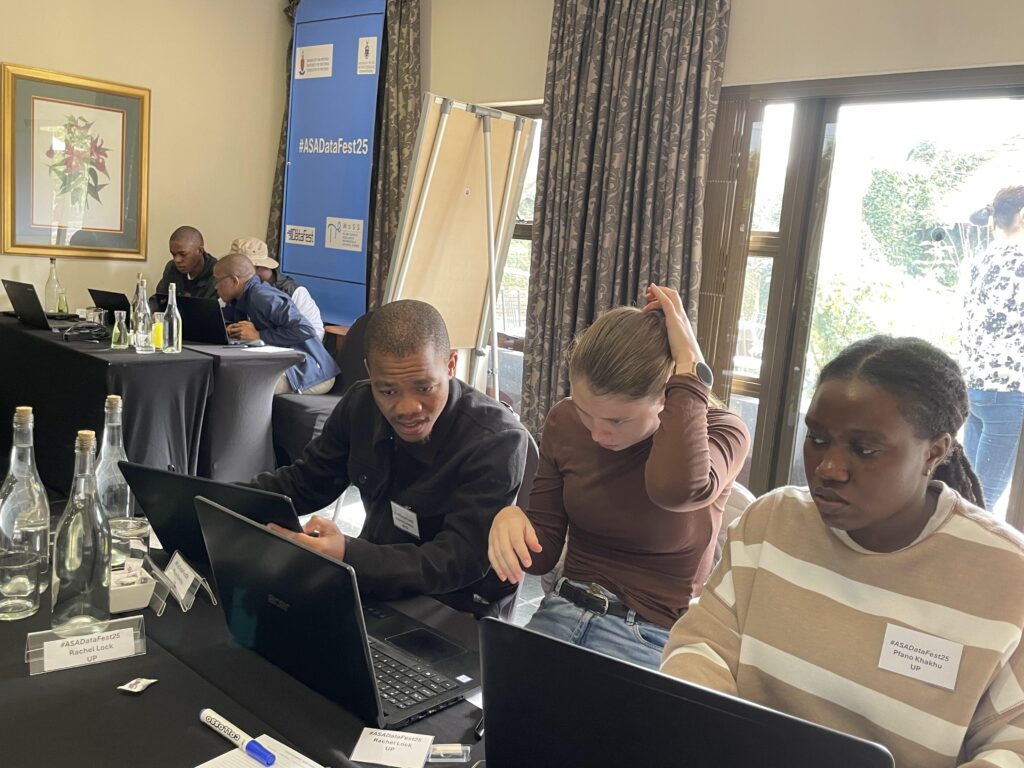
Team Number Ninjas_SA (from left): Kopano Letsela (University of the Witwatersrand); Rachel Lock (University of Pretoria); and Pfano Khakhu (University of Pretoria)
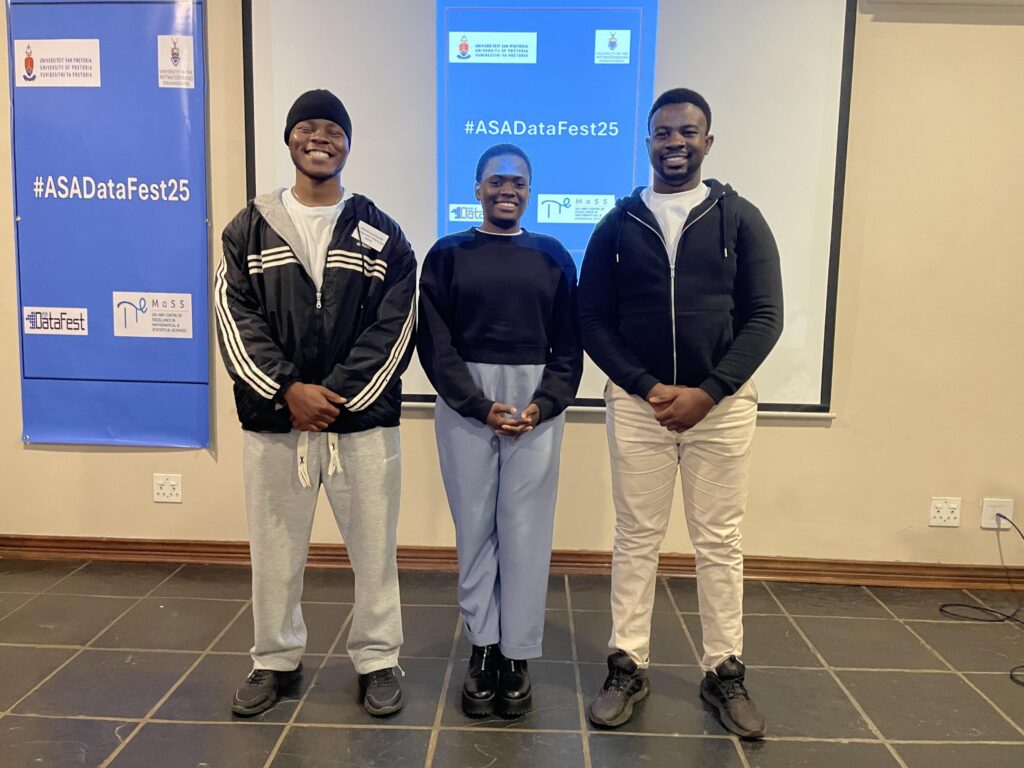
Team Greyt (winners, from left): Munyaradzi Ndumeya (University of the Witwatersrand); Itesiwajuayo (Tes) Babalola (University of Pretoria); and Kumaaipurua Rukoro (University of Pretoria)
Leave a Reply