
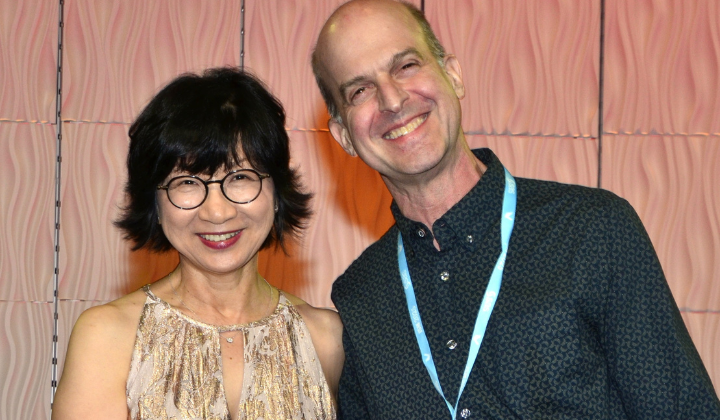
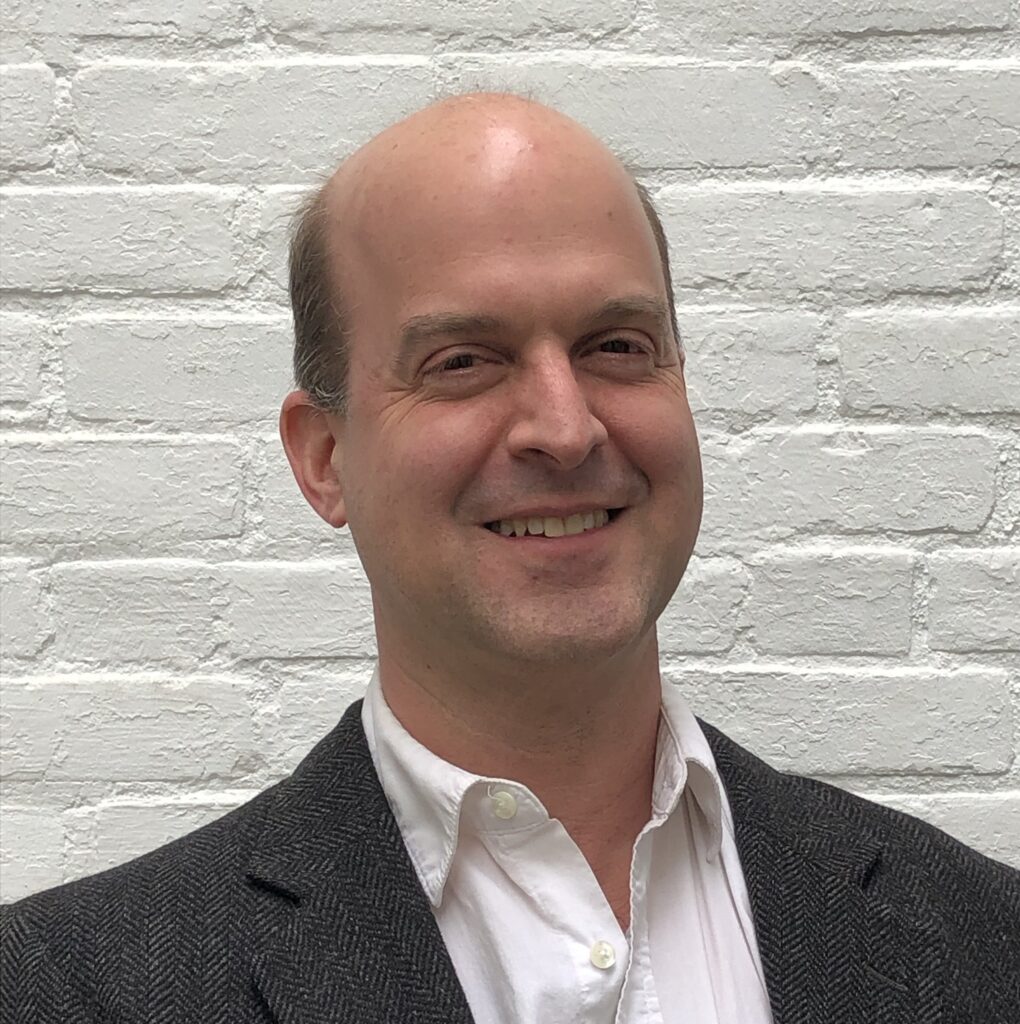
Mark Glickman, senior statistics lecturer in the department of statistics at Harvard University, earned his BA in statistics from Princeton University and his MA and PhD in statistics from Harvard University. He is a magician, musician, and statistician and, among his many talents, he earned the title of US National Chess Master in 1988 and invented the Glicko and Glicko-2 rating systems, which are widely used for assessing a chess player’s strength in two-player games.
Glickman has been an active member of the American Statistical Association throughout his career and currently serves as chair of the Committee on Data Science and Artificial Intelligence. He was a member of the ASA Board of Directors from 2019 to 2021 and previously served as editor-in-chief for the Journal of Quantitative Analysis in Sports and chair of the Statistics in Sports Section.
In 2025, Glickman received the ASA Founders Award, the association’s most prestigious honor, in recognition of his exemplary public communication of statistics through lectures that combine statistical expertise with cultural relevance. We wanted to get to know him better, so we asked him to answer the following questions:
Where did you grow up?
I grew up in Maplewood and South Orange, New Jersey. These towns are suburbs of Newark and a train ride from New York City.
What or who influenced you to become a statistician?
My path to becoming a statistician began with chess. I started playing in tournaments when I was 11 years old and became fascinated by the rating system used to measure playing strength. At that age, I didn’t have the background to understand it, but it sparked a curiosity that stayed with me.
In college at Princeton, I initially thought I would major in math or physics, but a probability course completely captured my interest. That class led me to take more courses in statistics and probability, which ultimately became my major. In my senior year, I connected with Mike Steele (also a chess player), who became my thesis adviser for a project on rating chess players. That experience brought everything full circle and convinced me statistics was the field I wanted to stay in.
Career Journey
You are widely known for inventing the Glicko and Glicko-2 rating systems for assessing a chess player’s strength in zero-sum, two-player games. These rating systems have been implemented by the Australian Chess Federation and on game servers such as Counter-Strike, Team Fortress2, and Chess.com. What inspired you to develop this rating system, and what has it been like to see your doctoral work grow into something used internationally?
My doctoral dissertation, advised by Hal Stern, focused on developing probability models for head-to-head game outcomes in which player abilities change over time. The methods I used were fully Bayesian, which worked well for small data sets but became computationally impractical for large groups of competitors. To address this, I used those models as a foundation for finding reasonable and efficient approximations. This work ultimately led to the development of the Glicko rating system and, later, the Glicko-2 system.
Around 1995, I happened to be exchanging emails with one of the administrators of Freechess.org and mentioned this new rating system. He decided to implement it, and players responded positively. Before long, I started hearing from other gaming organizations adopting the system, as well.
It’s been deeply rewarding to see something that began as part of my doctoral research take on a life of its own and be used internationally in so many different contexts.
Your research interests are primarily in statistical models for rating competitors in games and sports and in statistical methods applied to problems in health services research. These areas seem quite different. What originally attracted you to each, and how did your interests evolve to include both?
My interest in rating competitors and related problems, such as the optimal design of tournaments, grew naturally out of my involvement with chess, as I mentioned above. My work in health services research began from a different direction. While I was a PhD student, I spent several summers at Abt Associates in Cambridge, Massachusetts, working on projects in their health services group—many funded through government contracts. Those experiences exposed me to a range of interesting and impactful applied problems, and I was eager to continue in that area. After completing my PhD, I pursued a postdoctoral fellowship at Harvard Medical School with Sharon-Lise Normand. Since then, I’ve maintained a research affiliation with the Center for Health Optimization and Implementation Research, a Veterans Administration Center of Innovation.
Consulting
You’ve consulted in fields ranging from health care and marketing to sports and law. What skills or approaches transfer most easily to different contexts?
My success as a statistical consultant has come not only from doing solid technical work but also from emphasizing the soft skills that make collaborations effective. I try to communicate regularly with clients, keeping them informed throughout the process, rather than just presenting a finished analysis. I’m also organized and responsive, which helps build trust and keeps projects on track. In my experience, these qualities—namely clear communication, reliability, and openness—are just as essential to good consulting as the statistical work itself.
As a statistical consultant, you have served as an expert witness for several trials, including a case about potential steering of subprime mortgages toward underserved populations for the US Department of Justice and a case about someone being struck and injured by a foul ball for the Red Sox. How do you prepare for testimony, and how do these experiences differ from academic presentations?
These days, serving as an expert witness in legal matters is my primary form of consulting. In practice, it is actually uncommon to testify at trial because most cases settle beforehand, so much of my work involves preparing expert reports and occasionally giving depositions. Preparing to testify, whether for a deposition or at trial, requires intensive review of my analyses and often includes mock testimony sessions with retaining counsel. Depositions are not particularly enjoyable, but testifying at trial can be surprisingly rewarding. In many ways, it feels like giving a lecture to a jury, explaining statistical ideas in clear and accessible terms. The skills I have developed as a teacher, such as clarity, structure, and patience, are exactly the ones that make for effective testimony, in my opinion.
You’ve described consulting as “enjoyable in a different sort of way than academic projects.” What do you find most rewarding about consulting? What do you find most challenging?
One of the most rewarding aspects of consulting is seeing the immediate impact of the work. This is especially true in industry settings, where clients often need results quickly and the analysis can directly influence decisions. The challenge, which is really the other side of the same coin, is that consulting projects often have tight timelines, leaving little opportunity to explore a wide range of possible approaches. That constraint can sometimes be frustrating, but it also sharpens one’s ability to think creatively and work efficiently within real-world limits.
What advice would you give statisticians who are interested in starting their own consulting work?
I would offer two pieces of advice based on my own experience. First, try to get involved in several small consulting projects when you are starting out, especially with colleagues in other academic disciplines if industry connections are limited. Working with a variety of people helps build your reputation, and I have been continually impressed by how much word-of-mouth matters in being offered new consulting opportunities. Second, try to publish in the domain areas where you hope to consult. Early in my career, many of my consulting contacts came directly from papers I had written. The same principle applies today to writing substantive blog posts or other accessible pieces. Public work that demonstrates expertise is one of the best ways to attract consulting opportunities.
Beyond Statistics
You are a magician and incorporate magic tricks into your statistics classes. What or who inspired you to learn magic?
Like many people who become magicians, I was first captivated by magic after seeing a magician perform at a birthday party when I was about six years old. I got a few magic kits and tricks as a kid, which kept my interest alive, but the real turning point came when I was around 13 and a friend showed me some sleight-of-hand tricks. They seemed like miracles happening right before my eyes, and that’s what truly hooked me. Since then, I’ve been especially drawn to magic that relies on dexterity and precision, because mastering those techniques feels both challenging and deeply rewarding.
You are a pianist and guitarist and have performed in rock bands over the years. Do you have a favorite band or music genre? If you could take one album with you to a desert island, what album would that be and why?
I love power pop, and most of the rock music I play falls within that style. My favorite bands of all time are probably XTC and Fountains of Wayne, both of which can be traced back musically to The Beatles. The Beatles were what first sparked my interest in rock music, and I’m still fascinated by how profoundly they transformed popular music. I also love bands like Pink Floyd and Radiohead.
It’s hard to pick just one album to take to a desert island, but I’d choose OK Computer by Radiohead. Even though it’s a fairly dark album, the music is so rich and detailed that it would keep me engaged for a long time.
Is there a skill or topic you have always wanted to learn that you haven’t mastered yet? Do you have any plans to pursue it?
This might sound a bit boring, but most of my pursuits are extensions of hobbies I’m already involved in. I haven’t played tournament chess in quite a while, and I’d like to get myself back into good enough shape to compete again. I’d also love to keep learning new music, especially classical piano pieces that I take real pleasure in playing. And I’m always working to improve my magic performances, which is an ongoing and rewarding process. More recently, I’ve started playing squash and discovered that many of my colleagues in the Harvard Statistics Department are also players. Considering that my loss record against them far exceeds my wins, that’s definitely an area in which I’d like to improve!
Learn More
Read about Glickman, listen to his song parodies, and get the details about Glicko and Glicko-2 rating systems.
Very nice read