
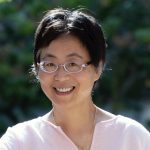
Annie Qu was trained as a computational mathematician and had not analyzed data until she was introduced to statistics in graduate school. Suddenly, all the numbers and programming were meaningful and there were interesting stories behind them. This was just the beginning of her journey in data science research. Since then, she has worked on tensor learning for optical breast cancer imaging data, network data, deep learning, active learning, crowdsourcing, and personalized medicine. Doing something new and cutting-edge has always been exciting for her and keeps her motivated.
A Statistician's Life
Clarice R. Weinberg
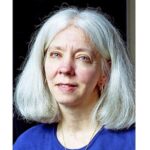
Clarice R. Weinberg was always good with numbers and earned both her bachelor’s and master’s degrees in mathematics. However, she didn’t know what to do with her math degrees so she looked into statistics and eventually earned her PhD in biomathematics from the University of Washington. Now at the National Institute of Environmental Health Sciences, she is active in breast cancer research and working with biostatistics graduate students to develop stochastic search methods to identify sets of gene variants and sets of exposures that synergistically influence risk.
Shawn Simpson
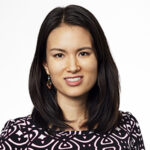
Shawn Simpson loved math and computers as a kid and thought soldering extra chips into her PlayStation was cool, so she resolved to major in electrical engineering in college. It wasn’t until she was analyzing LIDAR data that it became clear how powerful statistics was as a field and she decided to earn her PhD in statistics. Currently, as principal data scientist on the AI Labs team at BlackRock in New York City, she leads a group that builds tools for traders powered by statistics and machine learning. Her advice to young statisticians? Don’t do this alone; reach out to others for support and feedback.
Nandini Kannan
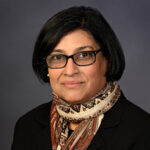
Nandini Kannan was born in Bhopal, India, and completed her schooling in Mumbai and New Delhi. She enjoyed solving math puzzles as a child, inheriting her love of mathematics from her father, a mathematician. After completing a master’s degree at the University of Madras, Kannan joined the University of Pittsburgh to work with C. R. Rao. She is proud of her work at the National Science Foundation developing interdisciplinary research and training programs in data science and is passionate about the critical role science and technology play in this global interconnected society. Kannan is committed to developing and supporting initiatives that address diversity and equity in the STEM workforce.
Christy Chuang-Stein
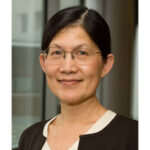
Christy Chuang-Stein grew up in an isolated city on the east coast of Taiwan. Both her parents were high-school teachers, and she remembers doing math lessons with her mother while other kids played outside. Yes, she resented the extra lessons at the time, but those lessons served her well and she ended up majoring in math in college. In the 90s, Chuang-Stein represented Pfizer (then Pharmacia) in presenting their HIV trial data at an FDA Antiviral Drugs Advisory Committee meeting to review statistical evidence for using viral load as a surrogate for clinical outcome in assessing HIV treatments. It is hard for her to describe the sense of exhilaration when her team’s endeavors lead to profound improvement in people’s lives.
Sandy Griffith
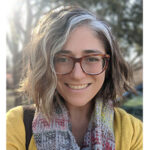
Always drawn to science in one form or another, Sandy Griffith started college as a biochemistry major, but her clumsy nature lent itself better to handling data instead of beakers and chemicals. Throughout her career, she has gravitated toward applied medical research with the potential to affect the lives of patients. In her current role at Flatiron Health, Griffith works with real-world data derived from electronic health records in oncology. Her proudest moments have involved communicating complex statistical concepts to nonstatistical audiences in an approachable way by weaving in personal stories that carry emotional resonance.
Simina Boca
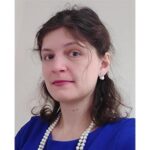
Simina Boca grew up in Bucharest, Romania, and participated in many math contests as a kid. Her best result was fourth place nationally in the ninth grade, but she was pretty sure she didn’t want to focus on pure math as a career. When she attended a genetics class her senior year in high school in the United States, she discovered biostatistics and majored in math at the University of Illinois. Along the way, she realized she enjoyed working with data and thinking about data. From a professional perspective, her proudest moment was convincing collaborators to rerun an experiment because the initial one had pronounced batch effects that could not be fixed at the analysis stage.
Celebrating Black History Month 2021
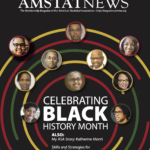
In celebration of Black History Month, we recognize 10 individuals from the Black/African-American collective who have made tremendous contributions to the field of statistics.
Emma Benn

Emma Benn has collaborated on a variety of health disparities-related research projects and teaches a graduate-level course, “Race and Causal Inference,” aimed at increasing the methodologic rigor by which health disparities are investigated, with a goal of finding effective causal targets for intervention. Benn’s contributions to diversity and inclusion in statistics and STEM have been celebrated by various organizations, including Mathematically Gifted and Black.
Simone Gray
After graduating from the University of Miami, Simone Gray became aware of the critical shortage of math and science teachers in high schools across the United States and became a tutor and mentor before going on to become a full-time mathematics teacher at a low-performing high school in southwest Florida. Gray wanted to continue learning about both math and science, however and decided to leave teaching to pursue a PhD in statistical science at Duke University. Today, she is a senior statistician in the Epidemiology and Applied Research Branch of the Centers for Disease Control and Prevention’s Division of Cancer Prevention and Control.