
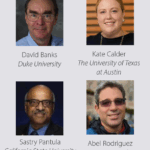
2022 ASA President Katherine Ensor led a JSM late-breaking session urging the statistical and data science communities to propose mathematical sciences research institutes (MSRIs) in response to the National Science Foundation’s current quinquennial call from its Division of Mathematical Sciences.
leadership
Nominations Open for Norwood Award
Electronic nomination submissions are encouraged and should be sent by July 14.
Section Officers Invite Mentoring Program Participants
The ASA Biopharmaceutical Section invites section members to join the 2023 Mentoring Program. Program members share their knowledge and experience with someone entering the statistics profession.
My ASA Story: Ron Wasserstein, ASA Executive Director

Ron Wasserstein says his ASA story started—and continues—with people, from early mentors to current colleagues at the ASA and elsewhere.
Introducing StatsForward: A New Leadership Initiative
Dionne Price explains her presidential initiative, which she says will help statisticians and data scientists lead in both formal and informal ways.
Michael Kosorok Receives George W. Snedecor Award

COPSS recognized Kosorok’s foundational, creative, and original contributions to mathematical statistics; methodological developments in empirical processes and machine learning; advancement of precision health; and mentoring.
F. N. David Award Goes to Karen Bandeen-Roche

COPSS has selected Bandeen-Roche as the 2023 winner of the F. N. David Award. She has been a tireless leader in the promotion of biostatistical thinking in the field of aging.
Distinguished Achievement Award Lectureship Goes to Bin Yu
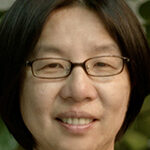
The Distinguished Achievement Award and Lectureship recognizes meritorious achievement and scholarship in statistical science and the significant impact of statistical methods on scientific investigations.
2023 COPSS Awards: Leadership Academy Welcomes 8 More

The Committee of Presidents of Statistical Societies selected these eight Leadership Academy winners. All awards will be presented at the Joint Statistical Meetings.
My ASA Story: Wendy Martinez, Mathematical Statistician
Wendy Martinez has had many great experiences during her years as an ASA member, and her service as ASA president is at the top of her list.