
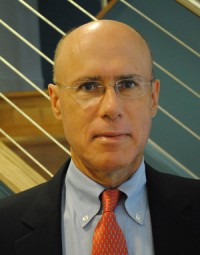
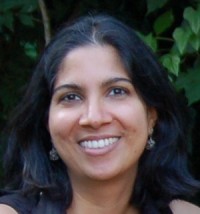
ASA members Peter Bruce and Jonaki Bose entered the statistics profession later in life. Neither planned to be a statistician. Bose “stumbled onto it and … never looked back” and Bruce “followed opportunities as they developed.” Both took a chance on statistics and, here, they explain the significance the profession has in their lives and careers.
Why Statistics?
Peter Bruce, founder and owner of statistics.com
Winston Churchill once characterized the British plan for World War II this way: “It is a mistake to try to look too far ahead. The chain of destiny can only be grasped one link at a time.”
Not the sort of career advice you generally give your kids, true, but it certainly characterizes my own situation. When I look back, I see no grand plan to my career path. On the positive side, I guess you could say I am a product of my own flexibility. I’ve used what I’ve learned to build my career and followed opportunities as they developed.
I am somewhat of an outlier in this profession. I don’t have a degree in statistics or education, but I do have strong interests in both. My undergraduate degree is in Russian language from Princeton; my MA is in Russian studies from Harvard; and I earned an MBA from Maryland. Before coming to statistics, I worked on airline deregulation in the U.S. Transportation Department and served as a career U.S. Foreign Service officer for the better part of a decade.
My entrance into the field of statistics came in 1989, via software. I was at the University of Maryland, where I met Julian Simon. He had read a lengthy article about airline deregulation that I (and a coauthor) had written for the National Review. Simon (best known for bringing an economist’s perspective to demography and natural resource studies) was the originator of the scheme by which airlines must bid for volunteers to give up seats when a flight is overbooked. A provocative scholar, Simon championed the lonely view that the world is not over-populated and running out of oil and other natural resources in any meaningful sense. Perhaps his most famous foray into the public arena was his bet with Paul Ehrlich, a Stanford biologist, concerning the prices of various natural resources. Simon bet they would decline, while Ehrlich bet they would go up. Simon won.
In my MBA program, I took a liking to statistics. My professor, Frank Alt, thought I had an aptitude for the subject because I paid close attention in class, took few notes, and scored well on exams.
Simon showed me his own work on resampling—his 1969 text Basic Research Methods in Social Science had a compendium of permutation and bootstrap illustrations—and I caught the bug. Leaving aside the statistical advantages and attributes of resampling methods, their do-it-yourself nature was sheer fun.
Simon had invented a software program for these procedures, Resampling Stats, and I took on the further development and marketing of it. From that point, my statistics was mostly self-taught, aided by many lengthy sessions with Simon, developing resampling illustrations and documentation. Simon also was instrumental in guiding me in the establishment and growth of our small business. (Another of his accomplishments was authoring a best-selling text on setting up and running a direct mail business.)
My involvement with the ASA and its meetings and activities dates from that time. I taught introductory statistics courses with a strong resampling flavor at the University of Maryland. I also taught professional development courses in resampling statistics for the Institute for Professional Education and other organizations. After Simon died in 1998, I continued to market the Resampling Stats software, but I looked for further opportunities.
I began working part time at Cytel Software. I had met both Cyrus Mehta and Nitin Patel, owners of Cytel, at the Joint Statistical Meetings and other events over the years. Mehta was interested in implementing a direct mail campaign similar to those Simon and I created to market Resampling Stats software. (Direct mail and, now, certain forms of variable Internet offers represent the purest form of controlled experiments and, done properly, are excellent fodder for statisticians.)
There was some commonality between Resampling Stats and Cytel’s StatXact software (though the audiences were completely different), and I worked with Patel on an NSF grant to fund development of an “urn sampler” program and curriculum. My relationship with Patel felt like part graduate student, part colleague. In my many sessions with him, I saw his white board constantly filled with ever-changing sets of equations. In the upper left was one fixed piece of advice: “With all thy getting, get understanding.” The urn sampler name was later changed to box sampler because another collaborator could not dispel from her mind the association of urns with cremains. Later, I also partnered with Cytel to market an Excel-based data mining program, XLMiner, and reconnected with the University of Maryland, coauthoring a data mining text with Galit Shmueli of the business school (and Patel).
Meanwhile, I was casting about for something to do with the website statistics.com. I had obtained that domain in the early days of the Internet, but had been using it only as an adjunct to software marketing efforts. About 10 years ago, I built a data portal into it—a search directory of data sources. This was based on the “build it and they will come” theory and on the further theory that “if they come, you can make money.” The advent of Google quickly rendered the data search portal idea hopelessly obsolete, so I never tested that second theory. Finally, I came upon the idea of developing an online short course that, in terms of cost and convenience, would lie somewhere between existing professional development courses (2–3 days of all-day training in person) and simply getting and reading a book.
It was here that I turned from employee (in a software firm) to entrepreneur (starting and running an education business). It was not a “cold turkey” startup. For one thing, I had a customer list. But, it was the first time I was without a steady income, relying totally on what the new business could generate.
Valerie Troiano, who helped run the software business, took the leap as well and became the key operations person. We started with what we knew—resampling methods—and offered a four-week course taught by Phillip Good. The format was a bit of a hybrid: all online, with scheduled dates for the term of the course, but no particular times that either instructor or student needed to be online. The courses worked well, and we expanded to data mining with two additional courses.
Through my Cytel ties, I had enlisted the help of the Center for e-Learning and Training (C-eLT) in Pune, India, a firm associated with Cytel. C-eLT employees, who are graduates of the University of Pune Statistics Department (and other universities), offer teaching assistance, grading services, and administrative help, allowing statistics.com instructors to focus on discussing statistics. This and students coming from diverse professional backgrounds made the model appealing for instructors. The number of courses grew, as did the number of noted statisticians who teach the courses.
I am now working with Bob Hayden (well known to the AP Statistics online community) to craft a state-of-the-art online introductory statistics course with a strong resampling-based inference component, complete with its own text and based on Guidelines for Assessment and Instruction in Statistics Education. We are in a good position to develop and teach many students with materials that reflect best statistical pedagogical practice.
While I am an outlier in the field, I share common experiences with most statisticians. The ASA has been a significant institution to me; it has afforded opportunities for professional association and engagement that are all the more important to me as someone who lacks an academic “home base.” Other statisticians whose stories you read in these pages point to the importance of mentors in their career development. Although I have not followed a traditional career path, connecting with mentors with diverse backgrounds has been an essential factor in my professional growth.
I also share with others in the statistics profession the ability to keep learning about fascinating new things. Of course, I have an unusually good vantage point for this, with the ability to poke my nose into any of the courses we teach that strike my fancy. The opportunities for continued learning are present in every profession, but, in statistics, once you are equipped with the fundamental tools of the profession, the entire range of human endeavor that involves data is at your disposal. Once I realized the guiding principle behind my work life has always been “close as few doors as possible,” the choice of statistics seemed like a natural one.
Why Statistics?
Jonaki Bose
I was asked to write this article and describe why I chose this profession, but the truth is I stumbled onto it and have never looked back.
I think many of us survey methodologists are fairly multifaceted. In India, I graduated from high school in the sciences, which means all I studied the last two years were mathematics, physics, chemistry, computers, and English. I needed a change and so, probably not entirely thoughtfully, completed a degree in communications from Purdue University. I also completed minors in math (my relaxation classes), French (so I could study in France), and art and design (I liked it). See a pattern emerging?
After graduation, I started looking for jobs in public relations and very quickly realized I needed a more quantitative job. But in those days—the pre-Internet era—it was not as easy to learn about available jobs. My gut told me I was better suited to a government job or a job in the nonprofit sector because of the sense of public service. But in what?
About 15 years ago, there was a federal recruitment program called Outstanding Scholars Program (OSP), which was open to college graduates with a minimum grade point average and allowed participants to be promoted at an accelerated rate. Once a week, the government printed a publication that listed all jobs, and, every week, I’d go to the library and apply for all the OSP jobs I could find. (It was a recession and I wasn’t being too picky, even though I wanted a quantitative job.)
I applied to be a public relations specialist, writer, editor, etc., since those were the kinds of jobs listed. But, fate favored one bewildered 22 year old when a hiring freeze was lifted for a brief period at the National Center for Education Statistics (NCES) in the U. S. Department of Education in Washington, DC. I may be wrong, but I think they found out they could hire through the OSP program one Friday afternoon and did so in a hurry, because the next day—a Saturday morning—I had a message on my answering machine (okay, my parent’s answering machine) describing a new job opportunity. I still recall listening to the voice of my soon-to-be boss as she described the opening in her office. I marveled that such a job existed and went in for an interview that week. I was offered the job and a career was born.
I started working a set of universe data collections that collected nonfiscal and fiscal data at the public school, school district, and state levels. While it is true that working in an understaffed agency means workloads are heavy, it also means opportunities abound. I had a great supervisor who allowed me to flourish and make decisions. I dove headfirst into the world of administrative records, edit checks, imputations, federal statistical publication writing, and contracting and I loved it.
“a person’s professional path is not dictated by professional interests alone”
Not only did I enjoy my job, but I enjoyed hanging out with my coworkers and learned much from them. I didn’t really have anyone my age (or even within 15 years of my age) to befriend, but I went to lunch at the Irish Times every Friday with a group of people with varied interests (motor back riding, classical music, coin collecting, map collecting, woodworking, movies, singing, reading, beer) and a broad world view.
Why is this relevant? Because I think in every job I’ve had, I’ve gone in thinking I was there to work and then realized it is impossible to separate work from the people with whom you work. I don’t think one must socialize with coworkers to enjoy work, but having some kind of kindred connection, some kind of shared understanding of the work world does seem to have the power to strongly influence job satisfaction. From these career feds, I learned to be a better public servant, to always remember we are here to serve the taxpayers and not be swayed by the latest political or administrative agenda.
Despite enjoying my job, it was clear I needed further education to help plug the gaping holes in my knowledge base. I simply did not know enough. I talked to a lot of folks at NCES who had jobs that looked interesting to find out how they had gotten there. I found mentors who were willing to discuss my options with me. Ultimately, I decided to pursue a part-time graduate degree at the University of Maryland’s Joint Program in Survey Methodology while continuing to work full time. It turned out to be a great decision, since it complimented what I was doing at work and gave me the theoretical background I needed to understand the context in which the federal government conducts its surveys and the technical background I needed to be a better survey manager and methodologist.
I spent the next few years working on sample surveys at NCES—learning about the world of disclosure analyses, public-use file creation, and statistical standards; intricacies of designing surveys from the ground up; and conducting longitudinal studies. I was loaned to the Office of Management and Budget for several months and was able to get a bird’s eye view of the federal statistical system—how data collected by both statistical and nonstatistical agencies come together to form the often confusing tapestry of official statistics. Gradually, my gut told me it was time to seek out new adventures, and as hard as it was for me to leave my NCES family, I moved to the Bureau of Transportation Statistics (BTS), which is part of the U.S. Department of Transportation.
Working at BTS was a new experience. NCES is a long-established institution, existing in some form since the late 1800s, but BTS was only established in 1992. I learned some of the challenges faced by statisticians in an organization trying to justify itself to external constituencies, potentially being viewed as a competitor for resources by sister agencies, and having to provide a clear-cut mission to its own staff. The office I worked in was comprised of like-minded people who believed in the federal statistical system and high-quality surveys and data analyses. It was a fun period, during which I was able to work on a range of activities—a national survey of travel behavior, data analysis, disclosure issues, and improving the statistical aspects of the Department of Transportation’s surveys.
But a person’s professional path is not dictated by professional interests alone; there were other forces that led me to seek different employment. BTS was moving to a new site that would result in a total commute time of almost three hours a day. With two children under the age of 4 and a spouse who worked when I was at home and took care of the kids when I was at work, I knew I could not sustain those hours.
By sheer luck, a position opened at the Substance Abuse and Mental Health Services Administration, which is part of the U.S. Department of Health and Human Services and close to where I live. I now work primarily on the National Survey on Drug Use and Health (NSDUH)—a survey methodologist’s heaven. (I’m embarrassed to write this with such enthusiasm, but it is true.) It is a large-scale national survey that collects data on substance use and mental health. It is a continuous data collection, and results are published annually. Trends are important for these data, which means we are very careful before implementing any kind of change. Any time we do introduce changes, we carefully study their effects.
So, 15 years and three government departments later, I am happily submerged in the world of federal statistics. All the agencies I have worked for have been small, which means I have evolved into a jack of all trades and a master of very little. I’ve gotten to work on survey design, questionnaire design, field staff training, data editing, imputation and weighting procedures, data file creation and dissemination, disclosure issues, and data analysis. I’ve gotten to volunteer with organizations such as the American Statistical Association and Washington Statistical Society. While I wouldn’t quite call my professional life exciting, I would say I stay cheerfully engaged.
If this sounds like a recruitment piece, you might be right. It wasn’t intended to be, but the opportunity to reflect has made me realize that working as a federal statistician can be extremely rewarding. There are many frustrations to overcome—the lack of staffing, the lack of understanding regarding the need for statistical quality, and the administrative illogic accompanying life in any large organization. On the flip side, staffing shortages mean we have the ability to define our jobs and be constantly challenged; there is no shortage of work and opportunities. And the sense of mission is always present; it is fortunate that at times of duress I can ask, “What would the best solution for the taxpayers be?” and use the answer to guide my actions. Not everyone has that luxury. All in all—reasonable pay and benefits, a clear mission, and interesting work makes the job of a federal statistician worthwhile.
It is a fascinating article. Statistics is a wonderland and we enjoy doing statistics. Statistics is for everyone.