
Penny S. Reynolds, University of Florida College of Medicine

Famous Statisticians Born in March
1574 William Oughtred is credited with the invention of the slide rule in 1622. He was a pioneer in the movement for fewer words and more symbols in mathematics, such as x for multiplication.
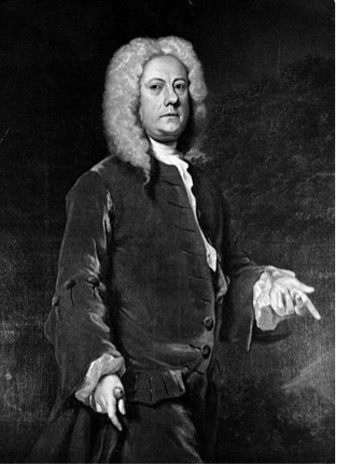
1749 Pierre-Simon Laplace’s interest in celestial mechanics led him to develop the principles of Bayesian probability and a precursor of least-squares (he minimized the maximum error, not the sum of squared errors). He was one of the first to suggest probability could be applied to medical data.
1768 Jean-Baptiste Joseph Fourier is best known for the Fourier series he first presented in a paper to the Paris Institute on December 21, 1807. Because Lagrange and Laplace complained the method lacked generality and rigor, Fourier did not publish his results until 1822, only to find he had been scooped by Gauss. It was rediscovered and repurposed in 1965 by Colley and Tukey as the fast Fourier transform, revolutionizing digital computing.
1813 Thomas Graham Balfour (president, Royal Statistical Society, 1888–1890) conducted some of the earliest controlled medical therapeutic trials to assess belladonna as preventative of scarlet fever.
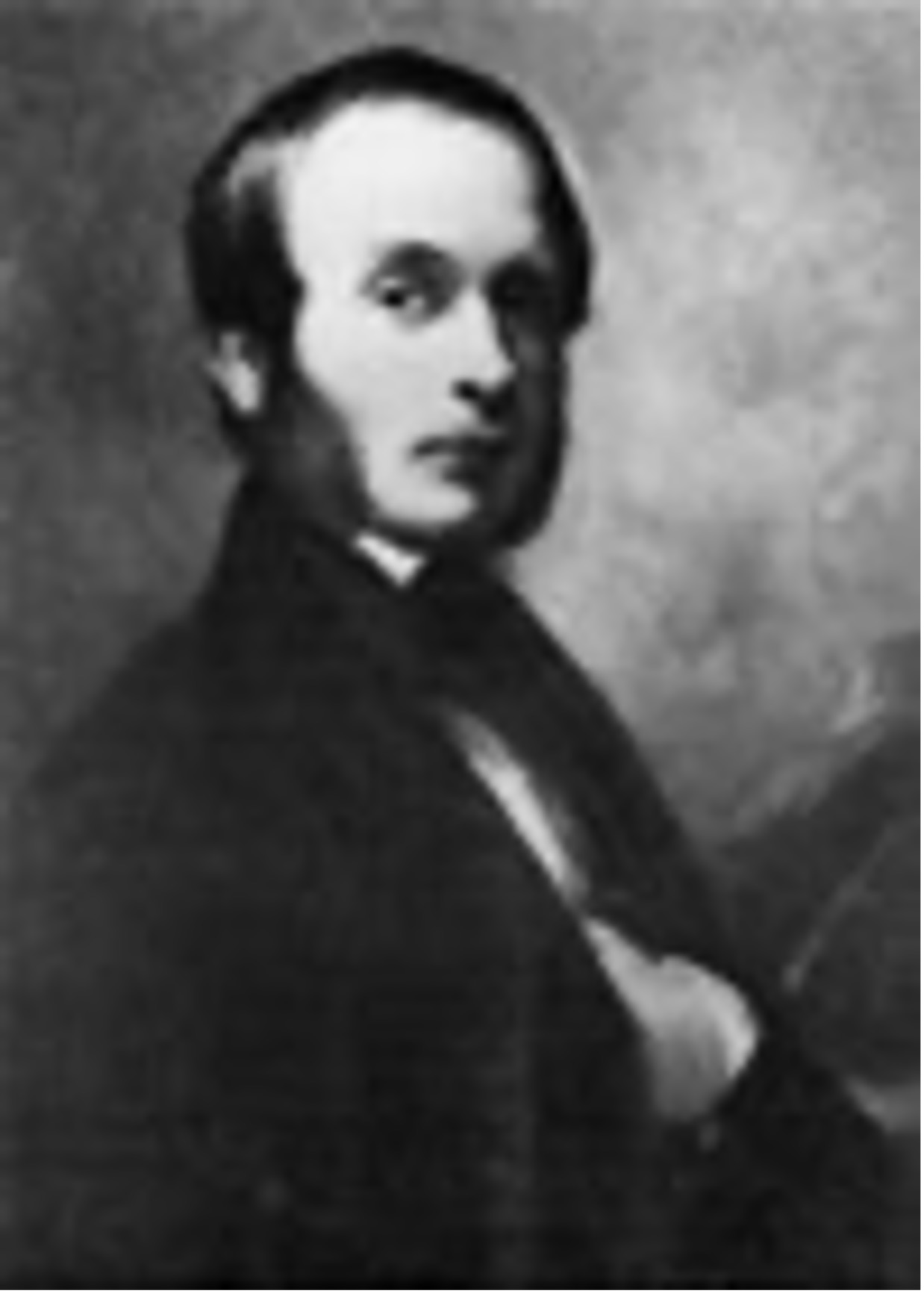
1857 Karl Pearson, the grand old man of applied statistics and one of the founders of statistical hypothesis testing, developed many statistical methods and coined the terms histogram, standard deviation, kurtosis, and heteroscedasticity. First holder of Galton’s chair of eugenics at University College London; both names were removed from buildings in 2020.
1860 Walter Frank Raphael Weldon co-founded Biometrika in 1901 (along with Galton and Pearson). Enthusiastic early adopter of the new science of biometrics and application of statistical methods to biology, saying “the problem of animal evolution is essentially a statistical problem.”
1891 Walter A. Shewhart (ASA Fellow, 1934; ASA president, 1945; IMS president, 1937 and 1944) was the father of statistical quality control. He is best known for his 1924 one-page memo describing the first use of statistical control charts. Founding editor of the Wiley Series in Mathematical Statistics, the first collected library of statistical reference texts since the 18th century.
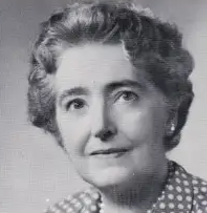
1906 Eleanor Josephine Macdonald was a pioneering cancer epidemiologist who established the first cancer registry in the USA. Early proponent of concept of cancer as preventable disease and early adopter of computer technology to cancer research. She learned statistical methods from EB Wilson (ASA Fellow 1924, president 1929) at Harvard. Before becoming an epidemiologist, she was a professional concert cellist.

1913 Churchill Eisenhart (ASA Fellow, 1943; ASA president, 1971) was the chief of the statistical engineering laboratory at the US National Bureau of Standards. He made major contributions to statistical methodology for a wide variety of disciplines and was first to explicitly define assumptions underlying ANOVA.
1929 Donald W. Marquardt (ASA Fellow, 1975; ASA president, 1986) is best known for the Levenberg-Marquardt method of nonlinear estimation. He originally developed the algorithm using an IBM Card Programmed Calculator. Later, he provided FORTRAN code, enabling other researchers to try it out on a variety of problems. The paper describing the method is now a citation classic.
1931 Norman R. Draper (ASA Fellow, 1971; fellow RSS, IMS, ASQ) was a pioneer of regression methodology, design of experiments, and response surface methodology for quality engineering and process control.
1934 Daniel Kahneman and 1937 Amos Tversky were longtime collaborators who pioneered studies of decision-making, cognitive biases, risk assessment, and why people “struggle to think statistically.” Their work revolutionized behavioral economics, which previously assumed decision-making was rational.
1937 William G. Hunter (ASA Fellow, 1979) was a teacher of design of experiments. He is best known as co-author of the classic text Statistics for Experimenters. An innovator and catalyst for quality improvement, he founded the ASQC Statistics division. ASQC presents the Hunter Award for “accomplishments in the development and creative application of statistics in problem solving.”
Events
1809 Carl Friedrich Gauss finishes Theoria Motus Corporum Coelestium in Sectionibus Conicis Solem Ambientium, in which he shows derivations of measurement error distributions, a method of least squares. However, Adrien-Marie Legendre claimed precedence for the first clear statement of the method in 1805. He was incensed when Gauss referred to it as our method and then claimed he had been using it since 1795, when he was 18. Legendre said, “This excessive impudence is unbelievable in a man who has sufficient personal merit not to have need of appropriating the discoveries of others.”
1823 Gauss publishes Theoria Combinationis Observationum Erroribus Minimis Obnoxiæ, in which he implicitly develops the least-squares principle now called best linear unbiased estimators (BLUE). In 1938, FN David and Jerzy Neyman further develop BLUE, calling it the “Markoff theorem on least squares.” Ronald Fisher, never missing an opportunity to attack, gave precedence to Gauss. Neyman acknowledged that Gauss may have “in principle” initiated its development but Markov made it practical.
1834 The Statistical Society of London is founded on March 15, 1834 by Charles Babbage, Thomas Malthus, Adolph Quetelet, and Richard Jones. It becomes the Royal Statistical Society (RSS) in 1887.
1903 The Worshipful Company of Drapers grants £1,000 to the University of London “to assist the statistical work and higher teaching of the Department of Applied Mathematics.” Karl Pearson uses the money to buy release time, create a new statistics research group, and self-publish his now-famous series on correlation and regression (free from critical reviewers).
1943 In March, Abraham Wald (ASA Fellow, 1945; president, IMS) is presented with the problem of developing the best sampling methodology for detecting anomalous production results for munitions. By April, he develops the sequential probability ratio test for quality control. The US military thought it was so important, it was classified until the end of WWII. A similar test was developed independently by George Barnard in 1946.
1947 Chester I Bliss (ASA Fellow, 1942) attends the March meeting of the National Research Council Committee on Applied Mathematical Statistics and is outraged at the lack of biometry representation. That very day, he begins organizing the International Biometric Society, officially launched only six months later, on September 6. He later became the 8th president; Ronald Fisher was first.
1951 Solomon Kullback (ASA Fellow, 1963) and Richard Leibler describe the Kullback–Leibler similarity measure for probability distributions. Derived from Fisher and Shannon information theory and Boltzmann’s concept of statistical entropy, it is a forerunner of Akaike’s Information Criterion.
1955 David B. Duncan (ASA Fellow, 1962) publishes his eponymous multiple-range test. It was based on pairwise comparisons between means and used the studentized range distribution to determine critical values. It is one of the most-cited statistical papers of all time.
View the references for this month’s Time Series.
Leave a Reply