
Jessica Karch, Jennifer Noll, James K. L. Hammerman, and Traci Higgins
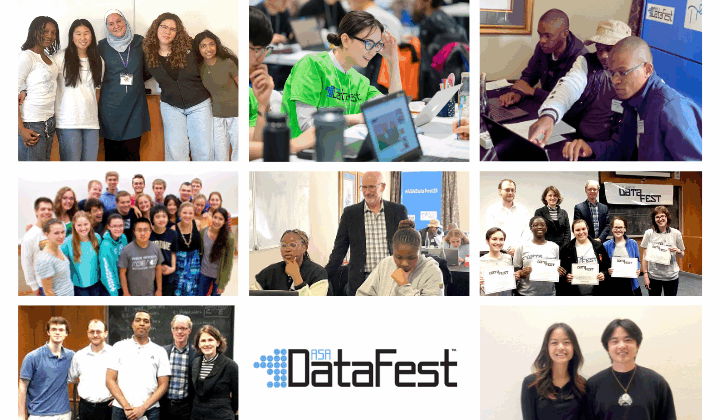
DataFest, a celebration of data that began at the University of California at Los Angeles in 2011, includes 60 sites involving 120 institutions from across the globe. It is a 48-hour-long co-curricular event in which teams of undergraduates come together every spring to tackle an authentic data problem. Corporate and civic sponsors donate data sets to DataFest for students to work on. Data sets can be situated in any authentic context ranging from the play of a national sports team, to online textbook use, to pro-bono legal advice services.
We first became involved with DataFest through research. Jennifer Noll and her colleague from TERC, Andee Rubin, started initial pilot work with Rob Gould in 2019 and 2020. In 2020, they conducted recorded observations of two teams at three points over the 48 hours to better understand the ways teams worked together from start to finish. Building on that pilot work, we ran a three-year, NSF-funded study that took place at six DataFest sites with almost 1,000 students. Our research explored why students take part in DataFest and how teams worked together to navigate the data investigation process within this open-ended context with large, authentic, complex data.
Much like the celebration of data itself, this special section celebrates 15 years of DataFest. It features perspectives from site organizers around the world, who reflect on how DataFest has evolved, what has enabled their events to succeed, how to broaden participation in DataFest and data science, and the unique opportunities and constraints of DataFest in their particular contexts. These include DataFest for two-year colleges, DataFest at international sites, and institutions that travel to host sites. These articles illuminate the overarching similarities across DataFest sites and the variability and flexibility that allow this event to thrive in many locations.
This section also features perspectives that provide insight into how the data for DataFest come to be. Rob Gould and Mine Çetinkaya-Rundel reflect on the affordances and challenges of retrieving and curating a usable data set for DataFest. On the other end of this process, two teams share their experiences as data donors. One donor was a DataFest participant as an undergraduate, and his essay speaks to his own experience and his motivation to give back to the community by becoming a data donor. Representatives of the second donor describe their team’s prior work as judges at the event, their decision to become a data donor, and what the experience meant to them.
Beyond individual experiences, this collection of essays explores how DataFest has catalyzed meaningful partnerships between universities, industry, and government that extend far beyond the weekend event. These collaborations have profoundly shaped the academic and professional trajectories of participants while also influencing institutional change, from the development of new data science majors to the establishment of centers for data science. The essays and Q&As from mentors, judges, and students capture the immediate excitement and lasting benefits of their DataFest experiences, alongside the unique challenges each group faces.
Finally, we feature findings from our three-year National Science Foundation study that explored why students participate in DataFest and how they make sense of data during the event. The study provides insights into organizer goals and participant expectations and considerations on who DataFest is for.
These articles provide a diversity of perspectives on DataFest and show how the event has evolved and grown over its 15-year lifetime. While some articles explore tensions and challenges, we can see DataFest has evolved in meaningful ways that have broadened participation when taken as a whole.
As the American Statistical Association, universities and two-year colleges, statisticians, data scientists, statistics and data science educators and researchers, industry professionals, and undergraduate and graduate students continue to organize around DataFest and engage in thoughtful dialogue and research, the event will continue to evolve to provide a challenging and important informal learning event for a diverse range of participants.
Through these articles, the American Statistical Association community is invited to reflect on and engage in dialogue about what DataFest is and what role it can play for undergraduate data science and statistics education.
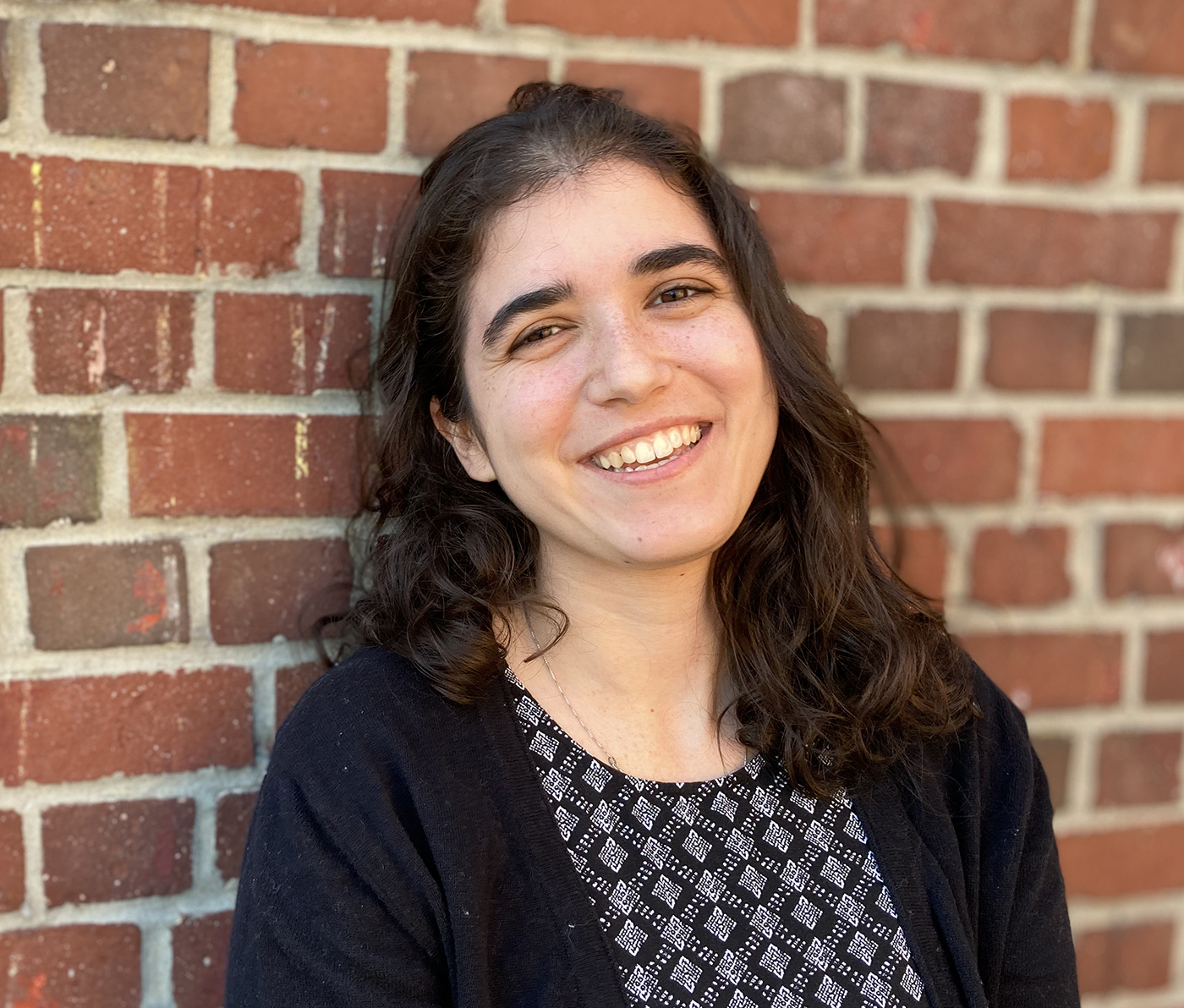
Jessica Karch
Karch is a senior researcher at TERC, which uses qualitative and mixed methods to study science learning and learning environments at the undergraduate and graduate levels with a focus on equity.
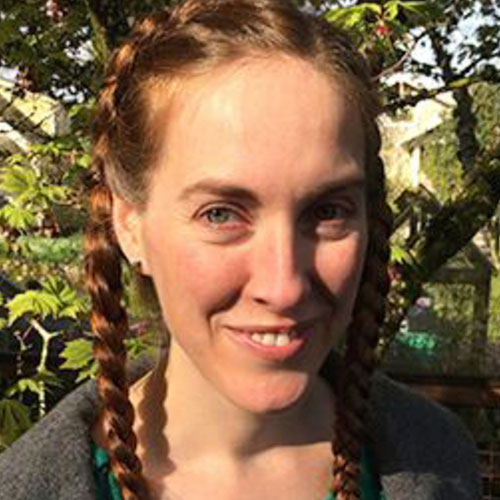
Jennifer Noll
Noll is principal investigator at TERC. Her background focuses on K-12 and undergraduate statistics and data science education through innovative curricula, technology, and teacher professional development.

James K. L. Hammerman
Hammerman co-directs the STEM Education Evaluation Center at TERC. For more than 20 years, he has worked as an evaluator, designer, teacher educator, and adviser for innovative statistics and data science education projects, engaging formal and informal learners of all ages to investigate and make sense of data.
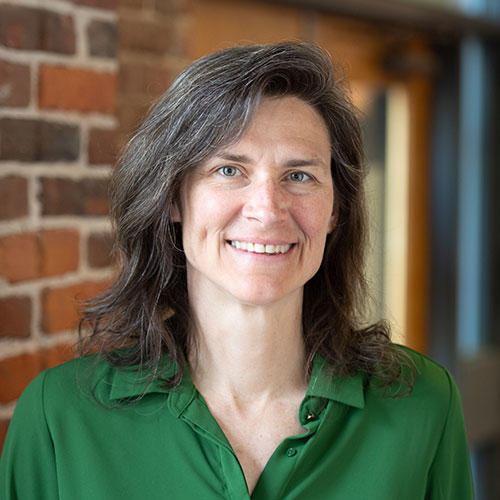
Traci Higgins
Higgins is a senior researcher in STEM education at TERC. She has more than 20 years’ experience conducting research and developing educational materials, processes, and models to support STEM learning and teaching both in and out of school, focusing on K-8 mathematics, data science K-12+, the social sciences, and interdisciplinary thinking.
Leave a Reply