
Penny S. Reynolds, University of Florida College of Medicine
SEPTEMBER BIRTHDAYS
1501 Girolamo Cardano wrote the earliest treatment of basic probability (and a how-to on cheating), Liber de Ludo Aleae (Book on Games of Chance). He also introduced the binomial theorem to Europe and was the first European to use negative numbers.
1707 Georges-Louis Leclerc, Comte de Buffon. A naturalist and mathematician, he is of interest to statisticians for his “needle problem,” an early example of the use of Monte Carlo simulation principles to estimate p.

1752 Adrien-Marie Legendre, who published the method of least squares (méthode des moindres carrés) in 1806 in the appendix to his book on comet motion. Gauss later claimed precedence, much to Legendre’s annoyance. The caricature (pictured) by Julien-Léopold Boilly is the only known portrait of him.
1759 William Playfair, a pioneer of statistical graphics and data visualization methods who invented numerous well known graph types, including the pie chart and time series plots. He always maintained that charts communicated better than tables of numbers.
1812 Rawson William Rawson, president of the Statistical Society of London (now the Royal Statistical Society) 1884–1886 and founding president of the International Statistical Institute, 1885. Regrettably, his 1844 report on Canadian Indigenous people was the foundation document for the infamous Indian residential school system.
1814 James Joseph Sylvester, Royal Medal 1861, Copley Medal 1880, mathematics tutor to Florence Nightingale in the 1840s. He was a pioneer of graph, invariant, and matrix theory. He also modestly claimed to be the Mathematical Adam, coining more terms “than all the other mathematicians of the age combined,” including “matrix,” “discriminant,” “canonical form,” “Hessian,” “latent roots,” and “Jacobian.”
1835 William Stanley Jevons, who pioneered the application of statistical techniques to economics. He was introduced to the use of statistics by the writings of Adolphe Quetelet. He famously distinguished a “mean” as the approximation of a definite existing quantity from the arithmetical average. He also invented an early logic machine.
1839 Charles Saunders Peirce, the “Father of Pragmatism,” made major contributions to philosophy, logic, and pure mathematics, and introduced the randomized, controlled, and blinded experimental protocol in 1884.
1860 Clara Collet, one of the first women to be elected Fellow of the Royal Statistical Society (1892) and member of RSS council in 1918. As a civil service statistician, she performed groundbreaking studies of women and the working poor in the London East End during the time of the “Jack the Ripper” murders. P. C. Mahalanobis says she persuaded him to join RSS.
1863 Charles Edward Spearman, known for his eponymous rank correlation statistics and for developing factor analysis. Both Karl Pearson (who considered himself the godfather of correlation) and E. B. Wilson (ASA Fellow 1924, ASA President 1929) attacked his two-factor theory of human intelligence, resulting in a long feud.
1876 Anderson Gray McKendrick, a mathematical epidemiologist, rediscovered the logistic equation in 1911, and was co-developer with William Kermack of the Kermack-McKendrick mathematical theory of epidemic disease spread, the origin of susceptible-infectious-recovered-susceptible (SIRS) epidemiological models.
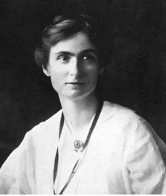
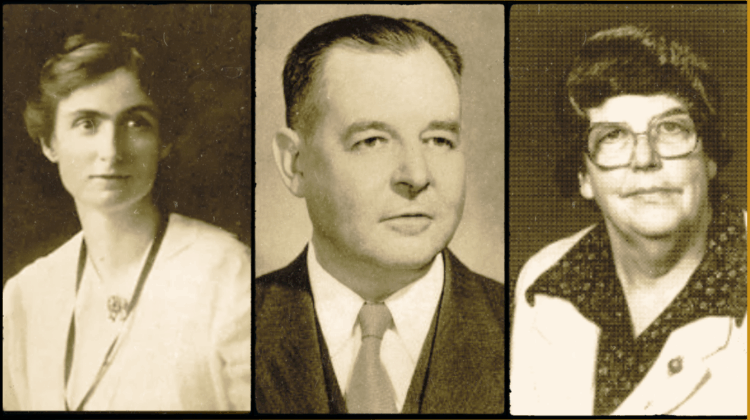
1876 Edith Abbott, ASA Fellow 1945, was first woman to be an academic dean in the United States (Chicago), pioneered statistical methods for studying social problems, and developed evidence-based policy for crime, welfare, education, and protections for immigrants, working women, and children.
1879 Leonard Porter Ayres, ASA Fellow 1917, 21st ASA President 1926. Secretary for the 1915 ASA Joint Committee on Standards for Graphic Presentation chaired by William Brinton. Organized Division of Statistics for the US Army during WWI to track combat casualties. Later involved in education and became head of statistics for the Playground Association of America.
1889 Besse Day (Mauss), ASA Fellow 1951, Intercollegiate Studies Institute Fellow, American Society for Quality Control Fellow, American Association for the Advancement of Science Fellow, pioneered design of experiments applied to engineering. Introduced to Ronald Fisher as a student, she collaborated with him for years. Her 1955 paper, “The Technique of Regression Analysis,” won the 1956 American Society for Quality Brumbaugh Award for quality control.
1892 Frank Wilcoxon, ASA Fellow 1955, developed nonparametric rank-sum and signed-rank tests. He attributed his interest in applied inferential statistics through reading Fisher’s Statistical Methods for Research Workers.
1893 Harold Cramér, ASA Fellow 1950, Guy Gold Medal 1972. “One of the giants of statistical theory,” he is best known for developing the Cramér-Rao inequality, Cramér-von Mises statistics, and Cramér-Levey theorem.
1893 Hilda Geiringer-von Mises, Institute of Mathematical Statistics Fellow. A “missed genius,” she was an innovative researcher in probability theory and Fourier series, but was denied a permanent faculty position at American research universities because of her gender. She collated and edited the papers of her husband Richard von Mises after his death.
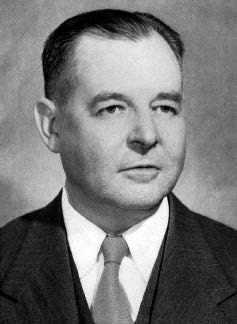
1895 Harold Hotelling, ASA Fellow 1937, mathematical statistician, and economist. He developed Hotelling’s Law, Lemma, T2 Statistic, and principal component analysis. He was first to recognize the revolutionary importance of Fisher’s Statistical Methods for Research Workers.
1907 Maurice Kendall, ASA Fellow 1950. Royal Statistical Society Fellow 1934, RSS President 1966; Guy Silver (1945) and Gold (1968) Medals. Known for his tau rank correlation, he also made notable contributions to experimental design, factor analysis,
k-statistics, and time series. With Bernard Babington-Smith, he developed one of the first early mechanical devices for generating random digits, and a series of tests for statistical randomness.
1911 Bernard Lewis Welch, founder member of the Industrial and Agricultural Research Section of the RSS, he developed Welch’s
t-test, which provides a robust solution to the Behrens-Fisher problem. Not surprisingly, he became the target of Fisher’s attacks.
1915 Olive Jean Dunn, ASA Fellow 1968; AAAS Fellow 1965; University of California, Los Angeles Woman of Science 1974. Best known for the 1961 method for multiple testing correction for simultaneous confidence intervals that she named after Carlos Bonferroni.
1915 George A. Barnard, ASA Fellow 1961, Royal Statistical Society President 1977, Guy Gold (1975) and Silver (1958) medals. Although he is best known for work on likelihood methods, often overlooked were his contributions to statistical process control, especially development of sequential tests and optional stopping developed independently of Abraham Wald.
1915 Helen Abbey, ASA Fellow 1976, public health statistician named by Johns Hopkins as a “hero of public health” in 1991 for distinguished teaching of statistics (often accompanied by her dog, Peppy) and prolific mentoring. She taught more than 4,000 students and read over 700 doctoral dissertations.
1920 Calyampudi Radhakrishna (C. R.) Rao, ASA Fellow 1972; President ISI, Institue of Mathematical Statistics, and International Biometric Society; National Medal of Science. Developer of the Cramér–Rao bound and Rao–Blackwell theorem, he has been called the most eminent statistician of our time.
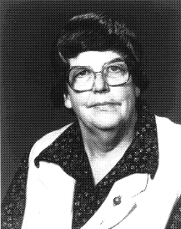
1922 Mary Gibbons Natrella, ASA Fellow, 1981; American Society for Testing and Materials Fellow; Department of Commerce Bronze Medal, 1982. A National Bureau of Standards statistician, she developed the Handbook of Experimental Statistics (NBS Handbook 91), precursor of the NIST/SEMATECH e-Handbook of Statistical Methods. Although originally intended for the Army, it is still a landmark publication for statistically based principles for experimental planning and analysis.
1930 Colin Lingwood Mallows, ASA Fellow, 1969; RSS fellow; IMS fellow; and codeveloper with Cuthbert Daniel of the Cp statistic for regression model diagnostics. (They called it C after themselves, Cuthbert and Colin: p is the number of variables). He is also one of only two statisticians awarded the Statistics Trifecta: the R. A. Fisher Lectureship (now COPSS award), 1997; Deming Lectureship, 2004; and Wilks Memorial Award, 2007.
1941 Stephen Jay Gould, paleontologist, evolutionary biologist, distinguished science writer, and author of numerous critiques of biological determinism and misapplications of statistical methods in racial theories of intelligence. He wrote a classic article on statistical communication, “The Median Isn’t the Message.”
EVENTS IN SEPTEMBER
1853 On September 19, the first International Statistical Congress begins in Brussels. It was organized by Adolph Quetelet. Unfortunately, nothing much was accomplished because of quarrels over agenda and choice of language, and accusations of data misrepresentation. Bismarck pulled the plug on further congresses after 1878 by forbidding Prussian statisticians to participate.
1854 On September 8, John Snow has the Broad Street pump handle removed, pinpointing the source of the 1854 Soho cholera outbreak. He established that cholera was waterborne, not airborne as previously believed. Snow’s intervention before establishing definitive cause—Vibrio cholerae was not isolated until 1883—was based on extensive ground-truth research, now the model for modern epidemiology.
1885 On September 10, Francis Galton introduces the concept of multivariate regression (the term he substituted for “reversion”) to a largely mystified audience at the British Association for the Advancement of Science meeting.
1935 On September 12, the Institute of Mathematical Statistics is officially founded by Harry C. Carver and Henry L. Rietz (first president). Other notable founder members were Walter Shewhart (first vice president), A. T. Craig, B. H. Camp, A. R. Crathorne, and Harold Hotelling.
1937 On September 28, chief Soviet statistician Olimpiy Kvitkin is executed on the orders of Stalin. His census reports showed the catastrophic 1932 famine (Holodomor) caused death tolls in the millions and contradicted Stalin’s claim that the population was increasing. Declared part of a “serpent’s nest of traitors in the apparatus of Soviet statistics,” other statisticians involved in the census are also arrested and shot.
1947 On September 6, the International Biometrics Society is launched at the First International Biometric Conference in Woods Hole, Massachusetts. Ronald Fisher was the first president and Chester Ittner Bliss, who took the lead in its founding, was first secretary. 1949 Los Alamos mathematicians Stanislaw Ulam and Nicholas Metropolis publish the Monte Carlo method of computer-intensive stochastic random sampling. Ulam got the idea from playing solitaire during recovery from surgery. Metropolis gave it the cool name because Ulam used to talk about his uncle who liked to go to Monte Carlo to gamble. In 1948, Metropolis and John von Neumann performed the first automated Monte Carlo calculations on the ENIAC computer.
Download the references for more information.
I really enjoyed the Amstat News blog post for September 2025; it’s a rich, informative snapshot of the vibrant statistical community and the many ways data and statistical thinking are shaping our world. The post weaves together reflections from the recent Joint Statistical Meetings, insights on navigating today’s employment market, and highlights like StatFest and DataFest that celebrate hands-on data engagement and mentorship, showcasing how the ASA supports both seasoned professionals and emerging talent. It underscores the relevance of statistics in everything from mental health research to career development, making the field feel accessible, active, and essential. The thoughtful blend of community stories, professional guidance, and celebration of statistical impact not only reflects the energy of the association but also inspires appreciation for the collaborative spirit that drives innovation and learning within the global data science community.