
Penny S. Reynolds
Statisticians have long been fascinated by alcoholic beverages, developing or adapting some of our best-known statistical methods for application to problems of production, quality control, and tasting. Whether or not you plan to go dry in January, here are some alcohol-related highlights in the history of statistics.
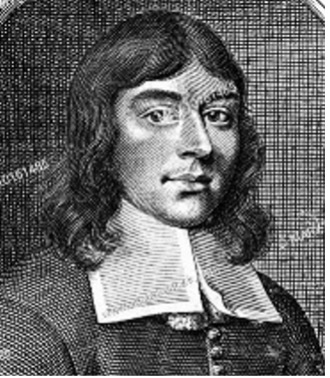
The choice of the “best” mean is a central problem of statistical inference. The astronomer Henry Gellibrand is credited with the first use of the term “arithmetick meane” in 1637. However, he was really talking about the midpoint of a range.
In 1687, a beer and spirits exciseman, William Hunt, author of Guide for the Practical Gauger, said about himself that he was A True Friend to All That Are Mathematically Affected.
With a sliding rule cross the Tun both ways at the greatest extent you can guess, and with chalk make 4 short lines, then place the end of the rule first in one, and then in the other of those Lines; note the differences from line to line, and adding them together take a fourth part, to which set the rule … take the diameters both ways and if they differ not above two inches you may take an arithmetic mean, set the rule to the mean and see what part of the Tun will bear it.

William Sealy Gosset publishes his ground-breaking paper, “The Probable Error of the Mean,” in 1908. It was a foundational paper in modern statistical inference. He does all his important work on statistics during his 38-year employment with Guinness brewery. Under the pseudonym “Student,” he develops the t-test and formulates the t-distribution (originally called Student’s z) using an early application of Monte Carlo methods. Largely self-taught, he also develops methods for significance testing for repeated trials, analysis of economic significance, decision theory interpretation, and small-n design of experiments.
Warren Milton Person (inaugural ASA Fellow, 1914; 18th ASA President, 1923) pioneered statistical methods for the forecasting of business cycles, but he also finds time to write Beer and Brewing in America; an Economic Study, published posthumously in 1938. He estimates that during Prohibition, public spending on bootleg and smuggled liquor was $36 billion. Relegalization resulted in a return of revenue to the US Treasury and an upsurge in sales of bottled and packaged beer over barrels.
In 1976, the Judgment of Paris was a blind tasting comparison of French and American wines, one of chardonnays and another of French Bordeaux vs. California cabernet sauvignons. French oenophiles swoon in outrage when the California wines rank first in both categories. However, scoring is based on simple averaging of the marks over all judges. A formal statistical analysis in 1999, conducted by Orley Ashenfelter and Richard Quandt and published in CHANCE magazine, indicates considerable disagreement on rankings between individual judges.
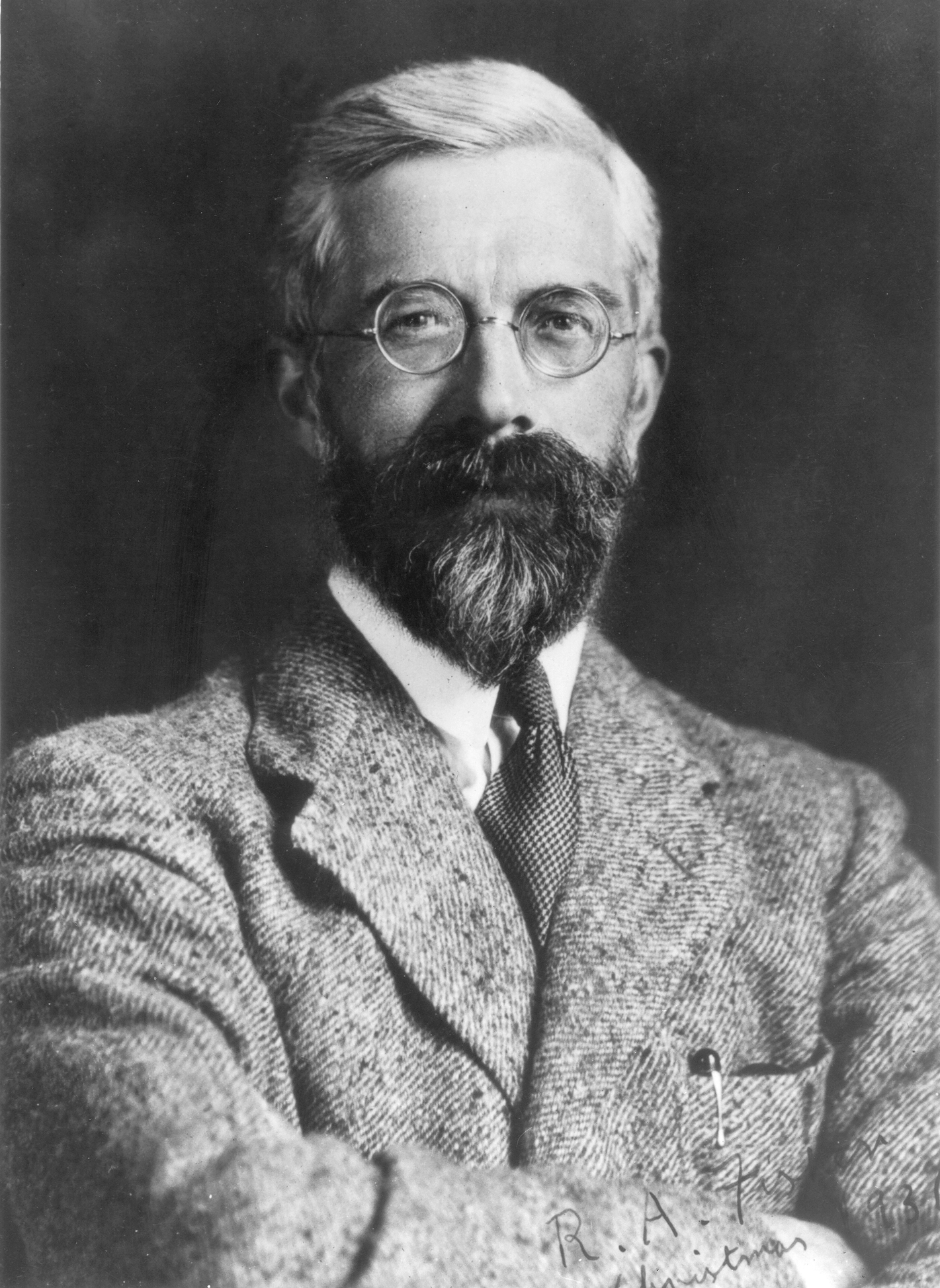
In1983, Ronald Fisher’s blinded taste test design (“lady tasting tea”) is adapted to test the boasted abilities of eight male surgeons to discriminate malt from blended whisky. For various reasons, the authors of “Can Malt Whisky Be Discriminated from Blended Whisky? The Proof,” a modification of Sir Ronald Fisher’s hypothetical tea-tasting experiment, are advised not to publicize their results in Scotland.
In 1986, Italian researchers Michele Forina, Carla Armanino, and Mario Ubigli publish one of the first applications of multivariate statistics for discriminating the geographic origins of different wines. They test 28 chemical and physicochemical characteristics of 178 wines from three regions in the Piedmont and find 98% correct classification on eight variables.
Between 2005 and 2009, wine judging consistency was assessed by Cohen’s k scores for rater reliability using data from two studies of California and Australian expert judges. Based on k >0.7 as a benchmark criterion, less than 30% of judges who participated could be considered “expert.” Later analysis of the results of wine competitions across California indicate medals were distributed at random. These findings lead a reporter from The Guardian to conclude wine tasting is “junk science.”
Apparently, type of background music affects wine product purchases (e.g., accordion music boosts sales of French wine, German polka music boosts sales of German wine). Choice of music might also affect the perception of wine taste. As a public service announcement, authors provide lists of recommended wine-music pairings. For example, cabernet sauvignon pairs well with Jimi Hendrix or The Who, syrah with Puccini’s “Nessum Dorma,” and chardonnay with Blondie’s “Atomic.” Check the references for ideas about setting up your own experiments.
Leave a Reply