
As members of the Statistics and Data Science in Aging Interest Group complete their second year, they have many milestones to celebrate. Founded in 2024 by Charles Hall and Michelle Shardell, SDSA serves as the ASA home for advancing statistical and data science methods and applications in aging research. It is dedicated to strengthening both methodological and substantive work on aging, building community, and providing a platform for collaboration among statisticians, data scientists, and researchers in aging.
A Fast-Growing Global Community
In two years, SDSA has grown to 454 members, spanning five continents, more than 20 countries, and all three professional sectors (academia, government, and industry). This growth reflects the need for a welcoming space within the ASA where people working across the aging research ecosystem—from methodology development to clinical and population applications—can connect, learn from each other, and build collaborations.
Year-Round Programming
The SDSA delivers a wide range of educational, career development, and networking activities. Programming includes monthly webinars that feature methods and applications across aging, dementia, and broader geroscience topics, along with career development sessions and journal-focused discussions. All sessions are free and open to the public. Recordings of most webinars can be found on the SDSA website.
Group members launched the ARISE (Aging Research—Innovations in Statistical Exploration) webinar series, designed by Ana Capuano, to spotlight early-career researchers working at the intersection of aging, statistics, and data science. ARISE also gives the community a concrete way to support emerging scholars through visibility and feedback. The winners of ARISE 2025 were Tianying Wang of Colorado State University (first place), Margaret Gacheru of Columbia University (second place), and Alessandra Pescina of Karolinska Institutet (third place).
Beyond the SDSA’s own webinar series, members have organized additional webinars and sessions across conferences—including the Joint Statistical Meetings, International Biometric Conference, International Day of Women in Statistics and Data Science Virtual Conference, and the Gerontological Society of America’s Annual Meeting—in collaboration with the Gerontological Society of America’s Measurement, Statistics, and Research Design Interest Group.
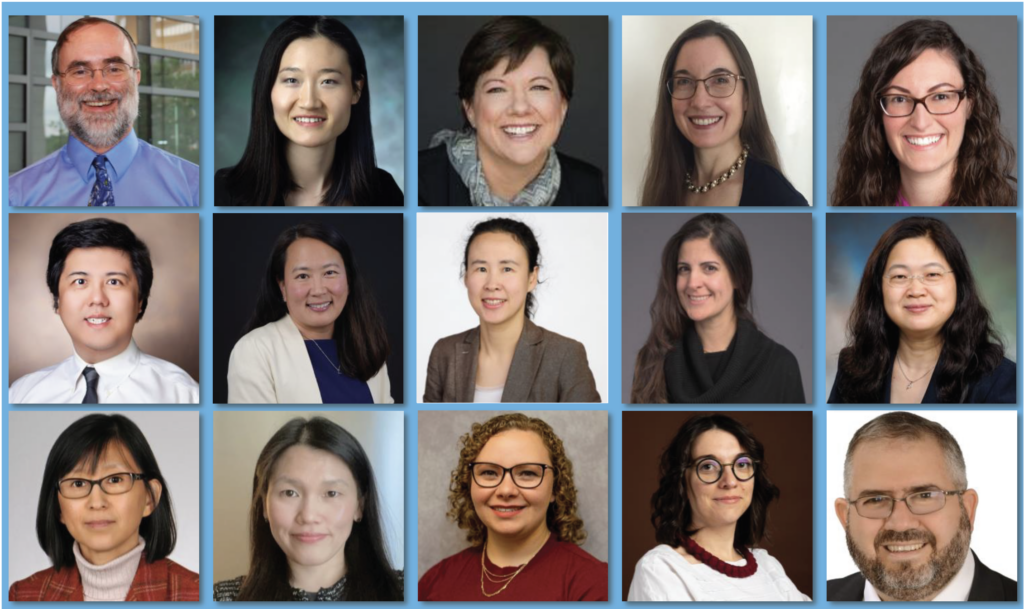
Top row, from left: Charles Hall, Albert Einstein College of Medicine, founding and past chair; Zheyu Wang, Johns Hopkins University, chair; Mary Kwasny, Northwestern University, chair-elect; Michelle Shardell, University of Maryland School of Medicine, founding and past program chair; and Jaime Lynn Speiser, Wake Forest University, program chair. Middle row, from left: Panpan Zhang, Vanderbilt University, program chair-elect; Theresa Kim, National Institute on Aging, founding and past publications officer; Lihua Li, Icahn School of Medicine at Mount Sinai, publications officer; Ana Capuano, The University of Chicago, founding education officer; and Xiaoying Yu, The University of Texas Medical Branch, founding secretary. Bottom row, from left: Hong Li, University of California, Davis, founding treasurer; Seonjoo Lee, Columbia University, founding communications officer; Cynthia Sopko, University of Nevada, Las Vegas, membership and outreach officer; Caterina Gregorio, Karolinska Institutet, volunteer; and Mehmet Koçak, Istanbul Medipol University, volunteer.
Networking and Career Development
The SDSA also emphasizes networking and career development. Members have organized conference meet ups and mixers at major statistical and aging-focused meetings—the 2025 Alzheimer’s Association International Conference, the 2025 Lifetime Data Science Conference, the 2025/2026 ENAR Meeting, and the 2025 JSM mixer. These events create welcoming spaces for members to meet, exchange ideas, and spark collaborations.
In addition, SDSA has led career-focused programming, such as sessions on grant writing and career development, including “Top 5 Pro Tips for Successful Biostatistics Grant Writing” at the 2025 Claude D. Pepper Older Americans Independence Centers Annual Meeting.
The SDSA also regularly shares time-sensitive opportunities for members, including funding announcements, postdoctoral positions, and prominent service roles. Additionally, it facilitates session and panel proposals at conferences.
These activities help strengthen member connections, expand professional visibility, and support career development across stages.
Partnerships and Service to the Broader Aging Research Ecosystem
The SDSA’s mission includes partnering with other organizations and ASA communities. The group has fostered collaborations with other ASA sections, including joint mixers and shared outreach activities at JSM with the Health Policy Statistics Section and Mental Health Statistics Section.
Most notably, SDSA has been facilitating a partnership with the journal Nature Aging, including efforts to establish a statistical advisory board and recruit statistical reviewers. The group is also supporting the launch of a new methodological column, Aging by the Numbers, aimed at improving rigor and clarity in aging research by highlighting key methodological challenges, common approaches, limitations, and appropriate use.
In addition, the SDSA supports reviewer recruitment efforts across the community to help identify experts for peer review, NIH scientific review, and journal service (including the Journal of Alzheimer’s Disease and JAMA Network Open). These contributions may not always be visible, but they matter for strengthening the quality of aging research literature and ensuring statistical expertise remains central to aging research.
Looking Ahead
As the SDSA looks to the future, its goals are simple: Keep the community welcoming and the science strong, while making it easier for members to connect, collaborate, and contribute.
Fill out this form to join the SDSA.
SDSA Interest Group
Zheyu Wang
Johns Hopkins University
Lihua Li, Icahn
School of Medicine at Mount Sinai
Xiaoying Yu
University of Texas Medical Branch
Panpan Zhang
Vanderbilt University
Mary Jeanne Kwasny
Northwestern University
Jaime Lynn Speiser
Wake Forest University
SeonJoo Lee
Columbia University
Hong Li
University of California, Davis
Ana Capuano
The University of Chicago
Cynthia Sopko
University of Nevada, Las Vegas
Caterina Gregorio
Karolinska Institutet
Mehmet Koçak
Istanbul Medipol University
Charles Hall
Albert Einstein College of Medicine
Michelle Shardell
University of Maryland School of Medicine
I work on developing methods to evaluate the interplay between HIV and ageing. How can I become a member of this working group? Thanks, musie
Hi Musie, To become a member of the working group, fill out this form: https://form.jotform.com/zzlalo/friends-of-sdsa to join SDSA.