

What does it take to prepare statisticians and data scientists for the realities of modern clinical trials? On a recent episode of the Practical Significance podcast, cohosts Donna LaLonde and Ron Wasserstein welcomed Ji-Hyun Lee and Nolan Wages to discuss the new ASA Clinical Trials Certificate Program. Lee and Wages explore the gap between traditional statistical training and the practical demands of real-world clinical research.
Developed in close collaboration with steering committee members Antje Hoering, Amarjot Kaur, and Lisa LaVange, the certificate program reflects a collective effort to bridge that gap by bringing together expertise from across the field to define what statisticians and data scientists working in clinical trials truly need to know and be able to do.
Donna LaLonde: Tell us about your day jobs.
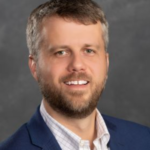
Nolan Wages: I’m a professor in the department of biostatistics at Virginia Commonwealth University School of Public Health. I also serve as the director of the biostatistics shared resource for VCU’s Massey Comprehensive Cancer Center.
My research primarily focuses on the design of early-phase clinical trials in oncology. I do that from a statistical methodology standpoint and through collaborations with cancer center members in designing and analyzing their trials. I also teach clinical trial-related coursework for our PhD and master’s programs in the department of biostatistics.
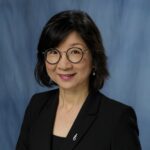
Ji-Hyun Lee: I’m a professor of biostatistics at the University of Florida and associate director for cancer quantitative sciences at the UF Health Cancer Institute. Like Nolan, I also lead the biostatistics and computational biology shared resource at the cancer institute. Of course, most recently, I served as the 120th president of the American Statistical Association.
My daily work, in addition to teaching courses and mentoring students, involves collaborating with clinicians and researchers on cancer clinical trials and translational research. Much of my work focuses on study design, statistical leadership, and using data to answer important questions in cancer research and patient care.
Ron Wasserstein: Why did you believe there was a need to build this program?
Ji-Hyun Lee: I have worked in clinical trials for many years, both in academic medical centers and as a faculty member in biostatistics. Over time, I have come to believe strongly that there is still a meaningful gap between academic statistical training and the realities of clinical trial practice.
During my own training, I learned rigorous statistical theory and methodology. But when I entered the world of oncology trials, I quickly realized how much I still needed to learn. For example, when I first heard about phase I and phase II trials, I had no idea what that meant. I also wondered, what is a clinical trial protocol, and what do biostatisticians do to prepare for it?
Of course, training programs today are much better and more modern than they were when I was a student a long time ago. But I still see the same challenge when statisticians enter clinical trial settings. It often takes substantial time—really substantial time—mentorship, and collective effort before they fully understand how these studies actually operate.
Clinical trials are not just about statistical methods. They involve regulatory expectations, protocol development, multidisciplinary communication, operational limitations, patient safety, interim decision-making, and interpretation under uncertainty.
At the same time, trials are becoming more complex.
We now see adaptive designs, biomarker-driven studies, and the growing use of AI tools in clinical research. Meanwhile, the demand for statisticians in pharmaceutical companies, CROs, and academic medical centers continues to increase.
So, the ASA wanted to create a more structured pathway to help statisticians gain practical clinical trial experience before entering these environments. The goal is quite simple: help our members become more prepared, more confident, and more effective in real clinical research settings.
Nolan Wages: Many statisticians receive strong theoretical training, but clinical trials require a very specific applied skill set. The things Ji-Hyun mentioned, such as protocol development, navigating regulatory considerations, and even endpoint selection, are not always covered in a structured way in graduate programs.
As a result, people often end up learning these skills informally on the job, which can be inefficient and sometimes inconsistent.
We’re trying to bridge that gap with this program and help people translate their statistical foundation into the context of real-world clinical research, where these decisions can directly impact patient care and regulatory approval.
Ron Wasserstein: Who was your target audience when you decided to build out the Clinical Trials Certificate Program?
Nolan Wages: The certificate program is really designed to span a wide spectrum, which is what makes this program unique.
We’re targeting quantitatively trained individuals—people with graduate-level backgrounds in statistics, biostatistics, data science, or other related fields. But they could be at very different stages of their careers.
This could include early-career individuals, such as recent master’s graduates trying to break into the pharmaceutical or clinical trial space. It could also include mid-career statisticians who may be pivoting from other areas.
We also envision academic researchers who want to be more deeply involved in clinical studies because, as we mentioned, clinical trials require a very specific applied skill set.
Ji-Hyun Lee: We also expect interest from academic researchers who already collaborate on clinical studies but want a deeper understanding of trial operations and statistical leadership.
If statisticians focus only on the methodological aspects of trials, our influence can remain limited. But when we also understand the broader clinical, operational, and regulatory landscape, we are better positioned to take on leadership roles and contribute more effectively to decision-making.
In that sense, this program is designed to support multiple career stages.
Donna LaLonde: Ji-Hyun, your theme for your presidential year was “Building Bridges.” I understand that one of the program’s goals is bridging statistical foundations and medical research implementation. Can you share why that bridge is so hard to cross without structured training?
Ji-Hyun Lee: The challenge is that the two worlds operate very differently. Graduate programs understandably focus on statistical theory, computation, and methodology. But real clinical trials involve many additional dimensions that are difficult to learn from textbooks or classrooms alone.
For example, statisticians need to understand how protocols are written, how endpoints are selected, and how FDA guidance affects analysis decisions. Many statisticians may not even be familiar with the term “endpoint” because, in other settings, we often refer to them as primary outcome variables. They also need to understand how data are collected and monitored and how multidisciplinary teams function under pressure.
Communication becomes critically important.
For example, a statistician may need to explain uncertainty or risk to clinicians, investigators, regulators, or company leadership. Not everyone is trained in our language. Without structured exposure, many people learn these lessons only through trial and error after entering the workforce, which can be stressful and inefficient.
We have a responsibility to pass that experience on to the next generation of statisticians. Otherwise, we risk losing important opportunities to strengthen both our profession and our impact on clinical research.
I feel strongly that this program will be a great way to advance our profession. That’s why I am so excited about it and so excited to continue building bridges.
Donna LaLonde: Nolan, the program will be cohort-based and online, but tell me about how you decided on the topics and planned out the certificate program.
Nolan Wages: First, regarding the structure, we wanted something that balanced flexibility with engagement—especially with colleagues also in the certificate program. The two-part weekly model grew out of that goal.
Participants will complete asynchronous material on their own time—things like recorded lectures, readings, and exercises—making the program accessible to people who are working full time. We then pair that with a live, synchronous session each week. That’s where the deeper learning happens through discussion, Q&A, and interaction with instructors, mentors, and peers.
The cohort model was also very intentional. Clinical trials are inherently collaborative, as we’ve already discussed. We wanted participants to learn in a community and build connections, not simply consume content in isolation.
Donna LaLonde: When building the curriculum, how did you incorporate aspects of your research into the design of the program?
Ji-Hyun Lee: The way I see data is perhaps a little different from how methodological statisticians may view it. To me, each data point reflects a patient’s life. That’s how I see the data.
Clinical trials are fundamentally about patients. Statistical decisions in trials are not abstract mathematical exercises. They can directly affect treatment development, regulatory approval, and ultimately patient care. That perspective shaped the curriculum significantly.
Of course, we are teaching emerging statistical methodologies and design principles. But we also wanted participants to understand why all this matters. Poor endpoint selection, inadequate monitoring, weak data quality, or inappropriate interpretation can have very real and serious consequences.
We also spent time debating balance. There is simply too much material to cover fully in a single certificate program.
The challenge was deciding what is most essential and practical from a patient-care perspective. We focused on areas where statisticians often face steep learning curves in real-world clinical trial settings, while creating a framework that participants can build upon throughout their careers.
At the end of the day, we wanted participants to understand that clinical trials are not just about methods or models. They are about patients and decisions that can affect their lives.
That is my personal hope, and I think the themes of this certificate program are very well aligned with that goal.
Nolan Wages: One thing I would add is that we felt strongly about including a capstone experience, and I think Ji-Hyun mentioned this in one of her earlier answers.
Giving participants the opportunity to work on a real project—designing, analyzing, and interpreting actual studies—helps connect the material to the kinds of decisions they will face in practice and the impacts those decisions can have on patients.
We did not want this to be solely a didactic experience with lectures and exercises. We wanted participants to engage in a real-world capstone project. I think that contributes to the mindset that this work is ultimately about patients, and we hope participants leave the program with that perspective.
Ron Wasserstein: Nolan, what would you say about the statistician’s role in the clinical research landscape?
Nolan Wages: The role is much broader than people sometimes realize. Statisticians should not be brought in only at the analysis stage. Ideally, we’re involved from the very beginning—not just in the design, but also in the initial concept of the trial and the research questions being asked.
Statisticians help define research questions, select endpoints, design studies, determine how evidence will be generated, and decide how data will be analyzed. We should be involved throughout the entire lifespan of a clinical trial.
In my experience, many clinical investigators come to me expecting to fit their study into some standard template or traditional trial design. But a big part of my role is helping them refine their objectives and then tailoring the design to answer the questions they are truly interested in exploring.
Importantly, we also serve as translators between disciplines. We bridge clinical, operational, and regulatory perspectives in ways that support better decisions for patients.
Ron Wasserstein: Ji-Hyun, how do you see AI changing clinical trial design, analysis, and many of the other aspects of clinical research?
Ji-Hyun Lee: AI is beginning to influence many aspects of clinical trials, although I think we are still in the early stages. Right now, I see the biggest impact in areas such as patient recruitment, eligibility screening from electronic health records, real-time monitoring, and the management of large and complex datasets.
We are also starting to see new therapies and treatment strategies that incorporate AI algorithms themselves, particularly in personalized medicine and biomarker-driven treatment approaches. These developments create additional challenges for clinical trial design, validation, and evaluation.
The future clinical trial workforce will need not only strong statistical skills, but also a practical understanding of how clinical research is evolving in the AI era.
Leave a Reply