
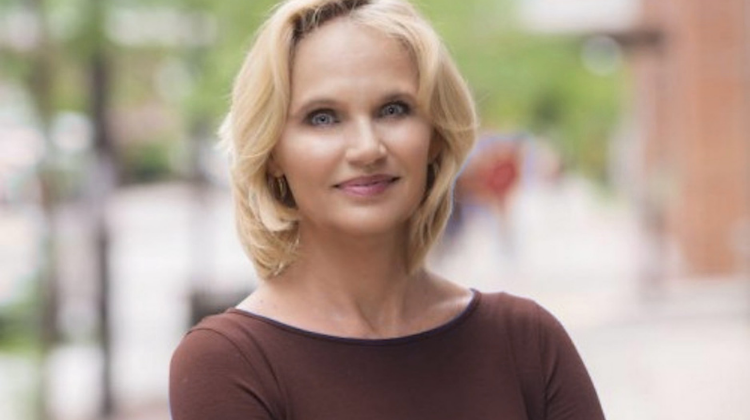
Alexandra L. Hanlon is a nationally recognized leader in collaborative biostatistics and health data science. As a professor in the department of statistics and the founding director of the center for biostatistics and health data science at Virginia Tech, she leads interdisciplinary teams working at the intersection of statistics, medicine, and public health. Over more than three decades, she’s contributed to research across a wide range of areas, including cancer, cardiovascular disease, mental health, and women’s health. She’s also authored more than 450 peer-reviewed publications.
Her path to biostatistics has been deeply personal. She lost her mother to breast cancer at a young age—an experience that continues to inform her commitment to advancing health research and improving quality of life through data-driven insights. Through more than two decades of service to the ASA, Hanlon has held numerous leadership roles at the chapter and national levels, including serving on the ASA Board of Directors.
Known for her dedication to mentorship, communication, and team science, Hanlon is passionate about training the next generation of statisticians and fostering meaningful collaboration across disciplines. In recognition of her sustained and distinguished service to the profession, she was honored with the ASA Founders Award.
Background and Career Journey
Where did you grow up, and how do you think it shaped your outlook on life?
I have deep roots in Virginia. My mother was born in Alexandria, and her family was from that area. She loved history, and we lived in Fredericksburg when I was young, a place she cared about so much that she dreamed of writing a book about its history. She died from breast cancer when I was 11, near the end of my fifth-grade year.
After my mother died, I actually finished fifth grade in my paternal grandmother’s classroom. She was a teacher, and I think about that now as one of those experiences whose significance I couldn’t fully understand at the time. Education, family, and taking care of one another were simply part of my life from a very early age.
Afterward, we moved to Chambersburg, Pennsylvania, where my father was a professor of English at Shippensburg University. He was not only a professor, but also a mentor. His graduate students were part of our lives. They came to dinner, spent holidays with us, and occasionally even lived in our spare rooms. I watched him invest in them and saw, without really understanding it at the time, how much a mentor could shape another person’s life. He also directed a summer program for underserved students who needed additional preparation for college.
My father’s parents retired in Asheville, North Carolina. My grandfather spent 36 years with the US Forest Service and ultimately served as supervisor of North Carolina’s national forests. We spent summers with my grandparents, driving back and forth along I-81 between Pennsylvania and Asheville. I remember passing Virginia Tech and being fascinated by it, long before I could have imagined that I would someday build a career there.
We also spent many holidays at the Peaks of Otter along the Blue Ridge Parkway, just north of where I now live in Virginia. Those mountains, forests, and times together remain incredibly meaningful to me.
As I got older and my own career began to take off, I continued visiting my grandmother. She was fascinated by what I was doing and where I was going. She used to tell me that she lived through my adventures. I loved that. Having someone I loved so much take such a genuine interest in what I was doing elevated me. She made my work and experiences feel interesting and important, probably at times before I fully believed that myself.
Looking back, I realize I grew up around people who cared deeply about things larger than themselves. My mother cared about history and place. My father cared about literature, education, and his students. My grandmother was a dedicated teacher who believed in me and took enormous joy in watching my world expand. My grandfather devoted his career to our national forests.
I don’t think I consciously connected any of that when I was young, but I certainly see it now. I love science, but I also love the human side of science: curiosity, relationships, education, mentorship, and especially helping others discover what they are capable of.
In many ways, I’ve spent my career trying to do for others what others have done for me.
Your path to biostatistics was shaped by a deeply personal experience. How has that continued to influence your work and priorities today?
Losing my mother to breast cancer at such a young age certainly influenced my path to biostatistics, although I don’t think I fully understood that connection until later.
Other experiences reinforced it. My first job after Rochester Institute of Technology was at Rockwell International in aerospace, where part of my work involved testing missile systems and studying reliability, essentially asking when systems might fail if the country were under attack. I wore a dosimeter every day because of potential occupational exposure, and given my family history, I was very aware of that risk. Two young women I worked alongside had been in that environment longer than I had. After I left Rockwell, both were diagnosed with breast cancer at very young ages.
Years later, I learned that I carry a pathogenic BRCA2 variant, which significantly increases a person’s risk of developing breast cancer. By then, I had also been involved in the early high-risk breast cancer program at Fox Chase Cancer Center, contributing detailed family medical histories and pathology records at a time when our understanding of hereditary cancer risk was still evolving.
So, cancer has never been an abstract research problem for me. At the same time, I wouldn’t characterize my career as being driven solely by cancer. Those experiences taught me that the questions behind the data matter. Statistics can be applied almost anywhere. I wanted to use it in settings where the answers could ultimately improve health and quality of life.
That perspective still guides me today. I am drawn to research where statisticians are genuine scientific partners, where the questions matter, and where our expertise can help a team design a stronger study, think differently about a problem, or generate evidence that can ultimately improve people’s lives.
You began your career in aerospace before transitioning fully into biostatistics. What drew you to this field, and what has kept you here?
My route into statistics was not particularly linear. When I started thinking about college, computing was an emerging field, and I wanted to be part of it. I applied to exactly one school, RIT [Rochester Institute of Technology], because of its extraordinary placement record and co-op program, and entered as a computer science major.
At RIT, I discovered that I loved STEM and had a real aptitude for mathematics. A wonderful professor, David Farnsworth, introduced me to statistics and helped me see its possibilities.
After graduating, I went to Rockwell International in Anaheim, California, and worked in aerospace for about three years. It was an excellent opportunity right out of college, but eventually I realized something was missing. I enjoyed the quantitative work, but I wanted to use those skills in a way that connected more directly to people and questions that felt meaningful to me.
I left Rockwell and entered graduate school at the University of California, Irvine. While I was there, the Joint Statistical Meetings came to Anaheim in 1990. I volunteered at the meeting, explored opportunities across an incredible range of fields, and made a connection with the American College of Radiology that ultimately led to my first position as a biostatistician.
That was when things really came together for me. I realized I could combine statistics with medicine and health research and use quantitative skills to contribute to questions that could affect people’s lives.
What has kept me in biostatistics, though, is collaboration. Early on, I discovered how much I enjoyed working with investigators, learning their science, and using my expertise to help move their scholarship forward. Throughout my career—at Fox Chase Cancer Center, Temple, Penn Nursing, and now Virginia Tech—I have repeatedly found myself building collaborative groups and bringing people together.
I am very comfortable being a driver behind the scenes. There is tremendous satisfaction in helping a team take an important scientific question and determine how to answer it rigorously. I get to keep learning, meet interesting people, and contribute to science across areas I never could have imagined when I started. More than three decades later, that still doesn’t get old.
Your first role as a biostatistician came through a connection made at the Joint Statistical Meetings. What advice would you give to early-career statisticians about making the most of professional meetings?
I would tell them not to go to a professional meeting simply to attend sessions. Go ready to explore.
At the 1990 JSM in Anaheim, I was a graduate student trying to figure out what statisticians actually did. I volunteered. I went through the job binders. I talked with people from virtually every area I could find and interviewed with an extraordinary number of employers. I wasn’t executing some carefully designed networking strategy.
I was trying to understand all the possibilities that were out there.That experience changed my life. A conversation with representatives from the American College of Radiology ultimately led to my first position in health research as a biostatistician at the ACR and put me on a career path I hadn’t known existed before that meeting.
So, I encourage students and early-career statisticians to get involved. Introduce yourself to people. Ask them what they do. Attend something outside your specialty. Volunteer. Most importantly, have conversations without worrying about whether every interaction has an immediate payoff. You never know which conversation might change the direction of your career.
I would also tell them not to underestimate what they bring to those interactions. You don’t need to be the most accomplished person in the room to belong there. Ask good questions, listen, and follow up. Relationships develop over time.
And when someone opens a door for you, remember it. Then, when you are in a position to do so, open a door for somebody else.
ASA Service
How has your involvement with the American Statistical Association shaped your personal and professional life?
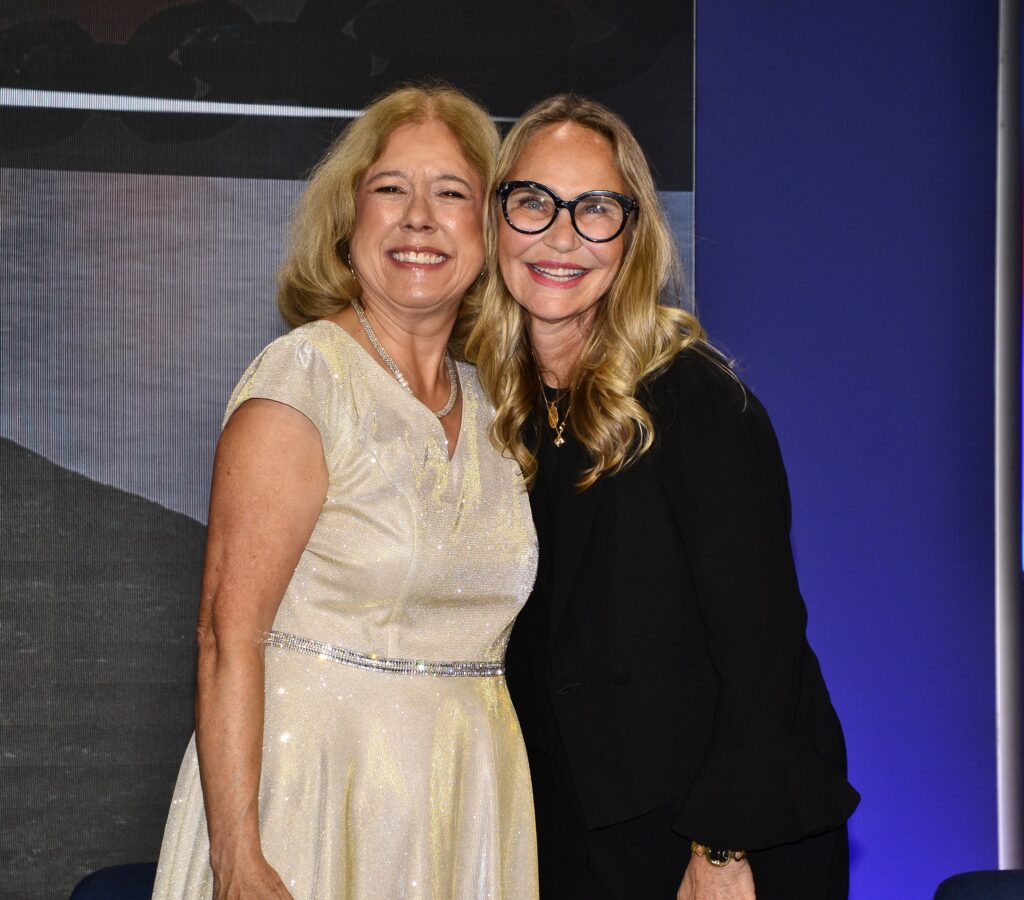
The ASA has given me so much over the years. Some of my closest colleagues have become dear friends, and those relationships have enriched my life in ways I never could have imagined. The ASA also opened doors for me as a leader, giving me opportunities to contribute to the profession and mentor students and early-career statisticians. Those experiences helped me develop the skills and confidence to build educational programs and initiatives that create opportunities for others. Receiving the Founders Award is especially meaningful because it recognizes service to a community that has given me so much. I can’t imagine my professional life without it.
Leadership
You lead a highly interdisciplinary center. What makes collaboration successful when so many fields and perspectives are involved?
For me, successful collaboration starts with respecting the expertise everyone brings to the table. Strong technical skills matter, but they are only part of what makes an interdisciplinary team work.
A collaborative statistician has to understand enough of the science to ask good questions, recognize what others contribute, and help define the real problem. I am often working outside the traditional biostatistical wheelhouse, and I have learned to be comfortable not being the expert in every part of the conversation.
My role is often to connect people, translate across disciplines, and create the conditions in which everyone’s expertise can contribute. That requires organization and discipline, especially when moving among very different projects and teams.
The best collaborations are those in which people value one another and see the statistician as a scientific partner from the beginning. When that happens, the science is stronger and the team can accomplish far more together than any one person could alone.
Your work spans areas from cancer to mental health to health policy. How do you prioritize projects, and what makes a research question compelling to you?
It is almost never just the disease area or statistical method that determines whether I find a project compelling. It is usually some combination of the question, the people, and the potential impact.
I am drawn to methodological challenges and problems that let me learn something new. One of the great privileges of being a collaborative statistician is that someone can walk through the door with a scientific question I have never encountered before and suddenly I get to enter a whole new area.
But I also ask myself: Where can we make the greatest difference? Would our expertise help move this investigator’s work forward? Can we contribute something meaningful to the science? And can we build a relationship in which everyone feels valued and invested in the work?
That distinction matters to me.
At this stage of my career, I’m also more thoughtful about where I invest my time and our team’s resources. Some of my most rewarding collaborations have been with early-career or underfunded investigators who have important scientific questions but limited resources. I genuinely enjoy helping people find a path forward.
What matters most to me is whether there is a shared commitment to doing good science and valuing what everyone brings to the table. It can be challenging when statisticians are brought in at the last minute or when the time and resources allocated don’t reflect what the work requires. Those situations often call for honest conversations about expectations, priorities, and what we can realistically accomplish together.
So, prioritization is not simply deciding which scientific questions matter. It is also choosing and cultivating relationships in which good collaborative science can actually happen.
You’ve emphasized the importance of communication in collaborative statistics. What does “good communication” look like in practice for a biostatistician?
Good communication starts with remembering that our job isn’t to impress people with how much statistics we know.
Jargon can create distance very quickly. Instead, I want to understand what an investigator is really trying to learn. That often takes several conversations. We may start broadly, then gradually narrow the research question, outcomes, design, and methods together. I would much rather have three productive short meetings than rush through one meeting and discover six months later that we answered the wrong question.
We also need to meet people where they are. That may mean drawing something, using an analogy, explaining an idea several ways, or simply stopping and asking, “Does this make sense?”
Ultimately, communication is how we build trust. I want collaborators to feel comfortable saying, “I don’t understand,” and I want our statisticians to feel equally comfortable saying, “I don’t know yet. Let me think about that.”
Technical brilliance matters, but if people are afraid to ask you a question, it is not enough for collaborative science.
Mentoring
You’ve received recognition for your mentoring. What do you think makes a great mentor in statistics or data science?
For me, great mentoring starts with the relationship.
I learned that early without realizing I was learning it. My father’s graduate students were part of our lives. They ate dinner with us, spent holidays with us, and occasionally lived in our home. He was fun. His students really enjoyed his company. But underneath that was something much more important. They knew he cared about them and was invested in who they were becoming.
My grandmother taught me something else: the power of genuine interest. As my career developed, she wanted to hear where I was going and what I was doing. She used to tell me she lived through my adventures, and her curiosity made me feel my work mattered.
That stays with me because mentoring isn’t always about giving advice. Sometimes it is simply about paying attention, being interested, and letting someone know you see something in them.
My strongest mentoring relationships are with people I genuinely get to know, and who get to know me. We spend time together. They hear my stories, including the mistakes, and hopefully absorb some of what I’ve learned without having to learn every lesson the hard way themselves.
But mentoring cannot be formulaic. People need different things. One person may need encouragement and confidence. Another needs to be challenged. Someone else needs an introduction, an opportunity, or simply a person who will listen. I try to understand the individual and mentor accordingly.
At this point in my career, watching someone I’ve supported grow into a leader and begin guiding others is enormously satisfying. That’s how I know the work continues.
How do you help students and early-career professionals build confidence when working with experts outside their field?
I understand that feeling better than people might imagine. At RIT, I was often the only woman in my mathematics classes, and throughout my career, there have been many times when I entered a room where everyone seemed to know something I didn’t.
Even today, there are moments when I look around a room and am struck by the fact that people are looking to me for ideas and leadership. I don’t take that for granted.
Remembering what it feels like to still be finding your voice makes me a better mentor.
I want younger people to understand that expertise does not require knowing everything. In interdisciplinary science, no one knows everything. Your responsibility is to know what you bring to the table, prepare well, listen carefully, ask thoughtful questions, and be willing to say when you don’t know something.
Confidence comes from doing that repeatedly and seeing that your contribution has value. Part of my role as a mentor is creating opportunities for people to discover that for themselves.
Programs such as CUBE create opportunities for underrepresented students. Why is that kind of initiative so important to you?
CUBE is personal to me in ways that probably aren’t obvious from the program description.
My father spent part of his career helping students who needed additional preparation to succeed in college. I grew up watching what happened when someone invested time in a young person and helped them see possibilities they hadn’t necessarily seen for themselves. Talent is widely distributed, but access to opportunities, professional networks, and exposure to fields like biostatistics is not.
Programs like CUBE can provide that kind of exposure. Students receive training, but equally important, they get to work on real scientific problems, meet statisticians and scientists, and begin building a professional network. They can see what collaborative biostatistics actually looks like and start imagining themselves in the field.
You cannot pursue a career you don’t know exists.
That’s one reason CUBE matters so much to me. Sometimes changing someone’s trajectory begins simply by opening a door and saying, “Come in. Let me show you what’s possible.”
Statistics Career and Advice
With rapid changes in healthcare and data availability, what skills do you think will be critical for the next generation of statisticians?
Obviously, statisticians need to understand emerging technologies, including AI. We would be foolish not to embrace tools that can make aspects of our work better and more efficient.
What worries me is the assumption that access to sophisticated tools is equivalent to years of statistical training, scientific experience, and judgment. It isn’t. We’re already seeing situations where someone arrives with an AI-generated solution and asks a statistician to validate it or repair it after the fact. Sometimes, untangling what was done and why is harder than designing the analysis correctly from the beginning.
So, somewhat paradoxically, I think the rise of AI makes the distinctly human skills of a collaborative statistician even more important: critical thinking, understanding study design, recognizing when an answer doesn’t make scientific sense, communicating uncertainty, asking the question nobody else thought to ask, and understanding the context in which data was generated.
AI can generate an analysis, including one that is not appropriate for the setting. AI cannot substitute for the scientific judgment and accountability required to understand the science, data, design, and people around the table.
The next generation needs technological fluency, absolutely. But my hope is they never confuse knowing how to use a tool with knowing how to think.
The next generation needs technological fluency, absolutely. But my hope is they never confuse knowing how to use a tool with knowing how to think.
What is one piece of advice you would give to someone just starting out in biostatistics or data science today?
Don’t underestimate the value of practice.
There is a difference between learning statistics and learning how to be a statistician. The latter comes from working with people, encountering problems you haven’t seen before, understanding enough about someone else’s science to know why the question matters, and learning how to apply what you know in settings that are rarely as tidy as the examples in a textbook.
That has been a constant throughout my career. I learned by doing, by working across disciplines, by asking questions, and by being willing to get outside my comfort zone.
So, my advice is to seek out those experiences. Work with people. Take on problems you don’t already know how to solve. Get outside your comfort zone. Find people you can learn from and eventually become someone other people can learn from.
And don’t wait until you feel completely ready. Very few interesting opportunities arrive at exactly the moment you feel prepared for them.
Personal
Outside of your professional work, what brings you the most joy or helps you recharge?
Family is at the center of my life. We are a big blended Hanlon-Kolb family, including my husband, our children, siblings, parents, and in-laws. Our home tends to be the gathering place for holidays and celebrations. I love that.
I also love to travel. I started writing a travel column, much of it about home exchanges, and that eventually led to becoming an editor for two local magazines. Travel satisfies the same curiosity that drives me professionally. I enjoy discovering new places and meeting people.
But I don’t need to go anywhere exotic to be happy. I can sit in my backyard watching deer graze and squirrels running around my feet and be perfectly content. I hike, bike, paddleboard, and probably go to a concert once a month. I also love the beach. Give me the sound of waves and sun on my face, and I’m pretty happy. And I am a sunset fanatic. Wherever I travel, I find myself looking for the best place to watch the sun go down.
The simplest answer is that I really love life. Family, music, nature, travel, new experiences, and time with the people I care about all matter to me. Work matters enormously, too, but there is a big world outside of it I don’t want to miss.
Looking back, is there anything you would have done differently in your career?
I would have learned earlier to look up from the work in front of me and understand the bigger picture.
I’ve spent much of my career building collaborative groups, and I’ve learned that doing that successfully requires more than assembling talented people and doing excellent science. You have to understand the institution you’re part of. What are its priorities? Where is it trying to go? What does leadership need? Where are the gaps?
And where can a collaborative group contribute in a way that advances both the science and the larger mission?
Earlier in my career, I focused more on proving the value of the work itself. I thought that if we did excellent work and helped enough investigators succeed, the value would be obvious. Those things certainly matter, but leadership has taught me that you also need to understand organizational structures, build relationships across them, and communicate your value in ways that resonate with different audiences. The goal isn’t simply to align with institutional priorities, but to help shape them by demonstrating where collaborative science can make a meaningful difference.
I’ve also learned the importance of diplomacy. As statisticians, we are trained to look at evidence, identify problems, question assumptions, and say when something isn’t supported by the data. Those are strengths, but how you use that statistical voice matters. You can be rigorous without being rigid. You can disagree without being adversarial. And you can advocate strongly for what your team and the science need while still listening carefully to what the institution needs.
If I could give my younger self advice, it would be to understand that landscape earlier. Don’t just build a great group. Understand where that group fits, why it matters to the institution, and how it can help move the larger organization forward.
That perspective has made me a better leader.
Leave a Reply