
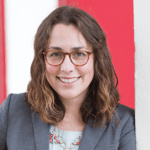
Emily Griffith took statistics in high school to avoid taking a “real” math class. Unfortunately for her plan to avoid math, she fell in love with statistics and ended up finishing college with a degree in statistics and a minor in math. She eventually earned her PhD, completed a postdoc at the Patuxent Wildlife Research Center, and then worked as a survey statistician for the FBI. She was recently named director of the North Carolina State University’s Statistical Consulting Core.
A Statistician's Life
Karen Bandeen-Roche
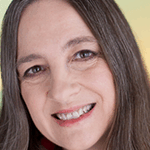
Karen Bandeen-Roche was inspired by her dad’s life as a NASA scientist and studied mathematics in college and graduate school. She wasn’t exposed to statistics until she attended Cornell and it was there, while mentored by David Ruppert, that she found joy in analyzing data. She now fosters trainees and co-founded a National Institutes of Health–funded training program in the epidemiology and biostatistics of aging.
Polly Phipps

Polly Phipps fell in love with statistics when, as a student, she designed and carried out a probability survey from beginning to end. She trained as a survey methodologist and joined the federal government in the late 1980s. Ultimately, she developed tools to evaluate quality at early and late stages of questionnaire development and put into place a model for instrument design that incorporated qualitative and quantitative methods.
Cynthia Rudin

Cynthia Rudin became interested in machine learning because she wanted to predict the future. She is now associate professor of computer science, electrical and computer engineering, and statistics at Duke University and directs the Prediction Analysis Lab. In 2015, she was named one of the “Top 40 Under 40” by Poets and Quants and one of the 12 most impressive professors at MIT by Businessinsider.com.
Nancy L. Geller

Nancy Geller’s interest in biostatistics developed at Memorial Sloan-Kettering Cancer Center and, more recently, at the National Heart, Lung, and Blood Institute. Currently, she leads a group writing many papers in biomedicine and biostatistics.
Karen Kafadar

Karen Kafadar had the great fortune to heed the council of her master’s adviser, Bradley Efron, and earn her PhD in statistics. It was during her studies she learned from some of the best, including John Tukey. Her career is living proof of the influence others can have on a career. Besides her service to the ASA, she has worked in applications such as forensic science and randomized cancer screening trials.
Nancy Potok
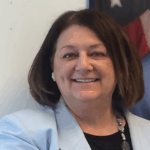
Nancy Potok couldn’t decide if she wanted to be a forest ranger or a librarian when she grew up. Eventually, it was her love for reading that led to an interest in research, analysis, and data. She has since worked as a statistician for the public, private, and non-profit sectors and has experience in all three branches of the federal government—including being the first female deputy director at the US Census Bureau.
Amanda L. Golbeck
Amanda Golbeck was a first-generation college student, who attended Grinnell College on scholarships. It was at Grinnell she taught herself how to conduct a cluster analysis using SPSS, analyzed the results, and became hooked on quantitative research. She earned her graduate degree and studied a broad array of subjects—finally settling on biostatistics. In 2017, she authored a book on the life and work of Elizabeth Scott: Equivalence: Elizabeth L. Scott at Berkeley. It includes a microhistory of Scott’s use of statistics to promote the status of women in science.
Stephanie C. Hicks
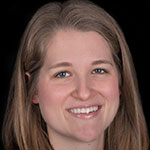
Stephanie Hicks began her college career majoring in chemical engineering but learned that what she loved about chemistry was mathematics. Currently, she is an assistant professor in the department of biostatistics at Johns Hopkins Bloomberg School of Public Health and co-founder of R-Ladies Baltimore, a local chapter of a global organization to promote gender diversity in the R programming community. She is also working on creating a children’s book about women in statistics and data science.
Aarti S. Shah

Aarti Shah began her tenure at Eli Lilly in 1994 as a senior statistician and rose among the ranks to become senior vice president and chief information officer. She is accountable for setting the company’s strategic direction so it can deliver on its mission to make medicines that help people live longer, healthier, and more active lives. In 2016, she was named one of the “Fierce Women in Biopharma” by Fierce Pharma.