

After being awarded a scholarship to Norfolk State University, Dionne Price earned a summer internship at the National Institute for Neurological Disorders and Stroke. It was there she fell in love with biostatistics. Currently employed at the US Food and Drug Administration, her statistical expertise contributes to ensuring the efficacy and safety of drugs and therapeutic biologics for the public.
A Statistician's Life
Simone Gray
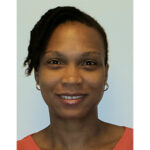
Simone Gray grew up on the island of Trinidad and enjoyed being challenged by mathematical problems. After graduating from the University of Miami, she became aware of the critical shortage of math and science teachers in high schools across the US and became a tutor and mentor. Recently, Simone was the co-chair of the Fostering Diversity in Biostatistics Workshop hosted by the Eastern North American Region of the International Biometric Society at JSM.
Jo Hardin

Jo Hardin’s father was an actuary so she thought about having a career in a mathematical field. But once she got to college, she fell in love with academia and found herself working toward a career as a statistics professor. She is now professor of mathematics at Pomona College. She is also a mentor for a group of students from the Chicago Public School District. Additionally, she started a program at Pomona College, Pomona Scholars of Mathematics (PSM), designed to build community and support students who are navigating college mathematics. Happily, quite a few of the inaugural PSM students are now in graduate programs in the mathematical sciences.
Deborah Nolan

A New Year’s resolution brought Debbie to statistics; her love for teaching moved her to want to communicate the story behind statistical analysis. She has written numerous books and, in 2018, was recognized for her excellence in teaching with the ASA’s Waller Distinguished Teaching Career Award.
Helen MacGillivray
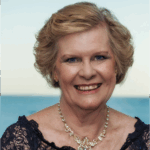
Helen MacGillivray set out to be a physicist but became captivated by the concepts, real-world problem-solving, and universality of statistics. She earned a PhD in statistics and eventually chose professional and teaching leadership over university leadership. In 2017, she became the second female, and second Australian, to be president of the International Statistical Institute.
Susmita Datta
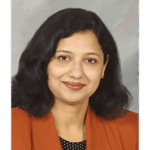
Susmita Datta was born in Kolkata, India, where she attended an eclectic school for women that taught her science, literature, drama, and music. She contemplated whether to pursue a career in music or science, with her passion for science winning out and bringing her into the world of physics, followed by statistics. Susmita is widely published in peer-reviewed journals and currently serves on the editorial boards of Briefings in Bioinformatics and the IISA Springer book series.
Rhonda Bacher

Rhonda Bacher found patterns and solving problems interesting when she was younger, so she fell in love with statistics when she realized it was its own powerful language, capable of explaining patterns and problems. Currently, she teaches and mentors biostatistics students and—like her mentors—she’s able to help students discover their careers, passions, and paths.
Madhumita (Bonnie) Ghosh-Dastidar

Her family called Bonnie Ghosh-Dastidar a human calculator when she was growing up, and it was her father who encouraged her to study computer science because it was the “future!” Eventually, Ghosh-Dastidar realized she wanted to do applied work and collaborate more so she turned to statistics. Currently, she works in health policy statistics and her first-authored article in the American Journal of Preventive Medicine is listed on the journal’s website as one of the most downloaded papers.
Amelia McNamara
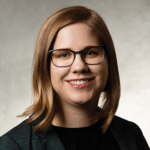
Amelia McNamara went to design school during her first year in college but learned working with data allowed her to cultivate her broad interests. When she saw people struggling to understand histograms, she collaborated with Aran Lunzer to write an essay titled “What’s So Hard About Histograms?” This essay has become a popular, interactive, and educational tool.
Irving J. Good (1916–2009)

Irving J. Good was born in London in 1916 and became proficient in mental arithmetic by the age of nine. Lying in bed with diphtheria, he turned over in his mind his sister’s lesson on square roots. On his own, he realized the irrationality of the square root of two and solved Pell’s equation. The […]