

While a math student at Vassar, Deborah Nolan was first exposed to statistics during a summer internship during which she helped analyze data from a survey in a women’s magazine about how family life had changed as more women became breadwinners. That experience convinced her to stay away from statistics and stick with the comfortable world of theoretical math. After graduating, she worked for IBM and learned how to code in several languages. It was her work as an applications programmer that brought Nolan back to the world of statistics, and she went on to earn a PhD in the field. Since then, Nolan has earned multiple awards for her dedication to teaching, including the ASA Waller Distinguished Teaching Career Award and Berkley’s Distinguished Teaching Award. She co-developed the first data science course at Berkeley and played a pivotal role in designing the data science major, leading to the establishment of the College of Computing, Data Science, and Society. Currently serving as the inaugural associate dean, Nolan is instrumental in meeting the growing demand for data science education, with nearly 1,000 students graduating annually with a data science major from Berkeley.
A Statistician's Life
Katherine Wallman
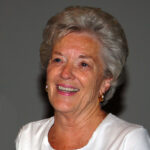
Her positions as chief statistician of the United States from 1992 to 2017 and 1992 ASA president only begin to capture her legacy as a leader, friend, and champion of government statistics and statistical literacy.
Jennifer Hill

Jennifer Hill developed an early interest in math and pursued economics in college. However, after working in the corporate world, she went back to school for graduate degrees from Rutgers and Harvard that allowed her to focus on causal inference and social policy. Currently professor of applied statistics at NYU Steinhardt, Hill has created software that makes it easier for applied researchers to use sophisticated methods in a way that helps them have a deeper understanding of what methods they are using and why. She notes, “Answering real questions with real data is the best and biggest challenge there is.”
Ginger Holt

Ginger Holt’s journey into the world of statistics and data science began in Fort Worth, Texas, fueled by a family passion for education. She pursued an undergraduate degree in industrial engineering at Texas A&M University and eventually earned a PhD in statistics from Rice University. She loved her first job as assistant professor at the University of Virginia but did not love pursuing research funding, so she transitioned into industry work. Currently at DataBricks, Holt plays a pivotal role in unifying forecasting processes across different domains. Leading her team, she focuses on building tooling in data engineering and data science, aiming to make these processes scalable not only for DataBricks but also for its customers. Her favorite aspect of a career in data science is its ability to foster new learning opportunities.
Nancy Reid
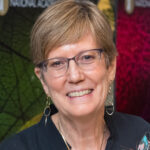
Nancy Reid initially intended to become a computer scientist because it was rumored to be the “future.” Instead, during her undergraduate years, she discovered she enjoyed statistics. She went on to pursue an MSc at the University of British Columbia, after which she expected to find a ‘real job.’ However, when she did her research thesis, she became hooked on research. In fact, the research environment was so exciting to her she has dedicated her entire career to academia. Still, Reid said she values the influence she has on her students the most.
Millennia Young

Millennia Young’s favorite subject while growing up was math. She loved solving problems and knowing she had the correct answer, even if the answer was “does not exist.” After high school, she went on to study applied mathematics at the New Jersey Institute of Technology, and it was there she was introduced to statistics. “Although both disciplines use math to model what is happening in the world,” she wrote, “statistics provided unique insights.” Before she started her PhD, she had two children, and by the time she defended, she had three. Although she struggled, she kept going. Eventually, she landed her dream job—leading the biostatistics lab for human health and performance at NASA.
Mary Ellen Bock
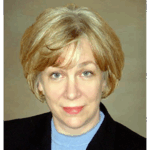
Mary Ellen Bock began her academic career at the University of Illinois at Urbana-Champaign, where she earned her bachelor’s degree in German in 1967. She shifted her focus to mathematics for her graduate studies at the same university and earned her PhD under the guidance of Robert B. Ash. In 1995, she made history as the first female full professor of statistics and inaugural female chair of the statistics department at Purdue. Under her leadership, Purdue added courses in areas of application such as bioinformatics, genomics, massive data, machine learning, visualization, and computational finance. She was also instrumental in securing National Science Foundation funding to develop the Pathways to the Future workshops that helped young female faculty succeed. Bock is an ASA founder and fellow.
DeJuran Richardson
DeJuran Richardson was pursuing a purely mathematical path of study when, midway through graduate school, he was introduced to the biostatistics field by a chance stumble into a conference on sequential methods and testing in clinical trials.
Drake Gibson
Drake Gibson is a lifelong Prince George’s County, Maryland, resident who became passionate about data science after learning to program in R and Python in graduate school. While working at the Bureau of Labor Statistics, he took on projects that enhanced his knowledge—his colleagues noticed and encouraged him to apply to be a data scientist.
Jemar Bather
Jemar Bather is a senior scientist in biostatistics at Merck, where he applies his statistical expertise to develop new medications that enhance health outcomes for those affected by infectious diseases.