
Sonia Thomas’s journey into biostatistics began at the University of North Carolina, where a flier in a math class piqued her interest.
A Statistician's Life
Elizaveta (Liza) Levina
Growing up in St. Petersburg, Russia, Elizaveta Levina excelled in math and pursued it in college, though without a clear career plan. It wasn’t until she was assigned to teach an introductory statistics course during her master’s studies that she realized her passion for applying mathematical thinking to real-world problems.
Ruixiao Lu
Ruixiao Lu was born and raised in China, where her early fascination with numbers and data led her to a career focused on personalized health care. With nearly 20 years of experience, she has contributed to genomics, diagnostics, and clinical trials, aiming to improve patient outcomes.
ASA Board Proposes Changes to Executive Committee Voting Rights

The ASA Board of Directors recommends amendments to the ASA bylaws and constitution to grant the treasurer voting rights on the executive committee, changing the position from its current ex officio non-voting status. The proposed changes are as follows: ASA members who have comments about the proposed changes should send them to Ron Wasserstein, ASA […]
Pawel Nazarewicz: AP Statistics Teacher Extraordinaire

Chris Franck interviews AP teacher Pawel Nazarewicz, who shares his teaching philosophy, creative teaching methods, and thoughts about AI in education.
Andrew Gelman on Tough Choices in Election Forecasting
The Washington Statistical Society and George Mason University held a joint seminar on the presidential election on October 11. Edward Wu, election analytics senior producer at CNN interviewed Andrew Gelman, professor of statistics and political science at Columbia University following Gelman’s talk, “Tough Choices in Election Forecasting: All the Things That Can Go Wrong.”
Julia Lane
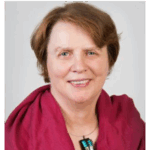
As a labor economist, Julia Lane is driven by practical questions such as “What is the return on investment in on-the-job training?” Her interest in data and statistics led to innovative methods combining diverse data sources and addressing bias and measurement issues. Passionate about public good, she co-founded programs such as the Longitudinal Employer-Household Dynamics Program, PatentsView, and the Coleridge Initiative. Her latest is a data search and discovery platform called Democratizing Data. Lane’s significant contributions extend to empowering women with remote access facilities and eliminating child care barriers. Among her achievements, she takes pride in her Nature article, “Women Are Credited Less in Science Than Men,” emphasizing the crucial role of statistics in understanding selection bias and highlighting implications for science policy.
Susan Paddock
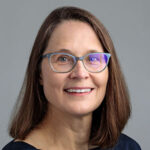
When Susan Paddock started her undergraduate degree, two pivotal courses—health care reform and women’s health—introduced her to epidemiological literature and cost–benefit analysis, steering her toward a major in math and biostatistics. After earning her PhD from Duke, Paddock joined the RAND Corporation, where she applied statistical methods to health policy research. Notably, she contributed to designing a Medicare payment system for inpatient rehabilitation facilities, affecting federal programs and congressional deliberations. Since 2019, Paddock has held a leadership role at NORC at the University of Chicago, overseeing a diverse team of statisticians, survey methodologists, and data scientists working on national issues. She was also involved in testing the safety of self-driving cars. Collaborating with Nidhi Kalra of RAND in 2016, she highlighted the inadequacy of existing road tests to ensure public safety, drawing attention from a US Senate committee. Their paper on this topic stands as her most frequently cited work, showcasing the power of statistical thinking in addressing crucial societal concerns.
Charmaine B. Dean

Hailing from Trinidad and Tobago, Charmaine B. Dean’s academic journey was shaped by her mother’s emphasis on getting an education, even though her mother was prevented from getting one herself. Dean’s affinity for mathematics, and particularly statistics, flourished during her undergraduate years and aligned with her desire to make a tangible impact. Currently, she provides strategic direction in research, innovation, and international collaboration at the University of Waterloo. She considers her engagement in interdisciplinary research one of her greatest achievements, particularly her research in fire science, which has allowed her to collaborate with scientists, government agencies, and fire crews.
Regina Liu
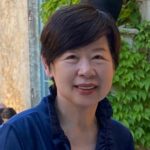
Regina Liu grew up in Taiwan with an interest in pursuing applied mathematics and actuary science, but she fell in love with probability and statistics instead. She earned a PhD in statistics from Columbia University and became an assistant professor at Rutgers University. Now a distinguished professor at Rutgers, she has established herself as an outstanding researcher and is praised for providing exceptional service to the statistics and data science profession. She has served as an editor for many journals and was president of the Institute of Mathematical Statistics from 2020–2021. She has dedicated much effort to the outreach and promotion of junior researchers and under-represented groups and is credited for making the Rutgers Statistics Department the well-known and nurturing place it is today.