

Jacqueline M. Hughes-Oliver was born in Jamaica and raised there by her grandmother until age 15, at which time she moved to join her mother in Ohio and attend the University of Cincinnati. She chose to study statistics in graduate school because of its applicability to every discipline; the thought of being able to make contributions in myriad areas was particularly enticing. A professor of statistics, Hughes-Oliver is passionate about outreach to underrepresented groups in the mathematical and statistical sciences and has been recognized with several teaching awards and elected to the NC State Academy of Outstanding Teachers.
Celebrating Black History Month 2020
Kimberly S. Weems
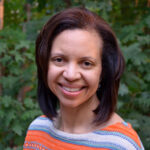
Currently a statistics professor at North Carolina Central University, Kimberly S. Weems has been instrumental in enhancing the graduate mathematics curriculum with statistics courses. She strives to expose her students to a variety of areas in statistics and data science and encourages them to pursue the path that inspires them, as she thinks this will lead to the happiest and most productive careers. She is the 2017 recipient of the College of Arts and Sciences Excellence in Teaching Award.
Bill William Carter Jenkins
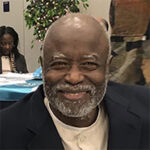
Bill Jenkins began his career as a statistician in the National Center for Health Statistics. He was a biostatistician by day and an activist by night. During his early 20s, he learned of the infamous, unethical Tuskegee syphilis study and worked to expose it. He helped extract an official apology from the federal government and produced a documentary with the survivors. Sadly, he passed away in February 2019 at the age of 73.
Charlotte Baidoo

Charlotte Baidoo loved how statistics told a story from data when she was in high school and, while she was an undergraduate, a professor inspired her to pursue a career in biostatistics. It was an opportunity to combine her love of applied math with helping others. Now, she aids the development of medicines to transform patient’s lives. A child of Ghanaian immigrants, she is also passionate about inclusion and diversity and co-leads EMBRACE, GSK’s first multiethnicity-focused employee resource group.
Neal Jeffries
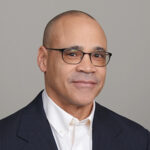
Even though Neal Jeffries’s father was a high-school math teacher, he studied only enough mathematics to earn a degree in economics. However, while working as a policy analyst, he realized statistics was necessary to critically evaluate the data that provides the basis for sound public policy—and that understanding led him to want a formal statistics education. Now, at the National Institutes of Health, Jeffries’s work involves advances in treating sickle cell anemia by expanding the pool of those who can receive curative stem cell transplants and developing new avenues of therapy.