
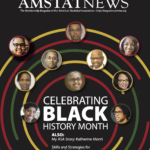
In celebration of Black History Month, we recognize 10 individuals from the Black/African-American collective who have made tremendous contributions to the field of statistics.
Celebrating Black History Month 2021
Emma Benn

Emma Benn has collaborated on a variety of health disparities-related research projects and teaches a graduate-level course, “Race and Causal Inference,” aimed at increasing the methodologic rigor by which health disparities are investigated, with a goal of finding effective causal targets for intervention. Benn’s contributions to diversity and inclusion in statistics and STEM have been celebrated by various organizations, including Mathematically Gifted and Black.
Simone Gray
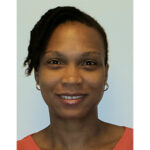
After graduating from the University of Miami, Simone Gray became aware of the critical shortage of math and science teachers in high schools across the United States and became a tutor and mentor before going on to become a full-time mathematics teacher at a low-performing high school in southwest Florida. Gray wanted to continue learning about both math and science, however and decided to leave teaching to pursue a PhD in statistical science at Duke University. Today, she is a senior statistician in the Epidemiology and Applied Research Branch of the Centers for Disease Control and Prevention’s Division of Cancer Prevention and Control.
Jesse Chittams
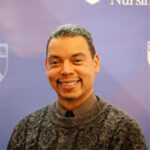
After graduating with an undergraduate degree in plant science, Jesse Chittams worked as a laboratory technician at the US Department of Agriculture. One of his first tasks was to perform a data analysis using SAS. It was then he fell in love with statistics and immediately pursued an advanced degree in mathematics and statistics. In 2000, Chittams established and directed the Biostatistical Analysis Center at the University of Pennsylvania and has trained and mentored more than 100 young professionals throughout his 30-year career.
Donald Martin
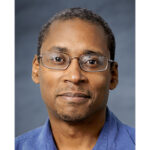
Math was always Donald Martin’s favorite subject in school. In fact, while in elementary school, his father taught him math he didn’t see in school until a few years later and that built his confidence. While at the University of Baltimore, Martin’s graduate adviser, Benjamin Kedem, convinced Martin to quit his full-time job on campus and become his research assistant, which helped Martin focus on his studies. Subsequently, he became one of four African Americans in the US to earn a PhD in mathematics in 1990. Since then, Martin, an associate professor at North Carolina State University, has received several research grants and the College of Sciences Faculty Diversity Professional Development Award.
Dionne Swift
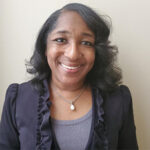
Since middle school, Dionne Swift knew she would pursue a math- or science-related occupation because those were her favorite subjects. Fortunately, her math and science teachers looked like her in both middle and high school and, as relatable role models, they sparked her interest in math and science. Because of the mentors in her life, Swift strives to inspire others to achieve their educational and professional dreams and is active in the initiatives of the ASA Committee on Minorities in Statistics, including serving as a mentor since 2012.
Rebecca Hubbard
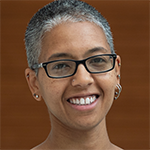
Rebecca Hubbard always excelled at science and math and considered becoming a science fiction writer but chose pre-med instead. However, not a “people person,” she discovered she had no interest in the clinical side of medicine. While looking for summer research opportunities, she learned about the Harvard Summer Program in Biostatistics, a field she had never heard of before, and decided to give it a try. This literally changed her life. Today, a professor at the University of Pennsylvania, she writes papers instead of poetry and science instead of fiction and helps her talented students decode the academic maze.
Scarlett Bellamy

Scarlett Bellamy grew up on her grandparent’s tobacco farm, learning how to drive a tractor when she was just five years old. This experience shaped her work ethic. Moreover, when her grandmother was diagnosed with breast cancer, Bellamy promised she would become a doctor so she could “fix” her. Ultimately, Bellamy earned her PhD in biostatistics from Harvard and although it wasn’t the type of doctor who could fix her grandmother, she did fulfill her promise. Today, Bellamy is a professor of biostatistics and associate dean for diversity, inclusion, and faculty development at Drexel University.
Machell Town
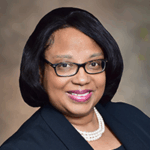
Machell Town’s introduction to statistics was as a statistician for the Boys and Girls Club varsity basketball team and, even though she started out at the University of Georgia majoring in computer science, she eventually changed her major to statistics. Town earned her PhD in public health with a concentration in epidemiology from Walden University. Currently, she is the branch chief for the Population Health Surveillance Branch at the Centers for Disease Control and Prevention (CDC). She mentors young professionals and students inside and outside the CDC and was appointed to the statistics advisory committee of Preventing Chronic Disease.
Michael Thomas

Michael Thomas noticed at a young age he excelled in his math courses. He remembers while in high school picking from sheets with example exam questions the one with equations on it, because it seemed the shortest. This year, he helped plan and host StatFest 2020. He has been involved in mentorship, tutoring, and career-development conferences for students since he was an undergraduate and is currently pursuing a PhD in computational science and engineering focused on civil and environmental engineering at the Georgia Institute of Technology.