
Once again, those attending the 2021 Women in Statistics and Data Science Conference realized their goals of celebrating successes, growing influence, building community, and sharing knowledge.
Celebrating Women in Statistics
Ani Eloyan
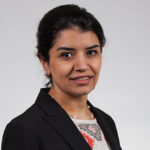
Ani Eloyan’s favorite subject in school, while growing up in Armenia, was mathematics. It wasn’t until graduate school, however, that she pursued statistics and learned to model health data. While she focused on the methodology of matrix decompositions for her PhD thesis, she had the opportunity to learn about neuroscience and applying statistics when analyzing brain imaging data during a postdoctoral fellowship. Her career and life have given her some great first moments—seeing the pride on her grandfather’s face when she finished her PhD, watching her first PhD student defend her dissertation, and hearing her toddler say a complete sentence.
Suzanne Thornton
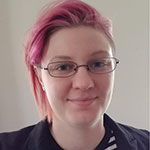
Suzanne Thornton’s interest in statistics blossomed when she took her first course in college. While attending JSM, she discovered a program covering interesting research and topics that she, as a queer woman, had never felt welcome to discuss with her predominantly straight, male instructors. Now a professor of statistics at Swarthmore, she works on ways statistics education can be modernized and brought to a wider population and ultimately increase the diversity of the field.
Jessica Kohlschmidt
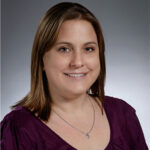
Jessica K. Kohlschmidt grew up in Houston, Texas, with five siblings. A first-generation college student, she had a passion for math from a young age. She has taught full and part time at colleges since 1999 and is currently is a PhD biostatistician at the Clara D. Bloomfield Center for Leukemia Outcomes Research at The Ohio State University Comprehensive Cancer Center. She is also a longtime officer of the Caucus for Women in Statistics, serving for 10 years as secretary and, in 2018, becoming the first executive director.
Dooti Roy

Dooti Roy spent her weekends as a child in Kolkata working on puzzles and combinatorics and reading storybooks. She was introduced to statistics when she was 16 and enjoyed it so much that she earned a graduate fellowship to pursue her PhD in the US. Today, she works as a methodologist at Boehringer Ingelheim, Inc., where her days are spent learning, researching, and implementing statistical methods to make clinical trials more efficient. Even though her job is challenging, she learns constantly and solves meaningful and complex problems to help patients in need. Recently, she has been mentoring younger statisticians and actively volunteers her time on several ASA committees, including the Antiracism Task Force.
Lucy D’Agostino McGowan
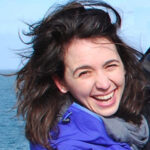
Lucy D’Agostino McGowan spent the beginning of her childhood in Boston, Massachusetts, and the rest in Winston-Salem, North Carolina, where she lives today as a biostatistician, teacher, science communicator, podcaster, partner, mom, programmer, Disney enthusiast, and BB-8 builder. She fell in love with the statistics field after doing a Summer Institute in Biostatistics at Boston University. D’Agostino McGowan is also an avid statistical communicator. Her efforts in statistical communication span from op-eds about the current COVID-19 pandemic; a podcast in partnership with the American Journal of Epidemiology, Casual Inference; and outreach via social media. Her research focuses on causal inference, human-data interaction, and statistical communication. She is currently the chair of the ASA Committee on Women in Statistics and co-leads an effort with past-chair Stephanie Hicks to build community and engagement. Follow their Twitter feed at @WomeninStat.
Elizabeth (Betsy) Ogburn
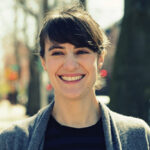
At a young age, Elizabeth Ogburn’s plan was to stay in school forever. In college, she studied philosophy and math and tried everything from epidemiology to data analysis, but nothing stuck. She wasn’t sure what she wanted to do until she attended a talk about causal inference and knew that was the perfect fit. Now, as a Johns Hopkins faculty member, she loves being part of the broader causal inference community, with its connections to social science, computer science, theoretical and applied statistics, and, of course, public health.
Marina Vannucci

Marina Vannucci was recognized early in her career with the Italian Statistical Society’s prize for “Best Doctoral Thesis in Statistics.” The prize gave her confidence in her abilities as a researcher and launched her professional career in academia. Now, as a professor, she savors advising students and watching them grow into independent researchers. Service is another aspect of her professional career she enjoys and she never shies away from challenging roles. She is particularly proud of her work as editor-in-chief of Bayesian Analysis and editor of the Journal of the American Statistical Association, Theory & Methods section.
Annie Qu
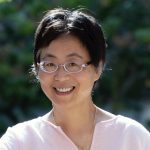
Annie Qu was trained as a computational mathematician and had not analyzed data until she was introduced to statistics in graduate school. Suddenly, all the numbers and programming were meaningful and there were interesting stories behind them. This was just the beginning of her journey in data science research. Since then, she has worked on tensor learning for optical breast cancer imaging data, network data, deep learning, active learning, crowdsourcing, and personalized medicine. Doing something new and cutting-edge has always been exciting for her and keeps her motivated.
Clarice R. Weinberg
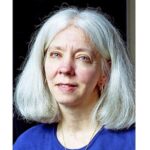
Clarice R. Weinberg was always good with numbers and earned both her bachelor’s and master’s degrees in mathematics. However, she didn’t know what to do with her math degrees so she looked into statistics and eventually earned her PhD in biomathematics from the University of Washington. Now at the National Institute of Environmental Health Sciences, she is active in breast cancer research and working with biostatistics graduate students to develop stochastic search methods to identify sets of gene variants and sets of exposures that synergistically influence risk.