
This year’s special issue is all about mentoring. Mary Kwasny and Colleen Stiles-Shields discuss mentoring using the motivational interviewing technique; Terry Speed looks at what mentoring is and isn’t; and Mark Ward shares his tips for peer-to-peer mentoring. Also included in this list is a piece by David Hunter and Murali Haran, who look at the positive outcomes of academic mentoring. We also feature several influential statisticians such as Mary Gray, Doug Zahn, Terry Speed, and Brian Harris-Kojetin. And we made sure to post many of the ASA’s mentoring programs in this issue. Enjoy!
Cover Story
2016 Poster and Project Competition Winners

The American Statistical Association is pleased to announce the winners of the 2016 Poster Competition and Project Competition, which featured creative studies from high-school students across the country.
LaVange Elected ASA President; Williamson Elected Vice President

Lisa LaVange, director of the Office of Biostatistics in the Center for Drug Evaluation and Research at the U.S. Food and Drug Administration, has been elected the 113th president of the ASA. LaVange will serve a one-year term as president-elect beginning January 1, 2017. Her term as president becomes effective January 1, 2018. The ASA membership also elected G. David Williamson, senior science adviser at the U.S. Centers for Disease Control and Prevention, as an ASA vice president.
Members also elected several new board members, plus officers for each of the ASA’s 27 sections.
Women in Statistics and Data Science: A Conference to Empower

This year’s WSDS featured speakers are Cynthia Clark, Stacy Lindborg, Wendy Martinez, and Bin Yu. Here, they reflect on their long careers, share advice for the future, and discuss the topic they plan to talk about at WSDS.
6000+ Statisticians Expected in Chicago

With more than 3,400 individual presentations arranged into approximately 181 invited sessions, 400 contributed sessions, and 500 poster and speed presentations, the 2016 Joint Statistical Meetings will be one of the largest statistical events in the world.
2016 Math Awareness Month: The Future of Prediction
April is Mathematics Awareness Month, and the Joint Policy Board for Mathematics (JPBM) has selected “The Future of Prediction” as the theme.
Yogi Berra, paraphrasing Niels Bohr, said, “It’s tough to make predictions, especially about the future.” Throughout Mathematics Awareness Month 2016, we will explore how mathematics and statistics are the future of prediction, providing insights and driving innovation. During the month, we will be asking the question, “What’s next?” and exploring how mathematicians and statisticians contribute to society.
How Does Your Salary Stack Up?

The 2015–2016 academic salary survey includes both faculty and nonfaculty statisticians and biostatisticians. We received responses from 64 institutions in the United States. The data included 956 faculty and 128 nonfaculty statisticians, with gender information. The quartiles and 90th percentile for relevant categories are provided in the summary tables.
Gender Balance in ASA Activities Update
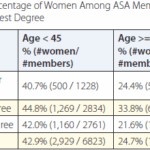
This article continues the tradition of looking at the representation of ASA women members among a range of activities supported by the ASA, using more recent data from September 2015. This report was written on behalf of the Committee on Women in Statistics (COWIS) with the primary objective to indicate areas where gender disparities have subsided, as well as highlight those areas where they persist.
A Recipe for Successful Collaborations

During JSM 2015, the ASA’s SPAIG committee highlighted cutting-edge collaborative projects through successful partnerships between academia, industry, and/or government organizations. In the statistical field and related professions, sharing of ideas from different organizations frequently leads to exchange visits, support for graduate students, consulting jobs, grant award for faculty, and continuing education opportunities for statisticians outside of academe.
A New Design for the 21st Century
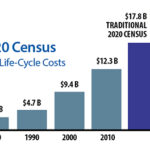
The U.S. Census 2020 Operational Plan lays the foundation for the most modern and dynamic census in our nation’s history—and outlines how the bureau proposes to save taxpayers more than $5 billion.