
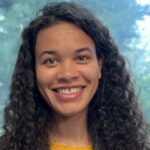
Brittney Bailey pursued graduate study at The Ohio State University, ultimately transitioning to a PhD program in biostatistics. Today, at Amherst College, Bailey advances research in mental health and aging.
ASA Committee on Minorities in Statistics
Charles Bernard Bell Jr.
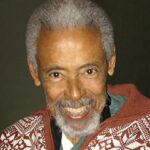
Charles Bernard Bell Jr. was a pioneering statistician elected as an ASA Fellow and an Institute of Mathematical Statistics Honored Fellow. Bell earned his doctorate in mathematical statistics from the University of Notre Dame in 1953.
STATFEST 2025: Connecting Students with a World of Opportunities

In this month’s JEDI Corner, David Corliss spotlights StatFest—a free, virtual event for students from historically underrepresented groups in statistics and data science.
Dionne Swift
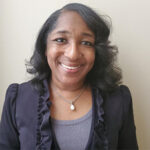
Since middle school, Dionne Swift knew she would pursue a math- or science-related occupation because those were her favorite subjects. Fortunately, her math and science teachers looked like her in both middle and high school and, as relatable role models, they sparked her interest in math and science. Because of the mentors in her life, Swift strives to inspire others to achieve their educational and professional dreams and is active in the initiatives of the ASA Committee on Minorities in Statistics, including serving as a mentor since 2012.
Brian A. Millen
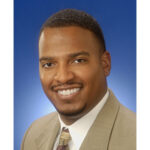
At The Ohio State University, multiple faculty members invested significantly in Brian Millen’s development. These individuals expanded Millen’s statistical thinking, supported his goals, celebrated his successes, and coached him through every low point. Consequently, Millen became an advocate for diversity and inclusion and is past chair of and current adviser to the ASA Committee on Minorities in Statistics and founder of the JSM Diversity Workshop and Mentoring Program.
Neal Jeffries
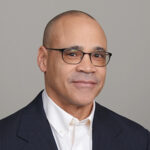
Even though Neal Jeffries’s father was a high-school math teacher, he studied only enough mathematics to earn a degree in economics. However, while working as a policy analyst, he realized statistics was necessary to critically evaluate the data that provides the basis for sound public policy—and that understanding led him to want a formal statistics education. Now, at the National Institutes of Health, Jeffries’s work involves advances in treating sickle cell anemia by expanding the pool of those who can receive curative stem cell transplants and developing new avenues of therapy.