
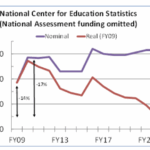
Congress wrapped up its funding for the federal government for fiscal year 2022 in March, the sixth month of the fiscal year. With the Biden administration releasing its fiscal year 2023 within a few weeks, Congress had to almost immediately start the process again. The National Institutes of Health and National Science Foundation both received 4 percent increases. Several statistical agencies also received 3–6 percent increases.
BJS
Biden Administration’s First Budget Request Favors NIH, NSF; Flat Funds Education, Energy, Health, Justice Statistics

The Biden administration’s fiscal year 2022 (FY22) budget request sends a strong signal for its support of research funding, proposing 20 percent increases for the National Institutes of Health and National Science Foundation. Many of the federal statistical agencies also see strong support through increases of 5–10 percent.
State of the Criminal Justice Data Infrastructure

ASA’s Count on Stats team spoke with three former BJS leaders about their perspectives on the state of criminal justice statistics.
FY21 Federal Budget Finalized
![Figure 1 shows the budgets of the seven mid-sized statistical agencies normalized to their FY09 levels, along with the GDP deflator to account for inflation. Budget restructuring for ERS in FY15 and ORES in FY19 are accounted for in the graph to allow for comparison over this time period. One-time moving costs in FY16 for BEA are also omitted. [Key: BEA, Bureau of Economic Analysis; BJS, Bureau of Justice Statistics; BTS, Bureau of Transportation Statistics; ERS, USDA Economic Research Service; NCSES, NSF National Center for Science and Engineering Statistics; ORES, Social Security Administration Office of Research, Evaluation, and Statistics; SOI, IRS Statistics of Income Division]](https://magazine.amstat.org/wp-content/uploads/2021/02/FY_Figure1_-150x150.jpg)
The NIH, NSF, and several federal statistical agencies received increases, but many are facing fiscal challenges after years of purchasing power loss.
FY17 Requests for NIH, NSF, Federal Statistical Agencies Largely Positive
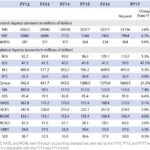
President Barack Obama’s requested budget for Fiscal Year 2017 maintains his record of proposing generally healthy increases for the NIH, NSF, and many federal statistical agencies, but realizing increases of any amount will be challenging.
Meet James Lynch, Director of BJS

Amstat News invited new Bureau of Justice Statistics Director James Lynch to answer some questions so readers could learn more about him and the agency he directs.
Administration Affirms Role of Data-Driven Decisionmaking with FY12 Budget Requests

Steve Pierson, director of science policy, discusses the 2012 fiscal year budget and how the administration largely affirms its belief in the value of the federal statistical system.
World Statistics Day
In celebration of World Statistics Day, Amstat News asked staff from several federal statistical agencies to provide a list of their agency’s accomplishments, both recent and historical. Documented here is a rich history of providing statistical data that informs policymaking in the public and private sectors, resulting in economic development and smarter, more effective government. Also documented is a commitment to innovation and adaptation that has kept federal statistical products current and reliable.