
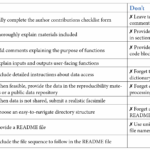
In 2016, the Journal of the American Statistical Association Applications and Case Studies introduced a reproducibility initiative to address the lack of standardized practices for reproducibility in scientific research. This initiative established minimum criteria for the inclusion of code, data, and workflow for JASA Applications and Case Studies papers and piloted a new editorial role—associate editor of reproducibility—to implement these standards. This initiative has since expanded to all original research manuscripts published in the journal.
code
Deborah Nolan

While a math student at Vassar, Deborah Nolan was first exposed to statistics during a summer internship during which she helped analyze data from a survey in a women’s magazine about how family life had changed as more women became breadwinners. That experience convinced her to stay away from statistics and stick with the comfortable world of theoretical math. After graduating, she worked for IBM and learned how to code in several languages. It was her work as an applications programmer that brought Nolan back to the world of statistics, and she went on to earn a PhD in the field. Since then, Nolan has earned multiple awards for her dedication to teaching, including the ASA Waller Distinguished Teaching Career Award and Berkley’s Distinguished Teaching Award. She co-developed the first data science course at Berkeley and played a pivotal role in designing the data science major, leading to the establishment of the College of Computing, Data Science, and Society. Currently serving as the inaugural associate dean, Nolan is instrumental in meeting the growing demand for data science education, with nearly 1,000 students graduating annually with a data science major from Berkeley.
JSDSE Calls for Papers About Teaching Reproducibility and Responsible Workflow
Submissions at all levels of education (primary through graduate programs and continuing education) are welcome.
Tech Leaders Discuss Working in Industry

We asked leaders in industry to answer a few questions to help students and statistics departments better prepare for jobs in the technology industry.