

The Conference Board of the Mathematical Sciences 2026 Mathematical Sciences Survey will collect enrollment data from US math and statistics departments nationwide, continuing a five-decade tradition of tracking educational trends to help institutions understand student patterns and secure academic resources.
Mathematical Sciences
Applications Open for EDGE Foundation Awards

Applications for the Karen EDGE Fellowship and Mary Beth Ruskai Research Fund are now open.
IMSI Programs Offer Pro Communication Opportunities
The Institute for Mathematical and Statistical Innovation trains researchers to be better communicators through three programs: communication bootcamps, MathStatBites and Carry the Two podcast .
DMS Mathematical Sciences Research Institutes Update
This is an open letter to the DMS community on its funding policies for the institutes.
2014 NSF-CBMS Regional Research Conferences in the Mathematical Sciences
The National Science Foundation recently announced support for eight NSF-CBMS regional research conferences to be held during 2014. These eight bring to 353 the total number of such conferences since the NSF-CBMS Regional Research Conference Series began in 1969.
Meeting the Challenges of Improved Post-Secondary Education in the Mathematical Sciences
On behalf of the Joint Policy Board for Mathematics, David M. Bressoud, Eric M. Friedlander, and C. David Levermore are calling upon the entire mathematical sciences community to achieve much-needed change in undergraduate education in the mathematical sciences.
Sixth Annual Field of Dreams Conference Held in Phoenix
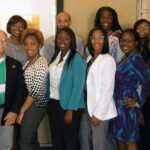
More than 150 undergraduate mathematics and statistics majors, together with more than 75 of their faculty mentors, met in Phoenix, Arizona, November 2–4 to learn about graduate school opportunities in the mathematical sciences.
The Mathematical Sciences in 2025
The Division of Mathematical Sciences at the National Science Foundation recently asked the Board on Mathematical Sciences and Their Applications to study the state of the mathematical sciences and make projections. Here, Keith Crank shows us how statistics can be involved.