

The Biden administration’s fiscal year 2022 (FY22) budget request sends a strong signal for its support of research funding, proposing 20 percent increases for the National Institutes of Health and National Science Foundation. Many of the federal statistical agencies also see strong support through increases of 5–10 percent.
National Institutes of Health
FY21 Federal Budget Finalized
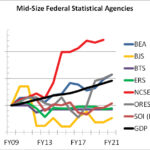
The NIH, NSF, and several federal statistical agencies received increases, but many are facing fiscal challenges after years of purchasing power loss.
Rajeshwari Sundaram Honored with 2020 Jeanne E. Griffith Mentoring Award

Rajeshwari (Raji) Sundaram was honored June 10 during a virtual ceremony for being exceptionally generous with her time spent mentoring and training staff at all levels.
NSF Shares Spring 2020 Student Training Resources
A listing of training resources for graduates, undergraduates, and postdocs related to social and behavioral science shared by the National Science Foundation
Gilbert Beebe

Gilber Beebe created and was first director of the Medical Follow-up Agency of the National Research Council, which examined the after-effects of war-related injuries and diseases using 18 million Army records.
Nancy L. Geller

Nancy Geller’s interest in biostatistics developed at Memorial Sloan-Kettering Cancer Center and, more recently, at the National Heart, Lung, and Blood Institute. Currently, she leads a group writing many papers in biomedicine and biostatistics.
FY17 Federal Budget Resolved; Trump’s FY18 Budget Request Released
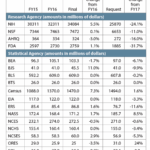
Steve Pierson, ASA director of science policy, breaks down the government’s FY17 final budget and reviews the FY18 requested budgets for federal statistical agencies.
Samuel W. Greenhouse

Samuel W. Greenhouse was one of the founding statisticians at the National Institutes of Health, helped pioneer the use of statistical methods in epidemiological research, and was influential in the early development of the theory and practice of clinical trials.
FY17 Requests for NIH, NSF, Federal Statistical Agencies Largely Positive
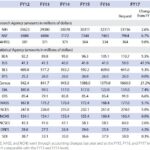
President Barack Obama’s requested budget for Fiscal Year 2017 maintains his record of proposing generally healthy increases for the NIH, NSF, and many federal statistical agencies, but realizing increases of any amount will be challenging.
Final FY16 Spending Bill Provides Increases for NIH, Census, Statistical Agencies

Steve Pierson, ASA Director of Science Policy, breaks down the Fiscal Year 2016 omnibus spending bill signed into law in December, which included needed increases for the National Institutes of Health and many federal statistical agencies.