
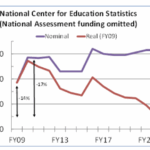
Congress wrapped up its funding for the federal government for fiscal year 2022 in March, the sixth month of the fiscal year. With the Biden administration releasing its fiscal year 2023 within a few weeks, Congress had to almost immediately start the process again. The National Institutes of Health and National Science Foundation both received 4 percent increases. Several statistical agencies also received 3–6 percent increases.
SOI
Biden Administration’s First Budget Request Favors NIH, NSF; Flat Funds Education, Energy, Health, Justice Statistics

The Biden administration’s fiscal year 2022 (FY22) budget request sends a strong signal for its support of research funding, proposing 20 percent increases for the National Institutes of Health and National Science Foundation. Many of the federal statistical agencies also see strong support through increases of 5–10 percent.
FY17 Requests for NIH, NSF, Federal Statistical Agencies Largely Positive
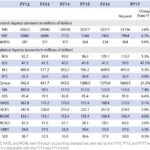
President Barack Obama’s requested budget for Fiscal Year 2017 maintains his record of proposing generally healthy increases for the NIH, NSF, and many federal statistical agencies, but realizing increases of any amount will be challenging.
Meet Barry Johnson, Head of the IRS Statistics of Income Division

We invited Barry Johnson, head of the IRS Statistics of Income Division, to respond to a few questions so readers could learn more about him and the agency he leads.
World Statistics Day
In celebration of World Statistics Day, Amstat News asked staff from several federal statistical agencies to provide a list of their agency’s accomplishments, both recent and historical. Documented here is a rich history of providing statistical data that informs policymaking in the public and private sectors, resulting in economic development and smarter, more effective government. Also documented is a commitment to innovation and adaptation that has kept federal statistical products current and reliable.