
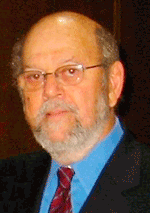
Herman P. Friedman
Submitted by Demissie Alemayehu
Herman P. Friedman, a longtime member of the American Statistical Association, died on October 17, 2010, in New York City. Friedman is survived by his wife, Judith D. Goldberg, also a longtime member and Fellow of the ASA.
Friedman was born in New York City and lived there all his life. He graduated from Brooklyn Technical High School and earned his bachelor’s and master’s degrees in mathematics from Brooklyn College. He studied statistics at the New York University Courant Institute of Mathematical Sciences with Allan Birnbaum and earned an MPhil in statistics from Yale University, where he worked with John Hartigan.
Near the end of the Korean War, Friedman was drafted into the U.S. Army. He taught and then joined the Scientific and Professional Program as a mathematician in the Ballistic Research Laboratory until his discharge as a sergeant in the reserves.
After his discharge, Friedman held positions of increasing responsibility while attending NYU and Yale as a part-time student. His first position was as a mathematician for Project Cyclone at Reeves Instruments Corp., where he worked on the design of a missile seeker and missile target simulations. Subsequently, he assumed roles as a senior and principal mathematician at the System Development Corp. and Bulova Research and Development, where he began his work in statistical classification theory and pattern recognition.
In 1963, Friedman joined IBM, where he spent most of his career—more than 26 years. It was during those years that he pioneered the development of methods and software for cluster analysis as a member of the New York Science Center. As a senior institute staff member of the IBM Systems Research Institute, and then institute consultant at Systems Research Education, he taught courses in advanced methods of data analysis and systems evaluation, continued his research, and consulted throughout IBM. He made significant contributions to the theory and application of classification and clustering and received several awards for his contributions.
After early retirement from IBM, Friedman founded Statistical Science and Technology Associates, Inc., and was visiting professor and mentor in the psychometrics program at Fordham University Graduate School of Psychology.
Friedman published on different topics, ranging from pattern recognition to classification and data mining. He also gave numerous lectures at various institutions and professional meetings. He was president of the Classification Society of North America (1992–1993); a Fellow of the New York Academy of Science and chair of its Section on Computers and Information Science; a member of Pi Mu Epsilon, Sigma Xi Yale Chapter; and a National ACM Lecturer. Friedman also served as a member of the ASA National Council, a member of the ASA Board of Directors, and a president of the ASA New York Chapter.
As an accomplished statistician, researcher, teacher, and mentor, Friedman touched the lives of many young statisticians. The profession has lost one of its champions, and he will be deeply missed by all who had the good fortune to have known him.
Jagdish N. Srivastava
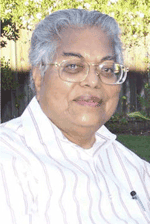
Jagdish N. Srivastava, a professor emeritus of statistics at Colorado State University (CSU), Fort Collins, passed away November 13, 2010.
He will be remembered for his leadership in the statistics profession; his thought-provoking questions at professional meetings and conferences; and his pioneering research contributions in design of experiments, multivariate analysis, survey sampling, reliability, coding theory, and combinatorial theory.
The 1973 conference Statistical Design and Analysis of Experiments and Linear Models, organized by Srivastava, started a new era of statistical design by bringing together leaders from different areas of statistics and demonstrating that both “good” design and “efficient” inference are fundamental for extracting the pertinent information from data collected for scientific investigations. With this same spirit, Srivastava founded the Journal of Statistical Planning and Inference in 1975. During this period, he also introduced “search linear models and search designs,” his groundbreaking research.
Srivastava’s PhD advisor, R. C. Bose, remarked on several occasions that his student had truly surpassed him. As a PhD student and postdoctoral researcher at UNC, Srivastava was inspired by R. A. Fisher, Jerzy Neyman, P. C. Mahalanobis, C. R. Rao, Jack Kiefer, and Herman Chernoff. In design theory, he developed the mathematical theory of confounding for asymmetrical factorial experiments and optimum balanced designs for fractional factorial experiments, introducing and studying balanced arrays and multidimensional partially balanced association schemes, which led to the noncommutative algebra of Bose and Srivastava—a multiset generalization of the Bose-Mesner algebra.
In multivariate analysis, Srivastava worked on MANOVA with complete and incomplete data in estimation, hypothesis testing, classification, and meta-analysis. He also wrote a monograph on design and analysis of quantitative multiresponse experiments.
In reliability theory, he introduced self-relocating designs for comparative experiments. In survey sampling, Srivastava introduced a general class of estimators with almost all the well-known estimators as the special cases. In coding theory, he introduced “Srivastava code,” a class of parameterized error-correcting codes.
Srivastava studied quantum mechanics and mathematical logic. Gödel’s theorem inspired him to realize the limitations of science. He slowly turned toward spirituality and studied the great religions of the world. He was particularly drawn to the Bhagavad Gita because of his nonsectarian outlook. This interest led him to obtain his 1991 joint appointment in the philosophy department of CSU, where he was a professor of statistics and mathematics since 1966.
Srivastava was a Fellow of the ASA and Institute of Mathematical Statistics, an elected member of the International Statistical Institute, a foundation fellow of the Institute of Combinatorics and Applications, and a Fellow of the Third World Academy of Sciences. He was the past president of the Forum for Interdisciplinary Mathematics and International Indian Statistical Association.
Srivastava is survived by his wife of 60 years, Usha; son, Arvind; daughter, Gita; son-in-law, Roy; son, Ashok; daughter-in-law, Lynn; and granddaughter, Leela.
Leave a Reply