
Marie Davidian

Marie Davidian, who is full professor of statistics at North Carolina State University, was recently selected as the 2011–2012 D.D. Mason award winner.
The award is made in recognition of Davidian’s years of outstanding service to the department and the statistics profession. Within the department, Davidian is especially known for her outstanding teaching and research, giving leadership to the biostatistics program, and for mentoring graduate and undergraduate students and junior faculty. More broadly, she is known for her research and innumerable contributions to serve and promote the field of biostatistics and statistics in general. Her service to the profession includes coordinating and executive editor of Biometrics, former president of ENAR, and current president-elect of the ASA.
The D.D. Mason Faculty Award is named for David D. Mason, who served as professor of statistics at NCSU from 1953 until he retired in 1981.
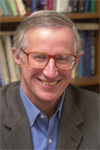
William D. Nordhaus
William D. Nordhaus, Sterling Professor of Economics at Yale University, has been selected to receive the 2012 Julius Shiskin Memorial Award for Economic Statistics. This award recognizes unusually original and important contributions in the development of economic statistics or in the use of statistics interpreting the economy.
Nordhaus is recognized for his contributions to the measurement of environmental-economic accounts and economic welfare and his active participation with the U.S. statistical system. Nordhaus will be honored at events hosted by the three sponsors of the award: The Washington Statistical Society, the National Association for Business Economics, and the Business and Economic Statistics Section of the American Statistical Association.
Nordhaus is best known for his work in measuring economic welfare and the impact of the environment on gross domestic product (GDP), which challenged the statistical systems in the United States and other countries to think more broadly about measurement issues. His research has had a major impact on economic statistics throughout the world by providing a conceptual and empirical basis for his measures. His 1972 monograph with the late James Tobin, “Is Growth Obsolete?” was among the first efforts to provide measures of economic welfare that differ from traditional measures of production, such as the GDP. That effort inspired substantial work to expand GDP and economic measurement to better record the effect of growth on economic welfare. In the United Nation’s (UN) 1993 System of National Accounts, satellite accounts were added to accommodate such extensions to the national accounts, and the UN published a handbook on developing integrated economic and environmental accounts.
In 1994, in “Integrated Economic and Environmental Satellite Accounts,” the Bureau of Economic Analysis (BEA) published a U.S. version of these accounts, and, in 2009, the Stiglitz-Sen-Fitoussi report on better measuring economic welfare was published, igniting another round of national and international efforts to provide measures of economic welfare. In contrast to the recommendations from some of these efforts, Nordhaus has expressed skepticism about incorporating “happiness” measures into economic accounting systems.
Building on his own work, Nordhaus chaired the 1999 National Academy of Sciences panel and co-edited its report, Nature’s Numbers: Expanding the National Accounts to Include the Environment, which recommended an empirical framework to integrate environmental and other nonmarket activity into GDP. He played a key role in a subsequent National Academies panel whose report, Beyond the Market, extended his study of environmental statistics to areas such as education and health. For a 2004 National Bureau of Economic Research (NBER) volume, A New Architecture for the U.S. National Accounts, he contributed an essay on applying a nonmarket account in the “new architecture” proposed in the volume, an essay that has already had a major impact on statistical practice on national accounting in the United States and many other countries. Most recently, in the May 2011 issue of the American Economic Review, he and his coauthors published “Environmental Accounting for Pollution: Methods with an Application to the United States Economy.”
Nordhaus has coupled his research with extensive involvement in and leadership of the statistical system. He currently serves as a member of the BEA Advisory Committee and served as its first chair. As chair, he was extremely active in working with BEA on innovations, including better integrated, more accurate, and timelier industry accounts; more comprehensive measures of stock options and pensions; the expansion of services data by BEA and the U.S. Census Bureau; and a wide range of new price indexes.
Nordhaus also has had significant influence on the statistical system through his work at the National Academy of Sciences. In addition to his work on environmental and nonmarket accounts, he was instrumental in the preparation of major studies on price and cost-of-living indexes and on the measurement of time use, both of which led to significant changes in federal statistical programs. The Bureau of Labor Statistics developed new ways to measure expenditures and prices for the medical sector and, in part because of his involvement in the time-use workshop, then launched the American Time Use Survey. Nordhaus’s other work for the academy included improving environmental statistics and increasing our understanding of the economics of climate change.
Nordhaus has served on academy oversight committees, such as the Committee on National Statistics and the Advisory Board for the Division on Behavioral and Social Sciences and Education, where he has worked to advance the relevance of U.S. economic statistics. In addition, he was the founder and chair of the American Economic Association’s Committee on Economic Statistics, which focuses the attention of professional economists on data issues. For example, he has been a member and senior advisor of the Brookings Panel on Economic Activity since 1972, is on the research staff of the NBER, and served on the Congressional Budget Office’s Panel of Economic Experts. Although his research has focused on economic growth and environmental accounting, he has worked on the economics of climate change. He has developed economic approaches to global warming, including the construction of integrated economic and scientific models to determine an efficient path for coping with climate change. Nordhaus has received numerous honors for his research work and public service, including membership in the National Academy of Sciences, the American Academy of Arts and Sciences, and the Swedish Academy of Engineering. In 2004, the American Economic Association named him a distinguished fellow.
Karl Peace

Jiann-Ping Hsu College of Public Health of Georgia Southern University (GSU) biostatistics professor and Georgia Cancer Coalition Distinguished Cancer Scholar Karl Peace was presented with the 2012 University System Board of Regents’ Hall of Fame Award on March in Atlanta, Georgia. Peace was one of three to receive the honor.
The award was established by the board of regents to honor those who exemplify superb leadership and support of higher education in Georgia. Recipients are nominated by their alma mater and selected by an external panel based on their outstanding accomplishments and contributions to their institution.
“We are extremely proud of Karl Peace for being recognized with this very prestigious award,” said Brooks Keel, president of Georgia Southern. “Karl has made a tremendous impact in the field of public health through his generous endowment of the Jiann-Ping Hsu College of Public Health (JPHCOPH). He has always been and continues to be the type of faculty member, scientist, philanthropist, and humanist that we all strive to be.”
Peace was recognized during the Board of Regents’ Salute to Education, an event hosted by the University System of Georgia Foundation, Inc. The event brings together college and university presidents, regents, trustees, and corporate and political leaders to celebrate and recognize those who bring excellence to public higher education in Georgia.
Peace, who serves as a senior research scientist and professor of biostatistics in the JPHCOPH, holds a PhD in biostatistics from the Medical College of Virginia, an MS in mathematics from Clemson University, a BS in chemistry from Georgia Southern College, and a health science certificate from Vanderbilt University.
Peace is the recipient of numerous other citations and awards, including several distinguished meritorious service awards from the American Public Health Association, Drug Information Association, Southwest GA Cancer Coalition, Deming Conference, and International Chinese Statistical Association (ICSA). In addition, his contributions to education, public health, and drug development have been cited by both the Georgia and U.S. House of Representatives.
Peace has a lengthy record of philanthropy to education, having created 21 endowments at five institutions. In addition, he founded the GSU Center for Biostatistics and Public Health Library and brought the central office of the ICSA to the JPHCOPH. Peace is also founder and chair of the internationally renowned Biopharmaceutical Applied Statistical Symposium, which generates funds to support graduate work in biostatistics.
His work has been published extensively in pharmaceutical, statistical, medical, and scientific literature. He is the author or co-author of more than 150 articles and 10 books and the editor or reviewer of several peer-reviewed journals, including the founding editor of the Journal of Biopharmaceutical Statistics, now in its twenty-second year. Peace has given more than 150 invited presentations worldwide in the scientific, statistical, medical, and pharmaceutical arenas.
Snehalata Huzurbazar

Snehalata Huzurbazar, associate professor of statistics at the University of Wyoming, has accepted the position of deputy director of the Statistical and Applied Mathematical Sciences Institute (SAMSI) for the next two years. Huzurbazar will take a leave of absence from the University of Wyoming while she performs her duties at SAMSI, starting on July 9. She also will be a member of the research faculty at North Carolina State University in the statistics department.
“We are very impressed with Snehalata’s background and think she will bring a fresh perspective to the development of SAMSI’s programs and will be instrumental in our education and outreach efforts,” remarked Richard Smith, director of SAMSI.
In her new position, Huzurbazar will help administer SAMSI programs and help develop future programs. She also will be involved with education and outreach efforts and work on staff and personnel issues.
Huzurbazar earned her bachelor’s degree from Grinnell College in 1984, her master’s degree in economics from Vanderbilt University in 1988, and her PhD in statistics from Colorado State University in 1992. She was an assistant professor at the University of Georgia from 1992–1995 and has been at the University of Wyoming since 1995. At UW, she has been an affiliate of the Science and Mathematics Teaching Center since 2003. She was also an adjunct professor of women’s studies from 2003–2008.
Huzurbazar spent time at SAMSI last year as a visiting research fellow in the analysis of object data program. One reason she was attracted to the deputy director’s position was because SAMSI is the only National Science Foundation institute that explicitly includes a focus on statistics. She is particularly interested in encouraging young people to pursue careers in statistics and mathematical sciences.
“Making an impact on outreach is really important to me. We often have trouble getting people into the mathematical sciences. I think we need to do a better job attracting students into mathematical sciences and inform them about various career options,” said Huzurbazar.
Much of Huzurbazar’s recent time has been spent building collaborations with colleagues in a variety of disciplines, ranging from evolutionary bioinformatics to the geosciences, broadly defined. In evolutionary bioinformatics, she is working on the statistical issues surrounding the data generation pipelines. “Genomes for various species are sequenced. Then, the data from the sequenced genomes are run through all kinds of computer programs in order to obtain what is used as the final ‘data’ that biologists model. We’ve been concerned that we are not taking into account the effects of the criteria used within these different pipelines on the final analyses and inferences that researchers obtain,” said Huzurbazar.
In the geosciences, she works with colleagues from glaciology, sedimentology, chemical and petroleum engineering, and restoration ecology. She spent 2004–2005 at the Institute of Arctic and Alpine Research in Boulder, Colorado. Some of the chemical engineering and sedimentology work involves modeling distributions of sand particles or water-in-oil emulsion particles using particle or grain-size distributions. The glaciology problems are about modeling three-dimensional data obtained from boreholes in glaciers to study how glaciers deform over time.
Leave a Reply