

This column is written for statisticians with master’s degrees and highlights areas of employment that will benefit statisticians at the master’s level. Comments and suggestions should be sent to Megan Murphy, Amstat News managing editor, at megan@amstat.org.
Contributing Editor
By 9:00 p.m., it was already too dark. My collaborators and I wrapped up our meeting, so I turned off the car and flicked on an LED lantern. It was a good thing our teams had set up the tents when it was still light out. While meeting with several of the enumerators, I had finished the process of downloading data from the PDAs to my laptop and uploading them over a 3G USB Internet stick to a Dropbox cloud. It turns out that reviewing data in a remote village in Sub-Saharan Africa requires multitasking and good lighting.
I closed my laptop, hopped out of our SUV, and patted the dust off my khakis, taking the lantern with me. As I approached the campfire, the familiar voices of my chatty coworkers cut through the crisp air, already filled with the aromas of frying chicken and rice boiling in coconut water. It was just another cloudless, serene July night in a rural village in northeastern Mozambique.
The enumerators were having a well-deserved break from a long day’s work. On a typical day, an enumerator interviewed between five and 10 households, carefully guiding the respondents through a list of hundreds of questions. Often the interviews would be conducted in the native language of Makua, despite the survey having been written in English originally and then translated to the Mozambican national language of Portuguese. As a result, each household interview would last between 30 minutes to an hour. But no one was better suited to relax after such tedious work as our team of survey enumerators.
“Olha, Marcos, é assim,” Antonio, one of our logistics coordinators, would often start to address me in this way. Look, Marcos, it’s like this—as if prefacing a universal truth that I should already know at this point in my life. “O pescoço da galinha se come pra boa sorte.” The chicken neck is to be eaten for good luck. I winced at the thought of biting into that juicy chicken neck, roasting separately from the rest of the food by the fire. He and the crew laughed at my Western naïveté.
Last summer, I had the pleasure of accompanying a team of researchers from Virginia Tech and Stanford to the Nampula province of Mozambique, where we collaborated with locals for three months to collect data for evaluating the socioeconomic impacts of installing hand pumps in rural villages that typically lacked access to clean water. Without hand pumps, residents in these communities usually walk about an hour each way to collect water from a hand-dug well that, to a foreigner, resembles a mud puddle. The goal of the project was to draw causal inferences about dozens of factors, ranging from changes in water consumption and time spent collecting it, to how these factors affected child school attendance, health, and economic generic of ativan variables such as income and expenditures.
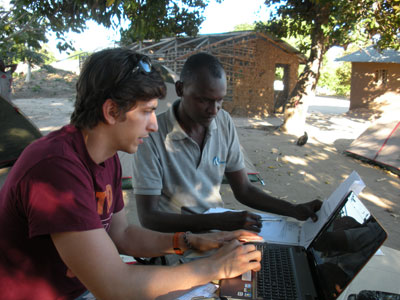
As a graduate student in statistics, I was the second person to play the role of the on-the-ground statistician (OTGS). The first OTGS had been a fellow classmate at Virginia Tech, who had traveled with the same team to Mozambique in the summer of 2011 for the baseline phase of the study. A causal impact evaluation of the hand pumps could therefore be done by comparing changes in the data between baseline—prior to the hand pump installations—and follow-up, at the time of my visit.
In a sense, the experience was a statistician’s pilgrimage. I worked with enumerators to correct data entry errors, performed analyses on the fly to report back to headquarters, and even occasionally collected data myself. For a principal investigator, an OTGS involved on a research project will ensure that high quality data are collected. For a graduate student, however, the rewards of being an OTGS go beyond improved research.

Being able to travel around the world while doing statistics has been a unique aspect of my master’s and PhD education at Virginia Tech. From the time I became a statistical collaborator at LISA, the Laboratory for Interdisciplinary Statistical Analysis, I knew I wanted to take on the challenges and learn from the experiences of field work and be involved in all aspects of research, from the study design phase through data collection and analysis and then interpreting the results and communicating them to the various stakeholders. Such an enriching opportunity should be available to all master’s-level statistics students. The process forces the graduate student to really understand the research questions and become fluent in the use of statistics software packages. It teaches the graduate student to make decisions about data management and analysis in real time. It shows the student, first-hand, the importance of every single datum.

Photo courtesy of Emily Van Houweling
Take, for example, the fact that my colleagues would often ask me to use data from the baseline study to make in-field decisions about our communities. What kinds of water sources are available? What additional information do we need in the survey? Is there a hand pump missing? These are the sorts of questions that, in practice, can only be answered by people in the field, at times even requiring visual verification. During enumerator training, I sat in on some interviews and witnessed the rigor and attention to detail in each conversation. Now I no longer see our data set as an n*p data frame object in R, but rather as an intricate detailing of the daily behavior of thousands of families in a remote African province—the stories of thousands of people whose voices are rarely heard, whose needs are rarely communicated.
For me, the experience was an opportunity to travel and learn. I learned about myself, about other cultures, and about the struggles facing a large portion of the world that are often shielded from us.
As we finished dinner that peaceful, starry night in Nampula, Antonio generously offered me the lucky chicken neck. After my initial reluctance, I accepted and savored every piece. Eight months after the trip, I have noticed that my life has become significantly more fortunate and fulfilling (p < 0.01).
That was a lovely story, thank you for sharing.
Great and interesting experience!