
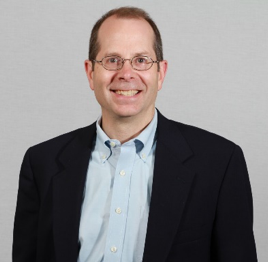
James Robins
James Robins, Mitchell L. and Robin LaFoley Dong Professor of Epidemiology at Harvard, has received the inaugural Distinguished Lectureship Award from the Center for Causal Inference. Robins accepted the award at the center’s annual Causal Inference Summer Institute, which was hosted by the Rutgers School of Public Health in New Brunswick, New Jersey.
Robins’ research has focused on the development of analytic methods appropriate for drawing causal inferences from complex observational and randomized studies with time-varying exposures or treatments. The new methods are to a large extent based on the estimation of the parameters of a new class of causal models—the structural nested models—using a new class of estimators—the G estimators. The usual approach to the estimation of the effect of a time-varying treatment or exposure on time to disease is to model the hazard incidence of failure at time t as a function of past treatment history using a time-dependent Cox proportional hazards model.
Bruce Meyer
Bruce Meyer, McCormick Foundation Professor at The University of Chicago Harris School of Public Policy, has been honored with the 2019 Links Lecture Award for adding important links in the progress of official statistics through research and advisory activities.
Meyer has worked extensively to explore ways to improve official statistics by linking data from multiple survey and administrative sources. He also served on the Commission for Evidence-Based Policymaking.
Meyer’s lecture is titled, “Linking Data to Improve Income Statistics.”
Mary Bohman, deputy director at the Bureau of Economic Analysis, will serve in the program as the “connector,” relating the points in Meyer’s lecture to the work of agencies engaged in the production of official statistics.
The lecture will be held October 18 at the National Academy of Sciences building, 2101 Constitution Ave., NW. The timing will align with events being held at the academy for Data Linkage Day.
The Links Lecture is sponsored by the American Statistical Association to bring visibility to issues surrounding the advancement of official statistics, such as the following:
- The statistical use of administrative records and alternative data sources
- Record linkage
- Statistical methods for creating blended estimates
- Privacy, confidentiality, researcher access, and reproducibility of results
The lecture series also celebrates Constance Citro, Robert Groves, and Fritz Scheuren, who have been critical links in envisioning the future of official statistics.
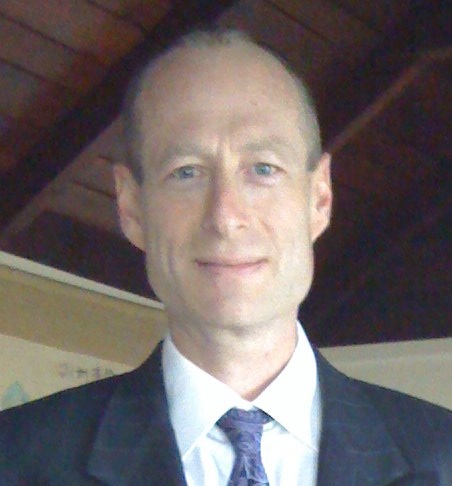
Philip Stark
House Minority Leader Nancy Pelosi appointed Philip Stark—former chair of the University of California, Berkeley, Statistics Department—to serve on the United States Election Assistance Commission (EAC) Board of Advisors.
Established by the Help America Vote Act of 2002 (HAVA), the EAC Board of Advisors is comprised of 37 individuals who assist the EAC in carrying out its federally mandated duties, which includes developing guidance to meet HAVA requirements, adopting voluntary voting system guidelines, serving as a national clearinghouse of information about election administration, accrediting testing laboratories and certifying voting systems, and auditing the use of HAVA funds.
Under HAVA, the house minority leader can select one professional from the field of science and technology to serve on the EAC Board of Advisors.
A professor of statistics and associate dean of mathematical and physical sciences at UC Berkeley, Stark is considered the originator of “risk-limiting” audits and has worked with California and Colorado secretaries of state, helping to conduct risk-limiting audits in nearly 20 counties. He testified about election integrity before the California legislature and at trial in a contested election. He also sits on the development team for the Travis County, Texas, STAR-Vote system, which combines auditability with end-to-end cryptographic verifiability.
Leave a Reply