
This column is written for those interested in learning about the world of Data for Good, where statistical analysis is dedicated to good causes that benefit our lives, our communities, and our world. If you would like to know more or have ideas for articles, contact David Corliss.
With a PhD in statistical astrophysics, David Corliss leads a data science team at Fiat Chrysler. He serves on the steering committee for the Conference on Statistical Practice and is the founder of Peace-Work, a volunteer cooperative of statisticians and data scientists providing analytic support for charitable groups and applying statistical methods in issue-driven advocacy.
Data for Good was wonderful to be involved in during 2019. The year was full of new resources, networking opportunities, and shared enthusiasm that comes from so many important projects making an impact for the greater good. The beginning of the new year provides the opportunity to look both backward at what the D4G community has accomplished and forward to the opportunities and challenges ahead.
Data for Good has seen rapid growth in so many areas—projects, volunteers, new organizations, student activities, and visibility both within and outside the world of statistics. From traditional leaders such as Statistics Without Borders and DataKind to new groups and even international growth (e.g., Data for Good Canada), new opportunities are all around.
Plans for JSM 2020 are well underway! With this year’s theme of Everyone Counts: Data for the Public Good, D4G will be at center stage. JSM offers unsurpassed opportunities to network with coworkers and meet new friends.
One great opportunity is the 2020 Data Challenge Expo. Teams develop their own projects, all working with the same data set, and present their results at JSM. Awards are given for top entries from students and professional researchers. This year’s theme is climate change, using data from the Global Historical Climatology Network. Abstracts will be accepted until February 4. More information and resources are available from the ASA Advisory Committee on Climate Change Policy.
One ASA resource launched this year that can make an impact is the Leader HUB. This website provides a central location for a wealth of information. Links helpful for Data for Good projects include the chapter visitation program for guest speakers, strategic initiative grant applications, information for student groups, and a template for presentations. ASA strategic initiative funding can reach the larger community via events and hackathons.
The Joint Statistical Meetings in Denver featured many paper and poster presentations, as well as networking opportunities. Visit the online program to access presentations and other materials.
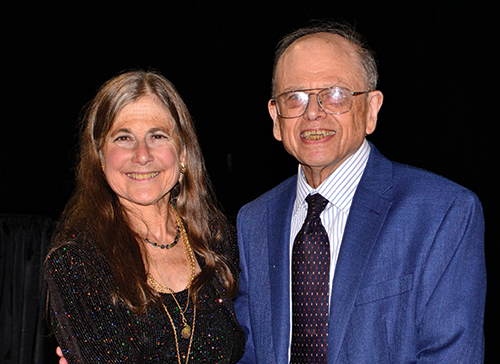
One special event at JSM each year is the announcement of the Karl E. Peace Award for Outstanding Statistical Contributions for the Betterment of Society. The 2019 recipient is Joseph Gastwirth for his foundational work in legal statistics, which is vital in statistical work for justice, civil rights, and fighting discrimination.
Also at JSM, I was glad to attend the meeting of the ASA LGBTQ+ Advocacy Committee as an ally. Groups such as this one make such a difference in under-represented and marginalized communities.
Both Gastwirth’s groundbreaking work in legal statistics and advocacy groups remind us Data for Good is more than papers and presentations. Direct service to individuals is an important channel.
With tremendous growth, there have also been a few growing pains. Having more volunteers has led to the need for more people who can lead projects. Design of experiments, project organization and management, and communication skills—especially with nonstatisticians—are in demand. As we look forward to 2020, these leadership skills will be important areas for development.
One challenge all statisticians face today results from the increasingly political and polarized environment in America—a development with considerable impact on statistical use and practice. Statistical science and methods have been in the news a great deal in the past year, and not always in a good way. For many of us, dealing with political controversy is now a substantial and growing part of our work.
Data for Good advocacy is often at the center of these politicized conflicts—involved in some of the most controversial questions of the day—including climate change and environmental issues, immigration policy, and the census. Examples of direct challenges to statistics in policy and advocacy include dismissing out of hand sound scientific analysis, uprooting and fragmenting the USDA analytics group, government data going dark or just not being collected, and a growing false equivalency between science fact and fiction.
We can meet challenges based more in politics than science by focusing on the science itself—solid, objective, and well-documented—while remaining aloof to political questions. Our statistical results must not be subject to partisan influence, even in the midst of controversy; they must be a solid foundation of science amidst the storms of politicized debate.
In 1903, H. G. Wells wrote in Mankind in the Making (using words now often much reduced), “The time may not be very remote when it will be understood that for complete initiation as an efficient citizen … it is as necessary to be able to compute, to think in averages and maxima and minima, as it is now to be able to read and write.” That day is here. As the impact of Data for Good on public policy continues to grow, an ability to work and clearly communicate with lay persons and professional scientists is needed to achieve the greater good.
As 2019 draws to a close, I would like to express my deep appreciation for the staff at Amstat News, especially Megan Murphy for her patience and many good thoughts about how this column can highlight distinguished projects, address issues and challenges, and grow to better serve the Data for Good community. I especially want to thank you, our readers, for your interest, comments and suggestions shared at events, and (most of all) the good you do for so many using statistics to better our world.
Leave a Reply