
This article originally appeared in Macalester College’s alumni magazine, Macalester Today, and is reprinted here with permission.
Alexandra McLaughlin
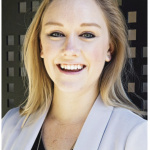
The world is one step closer to an end to dengue fever and other deadly mosquito-borne diseases because of the biostatistics work of Suzanne Dufault.
Dengue occurs in tropical areas and sickens nearly 400 million people a year. It kills 25,000. While a first dengue infection looks like a severe cold, a second infection can be deadly. Victims may suffer internal bleeding and require constant hospital attention.
“Your chance of survival depends on the resources where you live,” Dufault says. When dengue is left untreated, the death rate can reach a staggering 20 percent. Neither an effective vaccine nor an antiviral treatment exists.
Wolbachia may be the answer. The natural bacterium lives in around 60 percent of insect species, but not the Aedes aegypti mosquito that transmits dengue, Zika, and many other viruses. Wolbachia prevents the virus from replicating inside mosquito cells; modifying mosquitoes to carry Wolbachia can block virus transmission.
In 2016, the nonprofit World Mosquito Program (WMP) launched a trial of this biological technology in Yogyakarta, Indonesia, releasing the Wolbachia-carrying mosquitoes to randomly designated parts of the city.
In the years following the release, dengue fever rates in these areas were 77 percent lower than in areas that did not receive the Wolbachia-treated mosquitoes. Bolstered by this evidence, in the next decade, the WMP hopes to release Wolbachia mosquitoes in areas containing half a billion people at risk of dengue.
“It’s rare to see an intervention with this high of an efficacy, especially for an infectious disease,” says Dufault, who joined the WMP research team while pursuing her PhD in biostatistics at the University of California, Berkeley School of Public Health. After graduating in 2020, she was selected for a two-year postdoctoral research position to continue assisting the WMP’s efforts to eliminate dengue. Along with examining questions from the Yogyakarta trial, Dufault investigates methodological questions that arise in other WMP sites or that remain unanswered in the realm of infectious disease epidemiology more broadly.
Her adviser, Nicholas Jewell, was the Yogyakarta study’s lead trial statistician. An expert on infectious-disease interventions, Jewell likened the Wolbachia intervention’s effectiveness to that of condoms preventing the spread of HIV.
The study required a new design—called cluster-randomized test-negative trial—to relate people-based outcomes to a mosquito-based intervention. Dufault and Jewell developed statistical methods for the study.
The results illustrate the groundbreaking research emerging from biostatistics. By applying statistical principles to questions and problems in medicine, biology, and public health, this field helps us interpret scientific data and understand chronic diseases, cancer, human development, and environmental health.
Dufault credits Macalester for changing her trajectory. Upon arriving at Macalester, “I had no idea how to write a proof,” she says. Proof-based classes like calculus were not available in her rural Minnesota hometown. During her first exam in Professor Vittorio Addona’s probability class, Dufault drew pictures to show her work.
“At the bottom of the exam, he had written, ‘Very good, but let’s meet and talk about proof writing,’” Dufault says. “We sat in his office, and he walked me through how to write a proof. He never doubted that I could do it.”
In 2014, Dufault’s passion for biostatistics ignited after Addona encouraged her to apply for a University of Minnesota summer training program in the subject.
“The first speaker talked about how biostatistics is involved in every medical miracle you could think of, every improvement of quality of life,” Dufault says. “It was the perfect clicking together of the things I really wanted to do.”
At Berkeley, Dufault taught several graduate-level courses, among them a 120-student statistics course. For three summers, she instructed international doctoral students in Italy.
Along with teaching, Dufault tackled research. One project investigated genetic predictors of breast cancer outcomes in a cohort of a quarter-million women in the UK. Another looked at the impact of the declining American auto industry on suicide and self-injury in autoworkers. The study suggested that rates of self-harm are affected by whether people feel secure about the future of their job. “This is really important as we see the impact of COVID-19 and the death of a lot of industries,” Dufault says.
A project she’ll publish soon with UC Berkeley School of Public Health Professor Amani Allen creates a scale to assess the anticipation of racism and discrimination in Black women. A growing body of research has identified the harmful toll that prolonged stress exposure can have, physically and chemically, within the body. Recent work suggests the chronic anticipation of stress can itself trigger similar biological dysregulation. “The better we can measure that anticipation, the better we can measure the health impacts,” Dufault says.
When she completes her postdoc in December, Dufault hopes to join the faculty of an institution where she can continue biostatistical research and incorporate the approach she admired in her Mac professors: patience; a willingness to experiment with teaching styles; and an open-door policy.
“Sometimes I think, if I hadn’t gone liberal arts and had just focused on math and statistics, would I be a better biostatistician?” Dufault says. “I firmly believe that answer is no. The liberal arts degree enriches your ability to be involved in any kind of project that has meaning.”
Leave a Reply