
coronavirus pandemic.
Who are you, and what is your statistics position?
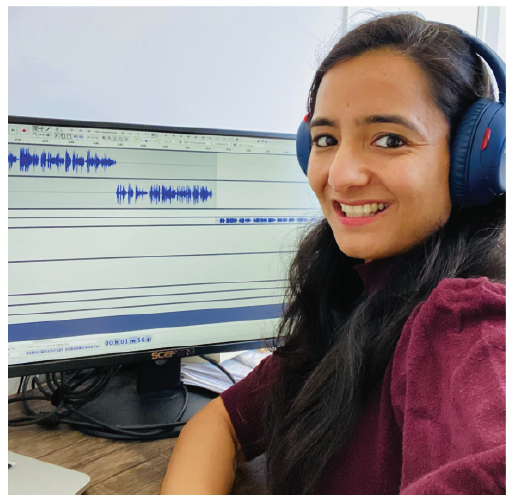
I am Arshi Arora, and I work as a research biostatistician in the department of epidemiology and biostatistics at Memorial Sloan Kettering Cancer Center. I am interested in integrating genomics and statistics to unravel new clinical and biological findings that impact patient care. I am especially interested in analyzing output of cutting-edge technologies like flow cytometry, copy number data, etc., that determine treatment decisions. At present, I am pursuing statistical analysis of pharmacodynamics in the realm of immunotherapy to understand biomarkers that might be associated with drug response.
My goal as a biostatistician is to make my work more accessible. I love sharing results via plots and other forms of visualizations to explain various trends in the data set.
Tell us about what you like to do for fun when you are not being a statistician.
When I am not dabbling in cancer genomics, the right hemisphere of my brain is into ceramics, biking, and DIY crafts. I also co-host a podcast on computational biology called Computationally Yours! I consider myself a minimalist and follow an intense reduce, reuse, and recycle waste regimen.
What drew you to these hobbies, and what keeps you interested?
Computationally Yours was started in times of the current pandemic in April 2020 with one of my closest friends, Sabah Kadri, who works as a director of bioinformatics at Lurie Children’s Hospital of Chicago and is an assistant professor of pathology at Northwestern University. We both overlapped at Carnegie Mellon University in Pittsburgh and share a love for science, books, and Bollywood dance.
As scientists, it was frustrating to see when scientific misinformation was becoming common in the news and, thus, we decided to do something about it. The idea for the podcast was pre-pandemic, but the pandemic definitely catalyzed the motivation to do something now.
Our mission here at Computationally Yours is to be a voice of science, especially for topics related to computational biology, biostatistics, and beyond. We talk about what we know and interview experts about topics we are passionate about and think the audience will really enjoy. We have covered myriad topics—clinical trials 101, the Human Genome Project, contact tracing, and climate change. And we look forward to covering many more!
As women in STEM, we are very excited to talk about different topics in science and how interdisciplinary yet unique they are. Stay tuned for one of our episodes in the pipeline with Jaya Satagopan covering five burning questions to ask a statistician. (shameless plug!)
My love for ceramics started when I decided to try a “paint your own pot” activity at one of the local art stores, and the rest is history. I started with a beginner wheel throwing class and went on to more advanced ones at 92Y in New York City.
To me, sitting at the potter’s wheel and molding clay into a vessel is extremely meditative and calming. I enjoy all the processes, from shaping up a piece to trimming it (when the clay is dried into a leather consistency, trim the excess clay to get the piece into your desired shape), glazing (adding color to your piece and getting ready to bake it where clay turns into glass), and admiring how it turns out (sheepish smile)!
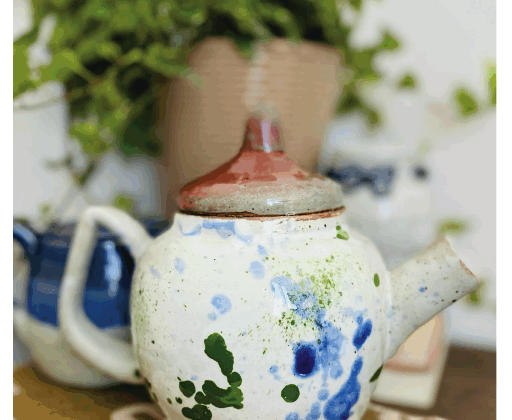
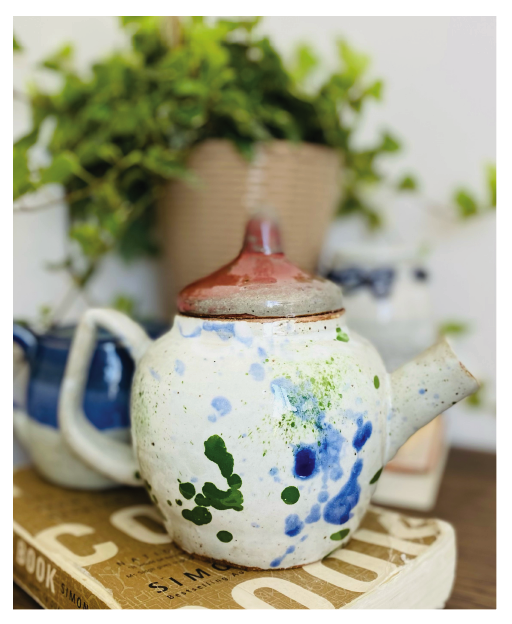
I still have the first cylindrical-ish piece I made. It was imperfect, yet I cherished it as it was something that could hold liquid and stand on its own. That said, there was definitely a growing and learning curve from that crooked cylinder to a more finished teapot! I had some amazing instructors who taught me so much about different pottery techniques and gave words of encouragement when I wasn’t delicate or patient enough.
Leave a Reply