
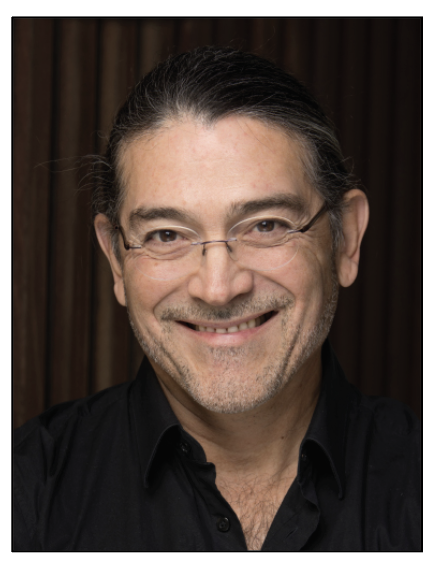
Greetings, fellow statisticians. It appears we are in for a long, hot summer. Being fully vaccinated, I am slowly venturing out and being reminded of what it’s like to go to an outdoor restaurant or see a small group of vaccinated friends. As we re-engage in person, please appreciate the science and statistics that contributed to our new normalcy. I am cautiously optimistic we can address the challenge of vaccination recalcitrance. We should continue, as statisticians, to help the public understand the risks and benefits of the jab.
This month, I’ve decided to focus on our vulnerabilities. Yes, statisticians are people, too, and we all have vulnerabilities. But I want to talk about vulnerability as a personal value that can make you a better statistician and a better human being.
I learned over the years that embracing vulnerability is not only a virtue, but it can offer genuine intellectual, personal, and career growth. You might ask, “How can vulnerability be a value?” As a value, vulnerability is not just about taking risks. It’s about being honest with yourself and others, allowing yourself to take your best shot at a career choice or a novel approach to a problem, or voicing a totally different perspective on research that gets people to think more critically. As a personal value, vulnerability is about accepting outcomes—when, despite your best effort and intent, you may fail. But you will learn from it. Or you will succeed and reap the benefit as well as learn.
Here is a story of how one’s vulnerability can be leveraged to improve statistical studies. Over the years, I have reviewed hundreds of research grant and contract applications. As a mid-career statistician, I was the only person of color on a review panel for health research projects. The panel boasted some of the most prominent researchers and, I confess, I was a little intimidated being a generic survey statistician in a pool of senior, substantive health research scholars. As with most review processes, each panel member would be assigned as a primary reviewer to provide an overview of the project and their assessment, followed by secondary reviews and open discussion.
Although I was neither a primary nor secondary reviewer, all were obliged to read every application. An interesting proposal was assessed and praised by the reviewers. It focused on the plight of those who had no health insurance. This was prior to the passage of the Affordable Care Act. The proposal spoke to the challenge of providing the uninsured with some type of meaningful health care. A specific health condition was selected that typically calls for the administration of medication. The proposal noted that hospitals and medical facilities were financially challenged in providing care to the uninsured and therefore less expensive, alternative treatments could be developed to address both the needs of the patients and the financial challenge of the care providers. So, an experimental design was proposed for the uninsured; it would demonstrate the efficacy of an alternative therapy that did not use any medication. Sounds like a win-win, right?
Well, the reviewers strongly praised the proposal and opened the floor to general discussion. The discussion was all positive and the project appeared to be poised for funding. But I was deeply troubled. I saw something no one else saw, and it was specifically because I was a Latino who grew up in a barrio and had friends and neighbors who were uninsured and faced obstacles to health care access. When we seek medical care, we do not want to be seen and treated as second-class citizens. We deserve equitable health care.
As a reviewer, I felt vulnerable. Although my insights had nothing to do with statistics, they had everything to do with statistics, in a sense. The statistical design was robust. If the project were funded, the statistical design could be used to develop a less-expensive alternative therapy. But I could not let my perspective go unheard. So, with as calm a voice as I could muster, I raised my hand. I noted the framing of the problem was incredibly problematic to me. Despite the merit of the therapy itself, the project would explicitly contribute to a two-tiered health care system: You have insurance? Step over to door number one and we have the best docs and meds for you. You don’t have health insurance? No problem. Step over to door number two and we will deny you meds and the ‘best therapy’ and instead provide you with a thrifty, low-cost alternative that may not be as good, but at least it’s something that can help.
I stated that if this therapy is really worthwhile, the research should be framed as an experiment for everyone, not just those without health insurance. There are plenty of people who would prefer an alternative to prescription drugs. The target population should be all patients with this specific affliction. I concluded by saying that, for no other reason, this project should not be funded because of its framing of the problem and the investigator should consider reframing and resubmitting if they thought the therapy would benefit the general population, not just the uninsured.
After my little speech, I sat in silence for a moment while the group of reviewers looked at me and then at each other. I never felt more vulnerable. Were they going to dismiss my perspective as inappropriate or unscientific? I would have been humiliated if that had happened. But I am pleased to report that the reviewers were supportive and agreed with me. We provided feedback to the investigator about the problem framing and that was the end of the review.
I do not know if a revision was resubmitted for funding. More importantly, I hoped my perspective helped both the reviewers and the investigators better understand the role of health care equity in our society.
None of this would have happened if I would have succumbed to my vulnerabilities and stayed quiet. Since that time, I have often been the outspoken reviewer who tries to remind us of our humanity when we conduct research. It doesn’t always work. But more often than not, as the only statistician in the room, I have embraced my vulnerability and spoken what others may have thought but were not willing to say, knowing I could easily be dismissed as not being a substantive expert. That’s okay, I suppose, for at least I got people to address my perceived ‘elephant in the room’ and to think about an alternative perspective, one rooted in my personal experiences and culture.
I have gone on to question everything, from why we should be spending millions on a program to help the homeless stop smoking (they face much more severe health risks daily that deserve more attention than fending off a disease that will manifest in 10–20+ years) to the use of race-ethnicity to predict Social Security representative payee violators (which would simply reinforce stereotypes and promote racial profiling). Naturally, I have been dismissed and even criticized for my perspectives over the years. And many have listened thoughtfully and revised their approach.
As a statistician, values and critical thinking often motivate the ‘statistical’ advice I provide to researchers. I allow myself to be vulnerable for the sake of promoting rigorous, relevant science. Please give it a try.
Leave a Reply