
This series features ASA members who share their ASA stories. Our mission is to collect authentic and meaningful accounts of member experiences. If you have a story you would like to share, email the ASA’s marketing and communications coordinator, Kim Gilliam.

I joined the ASA in 1998, while a graduate student in biostatistics at The University of North Carolina at Chapel Hill. One of my professors (I cannot remember which) said participating in the ASA would be useful for networking and developing my career as a professional statistician. And for a short while, I attended some Joint Statistical Meetings (JSM), presented my research, and attended talks that were relevant to my doctoral research and career in the biopharmaceutical industry. For many years, this is about as involved as I was with the ASA.
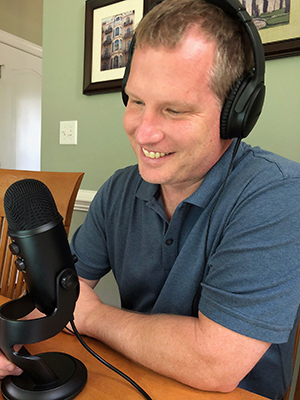
Fast forward to 2011. I was recently laid off as a statistician at a small biotech company in Research Triangle Park in North Carolina. I joined the JMP Life Sciences group at SAS, where I began developing software related to the analysis and visualization of data from clinical trials, with an emphasis on patient safety and data integrity. Because we were a small group and I was becoming active in research once again, I started participating more actively at JSM and the Biopharmaceutical Section Regulatory-Industry Statistics Workshop (which was the FDA-Industry Statistics Workshop at the time). While I was participating in the organizing meeting of the 2012 workshop, Biopharmaceutical Section (BIOP) Chair-elect Amit Bhattacharyya encouraged attendees to get involved more directly with BIOP. During a break, I approached Amit and volunteered. This encounter eventually led to the opportunity to join Rima Izem as co-host of the ASA Biopharm’s Podcast, which we began later that year in August.
It is now 2021, and the podcast has more than 90 episodes on ASA initiatives, regulatory and statistics topics relevant to the medical product industry, career guidance, and statistical leadership. It has been a wonderful experience, providing me numerous opportunities to reach out to statisticians and data scientists (many of whom I did not know) and have a conversation about their research, the challenges of their job, or how they decided to become a statistician in the first place. I learned more about the medical product industry and about the ASA and its various programs. I also learned statisticians and data scientists love talking about their work. (Though biased, I think statisticians and data scientists deserve to brag a bit more than we tend to.) In addition, I had several opportunities to provide guidance to others beginning their own podcasts on statistics and data science.
Perhaps most important, I learned that everyone’s educational and career paths vary greatly. I spoke with individuals who began in economics, medicine, zoology, biology, forestry, dentistry, or engineering (to name a few) who could not resist the lure of applying statistical methodologies to solve problems, eventually transitioning their education and careers. I heard accounts of individuals switching jobs between academia, industry, and the government (and back again) or developing, applying, or interpreting statistical methodologies with slight variations in emphasis according to their current employer. The first lesson is that successful and influential statisticians can come from anywhere—it is up to all of us to be encouraging and mentor these individuals as best we can. The second lesson is that statisticians can be successful anywhere, even across different job sectors.
Volunteering was the first step. Not only did it lead me on this wonderful journey with the podcast, but I have gotten involved with the Biopharmaceutical Section in numerous other ways. Being part of the Biopharmaceutical Section and the ASA have been good for my career but, more importantly, it has led to many friendships and provided many opportunities to help the next generation of statisticians and data scientists. And that is the most rewarding aspect of all.
Leave a Reply